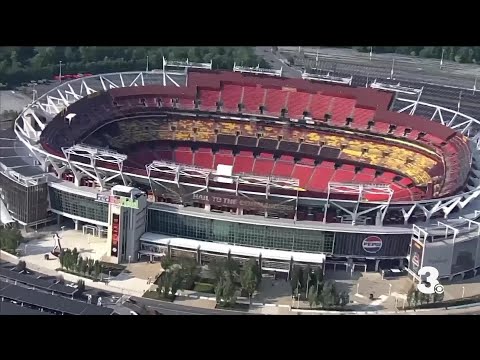
The Washington Commanders played their last game at RFK Stadium in December 1996. Nearly three decades later, they're returning with a $4 billion domed stadium—the most expensive NFL venue ever proposed.
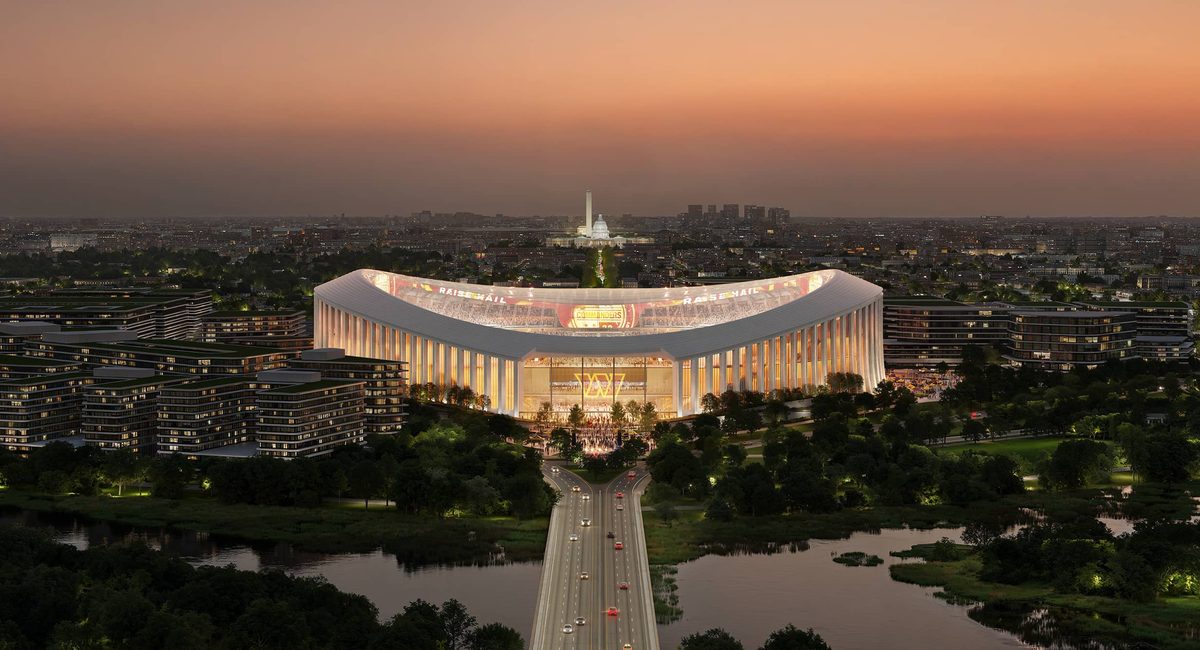
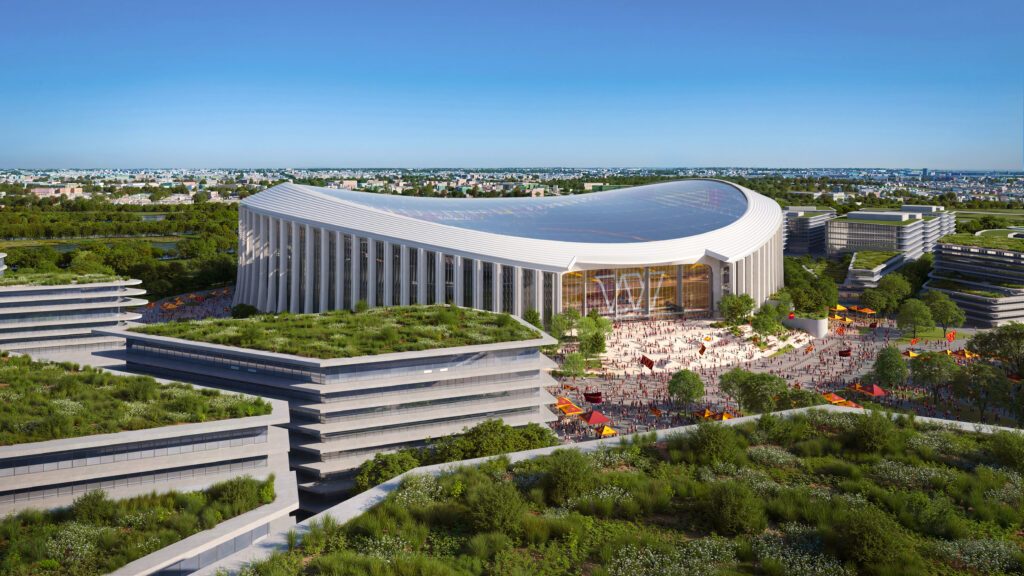
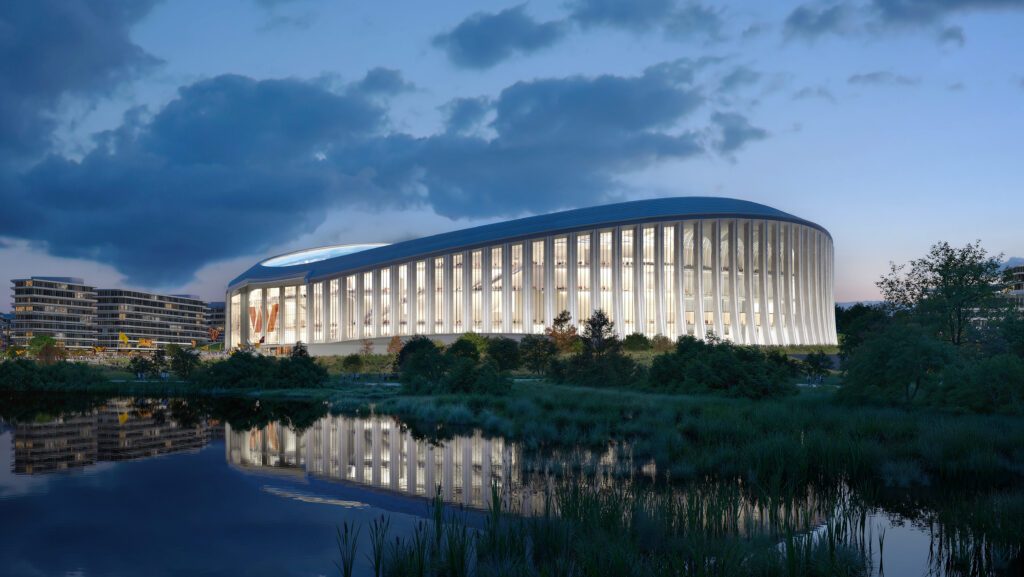
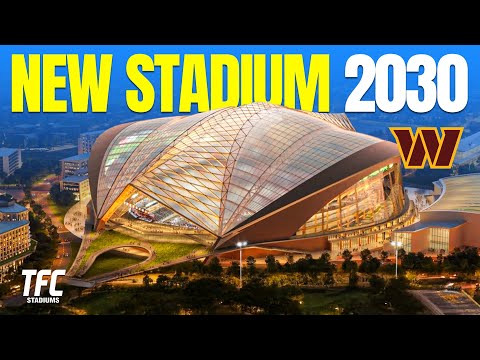
On January 15, 2026, HKS Architects unveiled renderings showing a transparent-roofed colosseum designed to frame views of the Capitol dome and Washington Monument. The project is a dramatic reversal for a franchise that spent 28 years in Landover, Maryland—a stadium so reviled that FedEx ended its naming rights two years early. Owner Josh Harris bought the team for a record $6.05 billion after Daniel Snyder's scandal-plagued exit.
He's staking $2.7 billion of private capital on returning to D.C. to restore the team's cultural relevance and unlock a Super Bowl bid by 2031.
Questions about this story
Free account needed to ask — your question is kept and asked for you right after sign-up. Answers are public.
No questions yet — be the first to ask.
Key Indicators
$4B
Total Project Cost
The most expensive NFL stadium ever proposed, exceeding SoFi Stadium's $5.5B when including the surrounding development.
$2.7B
Private Investment
The Commanders' contribution—the largest private sports investment in D.C. history.
$1.1B
Public Funding
Taxpayer contribution authorized by D.C. Council, criticized as a subsidy for billionaires.
28
Years Away from D.C.
The franchise left RFK Stadium after the 1996 season for suburban Landover.
70,000
Seat Capacity
Designed to meet NFL Super Bowl hosting requirements.
6,000
Housing Units Planned
The 180-acre development includes residential units, with 30% designated as affordable housing.
18 events
Latest: February 5th, 2026 · 8 months ago
Showing 8 of 18
JK to step
Tap a bar to jump to that date
Jump to
February 2026
National Capital Planning Commission scheduled review
LatestRegulatory
NCPC to review stadium design in advisory capacity. Though outside D.C.'s Central Area and not requiring formal NCPC approval, commission will provide input on alignment with monumental axis and overall design.
January 2026
Commanders submit planning documents to NCPC
Regulatory
Team files comprehensive project overview with the National Capital Planning Commission, including additional renderings and technical specifications. NCPC staff report released to the public ahead of February 5 review meeting.
Commanders and HKS unveil initial stadium renderings
Design
First designs show a 70,000-seat domed stadium with transparent roof offering views of the Capitol and Monument, steel colonnade echoing original RFK.
Poll shows 55% of D.C. residents support stadium plan
Public Opinion
Washington Post-George Mason Schar School poll finds majority support, with 74% backing the project in areas east of the Anacostia River. Support significantly higher than 30% recorded in 2022.
September 2025
D.C. Council gives final approval 11-2
Legislative
The Robert F. Kennedy Campus Redevelopment Act authorizes $1.1 billion in public funding. Council members White and Nadeau vote against.
August 2025
D.C. Council grants initial approval 9-3
Legislative
After marathon hearings drawing hundreds of speakers, the Council advances the stadium legislation over objections about billionaire subsidies.
April 2025
Mayor Bowser and Harris announce $3.7 billion stadium deal
Deal
The framework includes $2.7 billion in private investment and the largest mixed-use development in D.C. history. NFL Commissioner Goodell suggests a Super Bowl is likely.
January 2025
RFK Stadium demolition begins
Infrastructure
Deconstruction of the 64-year-old stadium commences following National Park Service approval.
Biden signs RFK Campus Revitalization Act
Legislative
D.C. gains control of the 174-acre site through a 99-year renewable lease. Federal ownership is retained.
December 2024
Senate passes RFK land transfer bill
Legislative
The Senate approves the legislation, sending it to President Biden for signature.
February 2024
House passes RFK land transfer bill
Legislative
The House of Representatives approves legislation enabling the stadium project. The bill prohibits federal funds for stadium construction.
July 2023
Congress introduces RFK land transfer bill
Legislative
The D.C. Robert F. Kennedy Memorial Stadium Campus Revitalization Act proposes transferring 174 acres from federal to D.C. control via a 99-year lease.
NFL approves $6.05 billion sale to Josh Harris group
Ownership
Owners unanimously approve the record transaction. Daniel Snyder is fined $60 million following the Mary Jo White investigation into workplace misconduct.
September 2019
RFK Stadium closes permanently
Infrastructure
Events DC announces the deteriorating 58-year-old stadium will close, saving $3.5 million annually in maintenance and utilities.
September 1997
Team moves to Jack Kent Cooke Stadium in Landover
Relocation
The franchise leaves Washington, D.C. for suburban Maryland, beginning a 28-year absence from the nation's capital.
December 1996
Final game at RFK Stadium
Historical
The Redskins beat Dallas 37-10 before 56,454 fans, closing a 36-year era. The team compiled a 173-102-3 record and went 11-1 in playoff games at RFK.
January 1983
'We Want Dallas' NFC Championship
Historical
The stadium physically shakes as 54,000 fans chant during a 31-17 victory over the Cowboys. Washington wins Super Bowl XVII two weeks later.
October 1961
Redskins play first game at D.C. Stadium
Historical
The franchise opens its new home with a 24-21 loss to the New York Giants. The stadium would later be renamed for Robert F. Kennedy.
Scenarios
1
Stadium Opens 2030, D.C. Hosts Super Bowl 2031
Likely
Discussed by: Mayor Bowser, NFL Commissioner Roger Goodell, local sports business analysts
Construction proceeds on schedule with groundbreaking in fall 2026. The 70,000-seat domed stadium opens for the 2030 season, meeting NFL Super Bowl hosting requirements. Washington lands Super Bowl LXV in February 2031—the first in the city's history. The surrounding 180-acre development attracts anchor tenants, validating the $1.1 billion public investment. This scenario requires no major construction delays, cost overruns remaining within the Commanders' responsibility, and the team fielding a competitive product to maintain fan interest.
2
Cost Overruns and Delays Push Opening Past 2030
Possible
Discussed by: Construction industry analysts, stadium financing experts, D.C. Council skeptics
Large infrastructure projects routinely exceed budgets and timelines. If construction costs escalate beyond the $4 billion projection, negotiations over who bears the overruns could stall progress. The deal places cost overrun responsibility on the Commanders, but disputes could trigger legal battles. A 2032 opening would push Super Bowl eligibility to 2033 and allow competing cities to lock up hosting rights.
3
Economic Study Vindicates Critics: Minimal Revenue Impact
Possible
Discussed by: Academic sports economists, Greater Greater Washington, Council member Robert White
Economists who study stadium subsidies have consistently found minimal economic impact from NFL venues, which host only 10 events per year. Associate Professor Geoffrey Propheter of the University of Colorado Denver estimated D.C. could forgo between $6 billion and $25 billion in alternative revenue over time. If post-opening studies confirm the pattern seen with other publicly subsidized stadiums—negligible job creation and tax revenue falling short of projections—the deal becomes a political liability for its supporters.
4
Franchise Value Soars, Harris Sells at Massive Profit
Possible
Discussed by: Sports business valuations, Forbes, Sportico
Harris paid $6.05 billion for a franchise playing in a deteriorating suburban stadium with a damaged brand. A new D.C. stadium could push the Commanders' valuation above $10 billion within a decade, rivaling the Cowboys and Patriots. If Harris sells within 10-15 years, he could realize a multi-billion-dollar gain—raising questions about whether taxpayers subsidized a private real estate play rather than a civic asset.
Historical Context
3 moments from history that rhyme with this story — and how they unfolded.
1 of 3
January 2016 - September 2020
Los Angeles Rams Return to L.A. (2016-2020)
After 21 seasons in St. Louis, Rams owner Stan Kroenke moved the franchise back to Los Angeles and privately financed the $5.5 billion SoFi Stadium in Inglewood. The team played four seasons in a temporary stadium before SoFi opened in 2020. Kroenke later paid $790 million to settle St. Louis's lawsuit over his bad-faith relocation efforts.
Then
The Rams won Super Bowl LVI in their new stadium in February 2022, validating the move on the field. SoFi became the NFL's premier venue.
Now
The privately funded model set a new benchmark, though Kroenke still received over $100 million in tax breaks. The Commanders deal follows a similar playbook of stadium-anchored mixed-use development.
Why this matters now
The Rams' return demonstrates how a new stadium in a major market can rehabilitate a franchise's value and cultural standing. Harris is attempting a similar transformation, though with more public funding than Kroenke required.
2 of 3
November 1995 - September 1999
Cleveland Browns Stadium Deal (1999)
When Art Modell announced plans to move the Browns to Baltimore in 1995, Cleveland sued. The NFL brokered a settlement: Baltimore got a new franchise (the Ravens), while Cleveland retained the Browns name, colors, and history, receiving an expansion team in 1999. The city built a $283 million stadium with 73% public funding.
Then
Cleveland preserved its NFL identity and opened a new publicly funded stadium. The Browns returned in 1999.
Now
The stadium aged poorly and the Browns became one of the NFL's least successful franchises, raising questions about whether massive public investment guaranteed competitive success.
Why this matters now
Cleveland's experience illustrates how cities leverage public money to retain or attract teams, but also how stadium subsidies don't guarantee on-field results. D.C. is betting the Commanders' return will produce different outcomes than Cleveland's 25-year struggle.
3 of 3
January 1983 - January 1992
Washington's Three Super Bowl Wins at RFK (1983-1992)
Under coach Joe Gibbs, the Redskins won Super Bowls XVII (1983), XXII (1988), and XXVI (1992) while playing home games at RFK Stadium. The stadium became legendary for raucous crowds whose jumping caused the structure to visibly sway. Washington went 11-1 in playoff games at RFK.
Then
RFK became synonymous with the franchise's identity and competitive advantage, with the 'We Want Dallas' 1983 NFC Championship entering team lore.
Now
The move to suburban Landover in 1997 coincided with competitive decline. The franchise has made the playoffs only six times in 28 years since leaving RFK.
Why this matters now
The stadium project explicitly invokes RFK's legacy—HKS's design features colonnade elements echoing the original structure. Harris and Bowser are betting that returning to D.C. can restore the competitive advantage and fan intensity the team lost when it left.