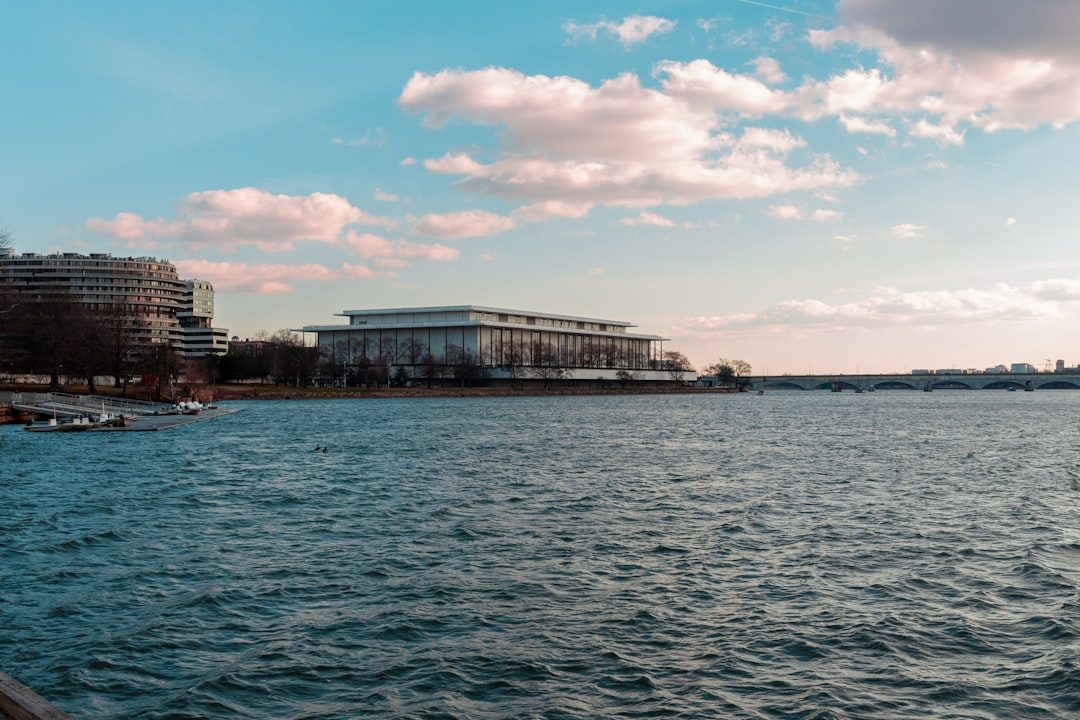
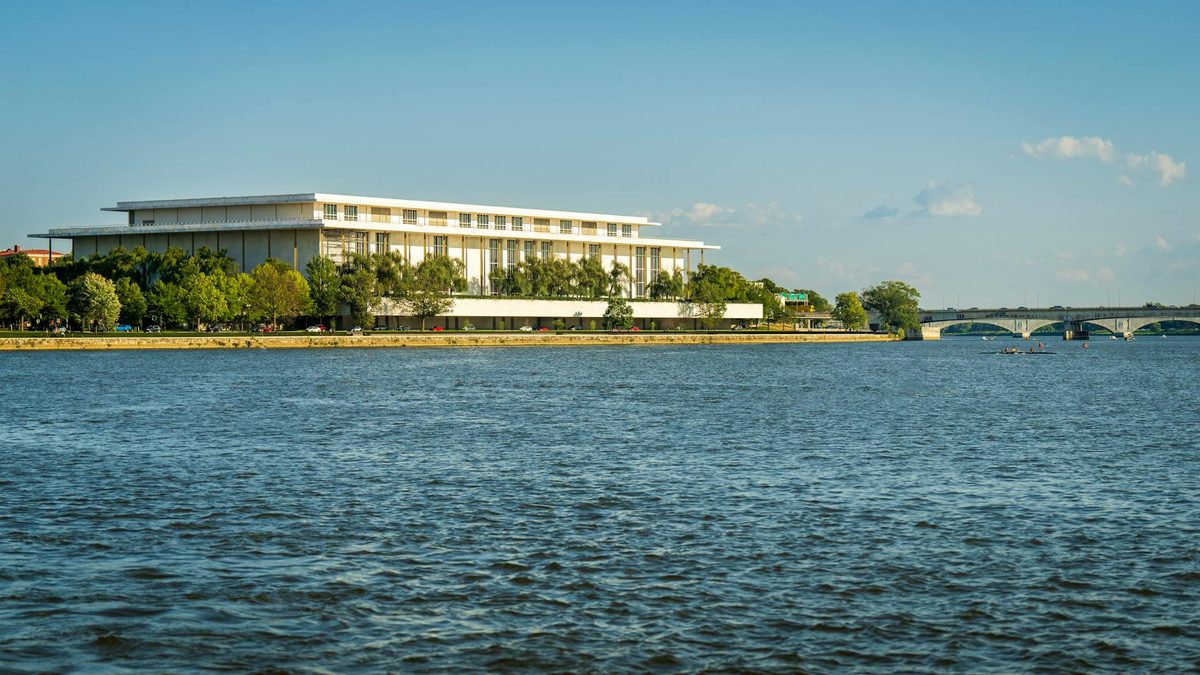
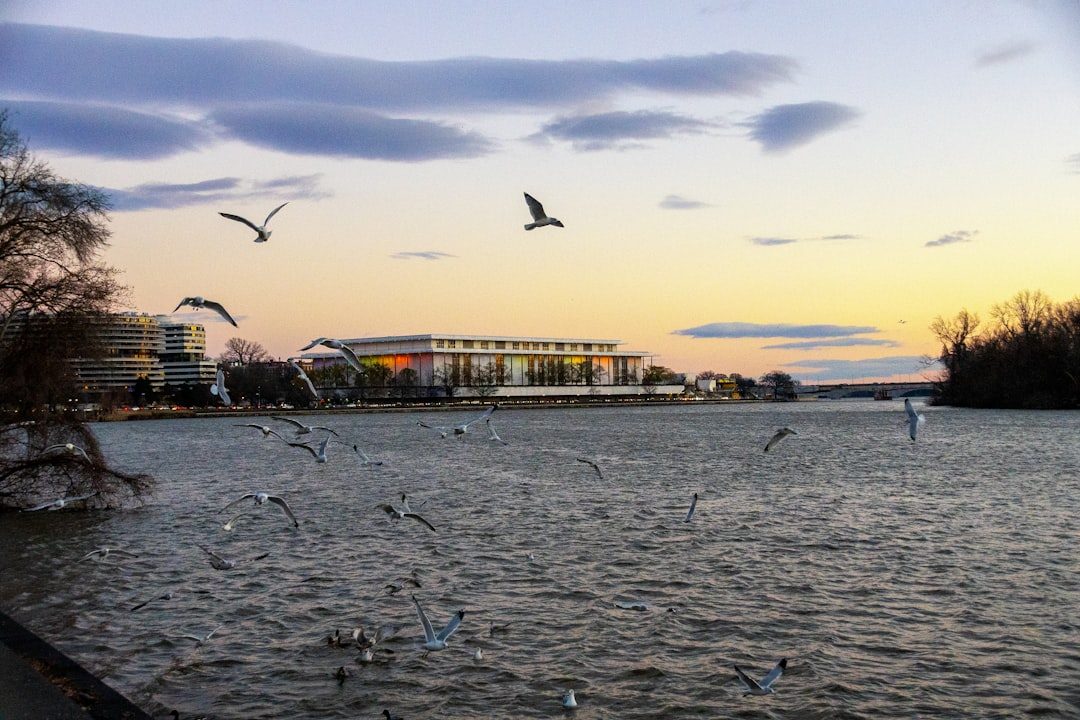
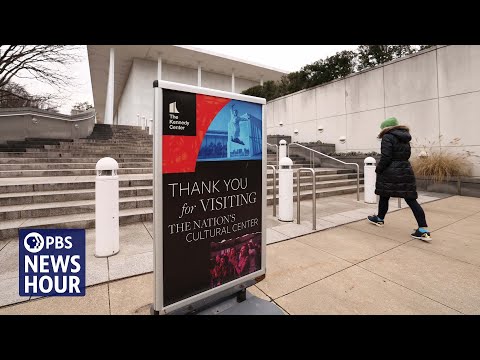
A federal judge on Sept. 15 again blocked the Kennedy Center's Trump-appointed board from putting the president's name on the building or naming the grounds after him. "Simply put, Defendants cannot install memorials for President Trump or anyone or anything else at the Kennedy Center without Congress's blessing," Judge Christopher Cooper wrote.
The board voted the same day to close the main building for two years, and the center appealed. The building shut suddenly on Sept. 16, citing "acute risks to public safety" from structural deterioration. On Sept. 17, Cooper ordered 30 days' notice before any demolition; Trump says renovations await a D.C. Circuit ruling on his name.
Why it matters
The case tests whether a sitting president can unilaterally rename, close, or demolish a federally chartered memorial without congressional consent.
Questions about this story
Free account needed to ask — your question is kept and asked for you right after sign-up. Answers are public.
0
How did Trump justify adding his name to the Kennedy Center? Seems like a difficult thing to do without coming off like a tool.
Trump's board — loyalists he installed after purging the previous trustees — framed the renaming as recognition for saving a 'financially ruined' institution, a justification he essentially manufactured by controlling both sides of the vote.
Why it matters: The circular logic (install allies, have allies honor you) is exactly why a federal judge ruled the board acted illegally and ordered the name stripped within 14 days.
—The official rationale: the board said the name honored Trump's role as 'the Chairman who saved the institution from financial ruin and physical destruction,' and Trump claimed he had driven 'record-setting' donations.
—The self-dealing problem: Trump fired 18 board members in February 2025, installed allies, had that board elect him chairman, and then that same board voted unanimously to add his name in December — Rep. Joyce Beatty, the one dissenting voice, says she was muted every time she tried to speak.
—The facts cut against the rescue narrative: ticket sales had dropped roughly 50% since his takeover by October 2025, Hamilton cancelled its run, the Washington National Opera departed after 54 years, and Philip Glass pulled his symphony premiere.
—The White House's legal workaround was to argue it wasn't a 'renaming' at all — DOJ framed 'Trump Kennedy Center' as merely a secondary label, not a memorial designation — a distinction Judge Cooper rejected on May 29.
The White House and DOJ maintain the board acted within its authority and the name addition was not a congressionally restricted 'memorial' designation — a legal theory that still has appellate life even after Judge Cooper's ruling.
AI-generated with web search — may be wrong. Check the linked sources.
Key Indicators
50%
Revenue Decline
Drop in ticket revenue since Trump's February 2025 takeover
43%
Unsold Seats
Percentage of seats empty in main venues, compared to 7% the prior year
Shut Sept. 16
Closure Status
Main building closed suddenly Sept. 16, with the center citing "acute risks to public safety" from structural deterioration. The board voted Sept. 15 to close for two years; reopening targeted for 2028.
Blocked Again
Trump Name on Building
Judge Cooper on Sept. 15 again barred the board from adding Trump's name or naming the grounds "President Donald J. Trump Plaza"; the center appealed
$257M
Federal Renovation Funds
Congress appropriated $256.7 million in July 2025 for capital repairs and security, available through Sept. 30, 2029
30 Days
Demolition Notice Required
Judge Cooper ordered the Kennedy Center to give 30 days' notice before any demolition or major physical changes, and to file a sworn status report on the temporary closure
Images from Openverse under Creative Commons licenses.
Videos from YouTube.
Voices
Curated perspectives — historical figures and your fellow readers.
George Orwell
(1903-1950) ·Modernist · satire
Fictional AI pastiche — not real quote.
"When a man renames a monument to culture after himself and demands the artists bow or leave, he has grasped instinctively what every would-be dictator knows: that the imagination is the last territory to conquer, and the most dangerous to leave free. The closure date—the Fourth of July—would be rather too perfect for satire if I had invented it myself."
100% found this insightful
Dorothy Parker
(1893-1967) ·Jazz Age · wit
Fictional AI pastiche — not real quote.
"I see they've renamed it the Trump Center for the Performing Arts, which is rather like renaming the Sahara for its abundance of water. Though I suppose closing it for two years does solve the problem of finding performers willing to appear there—one can't very well boycott a padlocked door."
100% found this insightful
Ever wondered what historical figures would say about today's headlines?
Sign up to generate historical perspectives on this story.
27 events
Latest: September 17th, 2026 · 3 weeks ago
Showing 8 of 27
JK to step
Tap a bar to jump to that date
Jump to
September 2026
Judge Orders 30 Days' Notice Before Demolition
LatestLegal
Judge Christopher Cooper ordered the Kennedy Center to give 30 days' notice before any demolition or major physical changes, and to file a sworn status report on the temporary closure. He denied Rep. Joyce Beatty's request for a hearing but said his order "prohibits demolition of the building." The Justice Department argued the same day that the closure is temporary and poses no emergency.
Kennedy Center Shuts Main Building Suddenly
Governance
The main building closed to the public without notice. President Matt Floca cited "acute risks to public safety resulting from continued structural deterioration" and said the closure would last at least seven days for structural assessments. The move followed a partial ceiling collapse earlier in September and was separate from the board's Sept. 15 vote to close for two years.
Kennedy Center Appeals Ruling Blocking Trump Name
Legal
Hours after Judge Cooper barred the board from adding Trump's name to the building or grounds, the Kennedy Center filed an appeal. The same day, the board voted to close the main building for two years, citing structural problems and depleted funds.
Trump Says Renovations Await Appeals Court Ruling on His Name
Governance
Trump posted on Truth Social that the closing takes effect immediately, but renovations cannot begin until the D.C. Circuit rules on the board's approved name. He threatened to keep the center shut if his name is not added and said he had given $17 million to an endowment supporting the institution.
August 2026
Board Approves Two-Year Closure and Re-Adds Trump Name
Governance
The board voted 23-3 to approve a two-year closure of the main building for renovations. A second resolution added inscriptions honoring Trump, including 'Renovated and Restored by President Donald J. Trump' under the center's name and 'Endowed by the Trump Kennedy Center Fund' once $100 million is raised. The resolution also called for naming the grounds 'President Donald J. Trump Plaza.'
June 2026
Trump Name Removed From Kennedy Center Building
Legal
Crews removed Trump-branded lettering from the Kennedy Center exterior in June, within the 14-day deadline Judge Cooper set in his May 29 ruling. The signage had been in place since December 2025.
May 2026
Trump Pledges Congressional Transfer After Court Loss
Governance
Hours after Judge Cooper's ruling, Trump posts on Truth Social that he will direct the Department of Commerce to transfer the Kennedy Center to Congress, saying he has no interest in a 'hopeless journey' without full freedom to manage the institution.
March 2026
Eight Preservation Groups Sue Over Renovation Plans
Legal
A coalition of eight architecture and cultural heritage organizations files a federal lawsuit arguing the renovation plans violate historic preservation law and require congressional authorization. The suit introduces a novel 'anticipatory demolition' claim, arguing that repainting exterior columns white and adding Trump's name without approval may already constitute legal violations.
Board Votes Unanimously to Close; Beatty Denied a Vote
Governance
Trump's board votes unanimously to close the Kennedy Center on July 4 for a two-year renovation. Rep. Beatty attends the White House meeting but is denied voting rights. The vote later becomes the basis for the court's May 29 injunction.
Grenell Departs; Matt Floca Named Kennedy Center President
Governance
Richard Grenell steps down as Kennedy Center president ahead of the planned renovation. Matt Floca, the center's VP of facilities operations and a construction management professional, is named his successor. Grenell will stay on as an unpaid consultant.
NSO Director Jean Davidson Resigns
Organizational
Jean Davidson, executive director of the National Symphony Orchestra since 2023, resigns, saying she could not lead effectively in the current climate. She will become CEO of the Wallis Annenberg Center for the Performing Arts in Beverly Hills, effective May 4.
Beatty Files Amended Lawsuit to Halt Closure
Legal
Rep. Joyce Beatty expands her federal lawsuit to seek an injunction blocking any steps toward closing, demolishing, or renovating the Kennedy Center, and requests a restraining order guaranteeing her participation and vote at the March 16 board meeting.
February 2026
Trump Details Renovation Specifications
Governance
Trump elaborates on Kennedy Center renovation plans, stating steel will be 'fully exposed' and 'checked out,' some marble will be retained, and estimated cost is 'probably around $200 million.' He confirms closure around July 4 to allow uninterrupted construction.
Rep. Pingree Seeks Legal Guidance on Closure Authority
Legal
Rep. Chellie Pingree, top Democrat on the panel overseeing Kennedy Center funding, tells ABC News she is seeking legal guidance on whether Trump can close the congressionally funded venue without approval from Congress. She expresses concern about lack of congressional oversight of the $257 million appropriated.
Trump Announces Two-Year Closure
Governance
Trump announces the Kennedy Center will close July 4, 2026 for approximately two years of renovations, calling the venue 'tired, broken and dilapidated.'
January 2026
Philip Glass Cancels Symphony Premiere
Cultural
Composer Philip Glass withdraws the world premiere of his Symphony No. 15 'Lincoln,' saying the center's values conflict with the symphony's message.
Martha Graham Dance Company Withdraws
Cultural
The Martha Graham Dance Company announces withdrawal from spring 2026 programming at the Kennedy Center.
Washington National Opera Announces Departure
Organizational
After 54 years at the Kennedy Center, the Washington National Opera announces it will seek early termination of its affiliation and resume independent operations.
December 2025
Kennedy Center Threatens Lawsuit Against Cancelling Performer
Legal
Grenell threatens $1 million in damages against jazz musician Chuck Redd, who cancelled his Christmas Eve performance over the name change.
Congresswoman Files Lawsuit Over Renaming
Legal
Representative Joyce Beatty sues in federal court, arguing that renaming a congressionally designated memorial requires an act of Congress, not a board vote.
Board Votes to Add Trump's Name
Governance
Board approves renaming the center 'The Donald J. Trump and The John F. Kennedy Memorial Center for the Performing Arts.' New signage appears the next day.
October 2025
Ticket Sales Plummet 50%
Financial
Washington Post analysis reveals 43% of seats unsold in main venues, compared to 7% the prior year. Revenue has dropped roughly 50% since February takeover.
March 2025
Hamilton Cancels Kennedy Center Run
Cultural
Producer Jeffrey Seller cancels Hamilton's planned 2026 engagement, calling the board dismissals a 'purge' that 'flies in the face of everything this national cultural center represents.'
February 2025
First Wave of Artist Withdrawals
Cultural
Actor Issa Rae cancels her March performance, citing an 'infringement on the values of an institution that has faithfully celebrated artists of all backgrounds.'
Trump Takes Control of Kennedy Center
Governance
Trump dismisses board chair David Rubenstein, 17 other trustees, and president Deborah Rutter. The reconstituted board elects Trump chairman and names Richard Grenell interim president.
September 1971
Kennedy Center Opens
Milestone
The Kennedy Center debuts with a gala performance featuring Leonard Bernstein conducting his Requiem mass honoring President Kennedy.
January 1964
Congress Designates Kennedy Memorial
Legislative
President Lyndon Johnson signs law designating the National Cultural Center as a living memorial to President John F. Kennedy, assassinated two months earlier.
Scenarios
1
Closure Proceeds, Center Reopens as 'Trump Kennedy Center'
Possible
Discussed by: Kennedy Center leadership, Fox News, conservative commentators
The board approves the July 4 closure. Renovations proceed with the $257 million in appropriated funds plus private contributions. The center reopens in 2028 with updated facilities, Trump's name intact, and new programming under Grenell's direction. Some artists return while others permanently boycott.
2
Court Blocks Renaming, Forces Restoration of Original Name
Uncertain
Discussed by: Legal analysts, Representative Joyce Beatty, arts advocacy groups
The federal court rules in Beatty's lawsuit that the 1964 act of Congress designating the Kennedy memorial cannot be altered by a board vote. The court orders removal of Trump's name and restoration of original signage. The closure may still proceed, but under the original name.
3
Closure Stalls as Funding Sources Remain Unclear
Possible
Discussed by: Washington Post, arts policy analysts, congressional oversight
Despite Trump's claim that 'financing is completed,' questions emerge about the source and sufficiency of funds for a multi-year closure and renovation. Congressional scrutiny or donor reluctance delays the project. The center continues operating in a diminished capacity.
4
National Symphony Orchestra Departs or Faces Existential Crisis
Possible
Discussed by: Orchestra musicians (anonymously), classical music publications, labor analysts
The two-year closure forces the NSO to find alternative venues or suspend operations. Contract negotiations collapse. Key musicians depart for other orchestras. The institution that has anchored the center since 1971 either relocates permanently or struggles to rebuild.
5
Trump Transfers Kennedy Center to Congress
Uncertain
Resolves by End of 2026
Discussed by: Trump (Truth Social), Variety, Al Jazeera, legal analysts
Following the May 29 court loss, Trump pledged to transfer Kennedy Center control to Congress through the Department of Commerce. If he follows through, Congress would inherit governance of the institution and could restore an independent board structure. The mechanism for such a transfer is untested and would almost certainly require legislation.
6
Appeals Court Lets Trump Name Stand
Unlikely
Resolves by End of 2027
Discussed by: Justice Department lawyers and legal analysts covering the D.C. Circuit
The U.S. Court of Appeals for the D.C. Circuit reverses Judge Cooper, ruling the inscriptions are permissible recognition of Trump's fundraising rather than a renaming that requires Congress. Trump's name returns to the building during or after renovations.
7
Two-Year Closure Proceeds, Reopening Set for 2028
Likely
Resolves by Oct 15, 2026
Discussed by: Kennedy Center board, Time, The Hill
The main building goes dark for renovations funded by the $257 million congressional appropriation. The center keeps some programming at the REACH campus and awards the Kennedy Center Honors offsite. Reopening is targeted for 2028.
8
Center Sits Dark While Name Dispute Drags Through Courts
Possible
Resolves by End of 2026
Discussed by: Reuters, RNZ
Trump has said renovations cannot begin until the D.C. Circuit rules on his name, while the Justice Department seeks to lift the order keeping the center open. If the appeal takes months, the main building could sit closed with no work underway, leaving staff and resident companies in limbo.
Beatty argues the Sept. 16 shutdown violates Judge Cooper's May injunction requiring the center to remain open during her lawsuit. The Justice Department says the closure is temporary and poses no emergency. If Cooper agrees with Beatty, he could order the building reopened while the name dispute proceeds.
Historical Context
3 moments from history that rhyme with this story — and how they unfolded.
1 of 3
2015-2023
Poland's Law and Justice Party Arts Takeover (2015-2023)
Poland's Law and Justice (PiS) government intervened in 23 arts and culture institutions, replacing directors with ideologically aligned figures. Culture Minister Piotr Gliński eliminated merit-based hiring for major venues. The Museum of the Second World War in Gdańsk became a flashpoint when officials objected to its inclusive portrayal of wartime suffering.
Then
Curators resigned or were dismissed. International arts organizations condemned the interference. Some institutions self-censored programming.
Now
After PiS lost power in 2023, the new government began reversing appointments and restoring institutional independence. The episode became a case study in democratic backsliding through cultural policy.
Why this matters now
The Kennedy Center transformation mirrors the PiS playbook: board purges, installation of political loyalists, name changes to institutions, and artist boycotts in response. The Polish experience suggests such changes can be reversed with political transitions but cause lasting institutional damage.
2 of 3
1985-1997
Steve Jobs Returns to Apple (1985-1997)
Apple's board ousted co-founder Steve Jobs in 1985 after a power struggle with CEO John Sculley. Jobs founded NeXT Computer and acquired Pixar. By 1996, Apple was near bankruptcy. The board brought Jobs back as interim CEO, and he systematically rebuilt the company.
Then
Jobs cut product lines, ended licensing deals, and laid off thousands. Apple posted losses for several quarters.
Now
Apple became the world's most valuable company. Jobs's return is now the canonical example of a founder-led turnaround.
Why this matters now
Trump has framed his Kennedy Center takeover as a rescue of a 'tired, broken and dilapidated' institution. The Jobs parallel is frequently invoked by supporters who see disruption as necessary for transformation. Critics note that Jobs was a product visionary, while Trump's arts credentials are untested.
3 of 3
2000-2012
Lincoln Center Renovation Wars (2000s)
Lincoln Center undertook a controversial $1.2 billion renovation that stretched over a decade and generated bitter disputes among its constituent organizations—the Metropolitan Opera, New York Philharmonic, and others—over costs, design, and governance. The project ran years behind schedule.
Then
Construction disrupted programming. Some constituent groups threatened to leave. Fundraising fell short of projections.
Now
The renovation was eventually completed. Lincoln Center's public spaces were widely praised. The institution emerged stronger but the process scarred relationships for years.
Why this matters now
The Kennedy Center's planned two-year closure will test whether a complete shutdown produces better outcomes than Lincoln Center's approach of renovating while operating. The Lincoln Center experience shows major arts renovations routinely exceed timelines and budgets.