



Pull to refresh
Logo
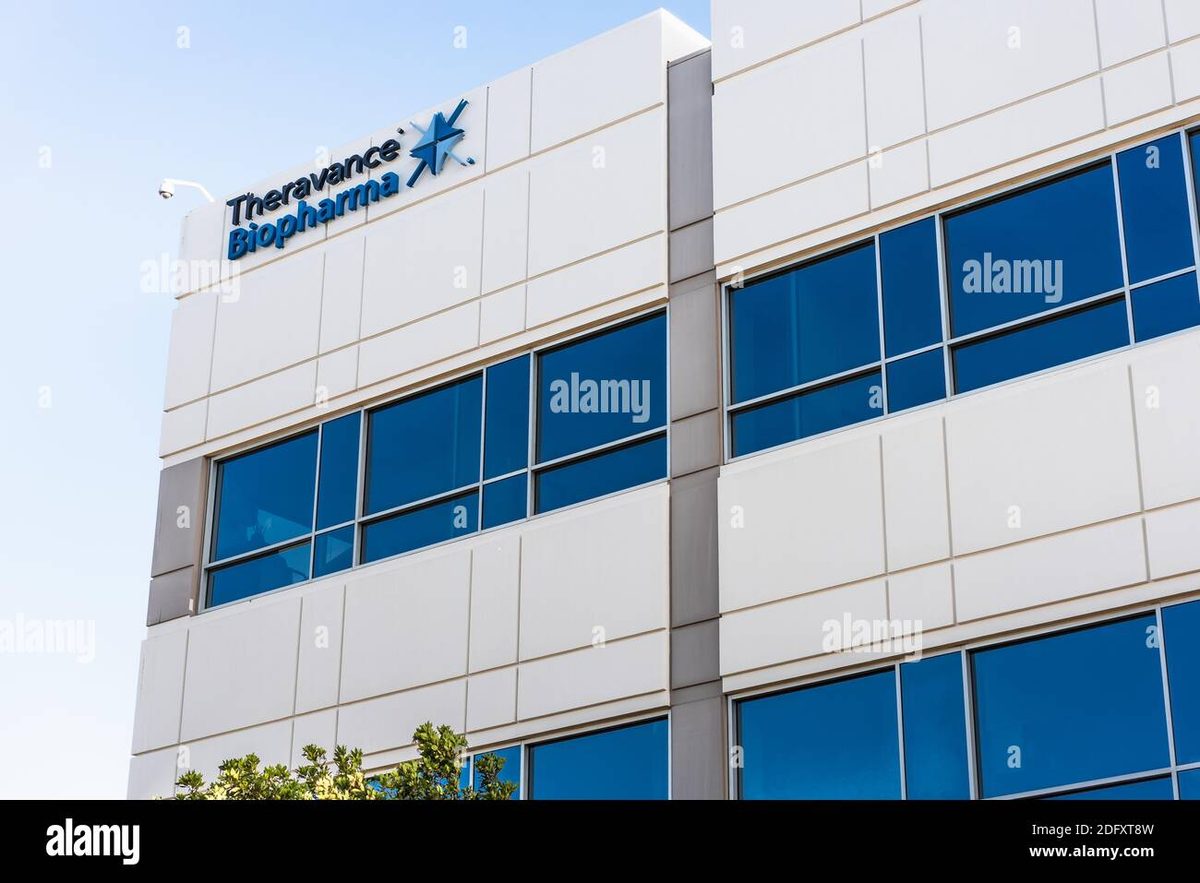
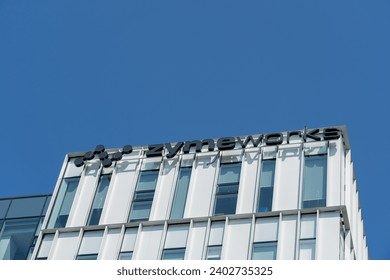
Zymeworks completes Theravance acquisition, adds COPD drug YUPELRI

Zymeworks completes Theravance acquisition, adds COPD drug YUPELRI

Money Moves

Vancouver biotech buys a commercial-stage respiratory drug using debt secured by the drug's own cash flows

Today: Zymeworks confirms YUPELRI adds ~$60M annualized cash flow

Overview

Updated 58 minutes ago

Zymeworks, a Vancouver biotech built on research partnerships, now owns a commercial medicine. The Sept. 23 closing of its Theravance Biopharma acquisition added YUPELRI, a once-daily nebulized COPD treatment that posted $133.1 million in sales in the first half of 2026, plus the hospital sales team behind it.

The deal was funded without issuing new shares. Zymeworks borrowed $350 million from OMERS Life Sciences through a non-recourse note secured purely by YUPELRI's profit-share cash flows, and put up about $217.5 million of its own cash. The company now expects $278-292 million in 2026 revenue and says the drug adds roughly $60 million in annualized cash flow.

Why it matters

Zymeworks' $350 million debt is secured by one drug's sales; if YUPELRI stalls, repayments and the pipeline it funds are both at risk.

Questions about this story

Free account needed to ask — your question is kept and asked for you right after sign-up. Answers are public.

No questions yet — be the first to ask.

Key Indicators

$350M
OMERS non-recourse note
Acquisition debt secured solely by YUPELRI profit-share cash flows; no equity dilution.
35%
Zymeworks share of U.S. YUPELRI net profits
Received through the Viatris collaboration, plus royalties on sales outside the U.S.
$278–292M
2026 total revenue guidance
Raised after the deal closed; midpoint around $285 million.
$60M
Annualized cash flow from YUPELRI
Company-reported figure following the close, before debt service.
75%
YUPELRI profit-share assigned to OMERS
Applied to principal and interest on the note until repaid; Zymeworks keeps the other 25%.
$17.00
Per-share cash consideration
Paid to Theravance shareholders at closing for each share of common stock.

Voices

Curated perspectives — historical figures and your fellow readers.

Ever wondered what historical figures would say about today's headlines?

Sign up to generate historical perspectives on this story.

People Involved

Organizations Involved

Timeline

June 2026 October 2026

5 events Latest: Today
Tap a bar to jump to that date
  1. Zymeworks confirms YUPELRI adds ~$60M annualized cash flow

    Today Corporate Statement

    Company says YUPELRI generates roughly $60 million in annualized cash flow and confirms the raised 2026 outlook following the close.

  2. Zymeworks raises 2026 guidance

    Financial Guidance

    Company guides 2026 total revenue to $278-292 million and adjusted EBITDA to $114-128 million, citing YUPELRI's accretive cash flows.

  3. Zymeworks completes Theravance acquisition

    Corporate Action

    Deal closes; Theravance delists from Nasdaq and shareholders receive $17 per share in cash.

  4. FDA approves Ziihera (zanatamab-hrii)

    Regulatory

    Agency clears Zymeworks' HER2-targeting bispecific antibody for first-line HER2-positive advanced gastroesophageal adenocarcinoma.

  5. Zymeworks announces Theravance merger agreement

    Corporate Action

    Zymeworks agrees to acquire Theravance for $17 per share in cash, with financing from a $350 million OMERS note.

Scenarios

1

YUPELRI hits guidance, debt gets paid down early

Likely Resolves by Mar 15, 2027

Discussed by: Zymeworks management and company guidance

YUPELRI's hospital-channel sales grew 25% in the second quarter of 2026, and Viatris handles community promotion. If that momentum holds, Zymeworks meets or beats its raised guidance of $278-292 million in 2026 revenue. The drug's profit-share cash flows service the $350 million OMERS note, with 75% going to debt repayment. A faster paydown returns 100% of future profit-share flows to Zymeworks sooner, and the potential $100 million TRELEGY milestone expected in Q1 2027 would further offset the cash outlay.

2

YUPELRI stalls under competitive pressure

Possible Resolves by Aug 1, 2027

Discussed by: COPD market analysts and respiratory drug competition

COPD is a crowded market, and YUPELRI competes with handheld inhalers many patients find easier to use. If generic competition, reimbursement pressure, or device preference shifts cut hospital and community sales, the profit-share that services the OMERS note shrinks. Zymeworks would need to draw on its own cash to keep the note current, potentially slowing R&D investment in its pipeline. The 2026 revenue guidance assumes continued YUPELRI growth, so a sales miss would force guidance down and pressure the stock.

3

Zymeworks spins out acquired pipeline assets

Possible Resolves by Q2 2027

Discussed by: Zymeworks management and biopharma deal watchers

Zymeworks acquired Theravance's research portfolio along with YUPELRI and said it will evaluate those programs against its strategic priorities. The company plans partnerships, licenses, or divestitures of assets that don't fit its core focus. The most likely early candidate is ampreloxetine, a depression drug; any monetization is shared 20/80 between Zymeworks and former Theravance shareholders over the year after closing. A pipeline deal would signal Zymeworks is managing the acquired portfolio for cash, not just keeping it.

Historical Context

2 moments from history that rhyme with this story — and how they unfolded.

March 2015

AbbVie acquires Pharmacyclics for Imbruvica (2015)

AbbVie paid about $21 billion in cash and stock for Pharmacyclics, acquiring the blood-cancer drug Imbruvica, already approved and generating strong sales. The deal gave AbbVie a commercial anchor beyond its then-flagship anti-inflammatory drug Humira.

Then

Imbruvica became one of the best-selling cancer drugs, with annual sales peaking above $5 billion.

Now

The acquisition supported AbbVie through Humira's patent cliff and validated buying commercial-stage oncology assets to diversify pipeline risk.

Why this matters now

Both deals center on buying an approved product with proven sales to offset research-heavy portfolios. Zymeworks' per-share price is far smaller, but the mechanism is the same.

June 2020

Royalty Pharma's IPO (2020)

Royalty Pharma, which buys royalty interests in approved drugs, raised about $2.2 billion in its Nasdaq IPO. Its model is to pay drug developers an upfront sum in exchange for a share of future sales.

Then

The IPO funded more royalty purchases and created a liquid public vehicle for drug royalty cash flows.

Now

It validated institutional appetite for royalty-backed drug revenue, a category that now includes Zymeworks' debt structure.

Why this matters now

Zymeworks is the inverse: rather than selling a royalty stream, it borrowed against YUPELRI's future profit-share through OMERS, keeping upside while servicing the debt with the drug's own cash flows.

Sources

(6)