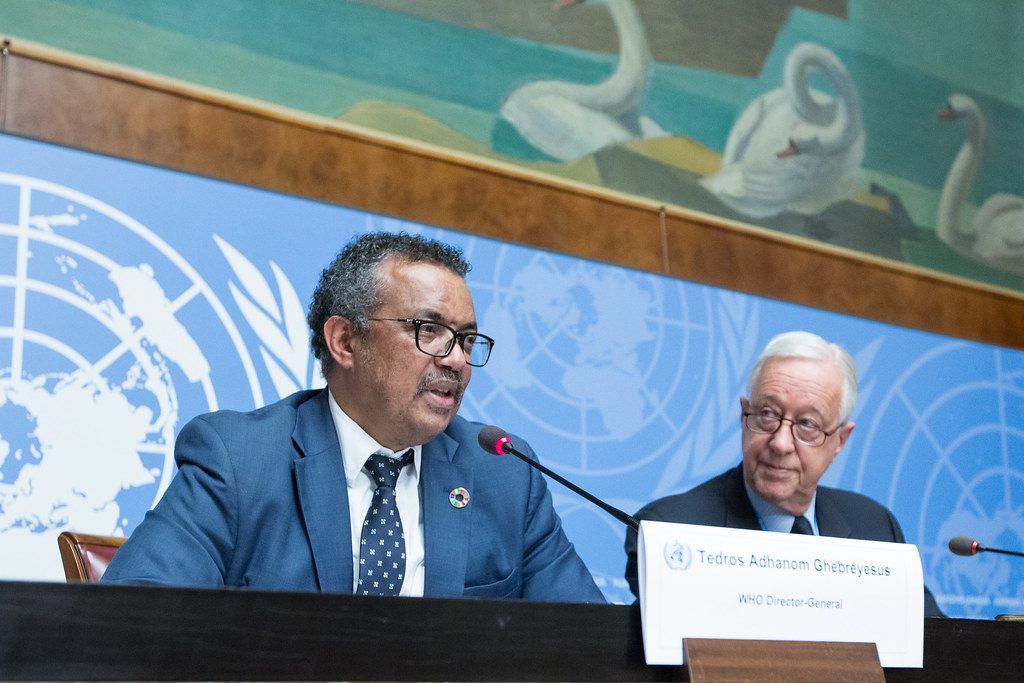
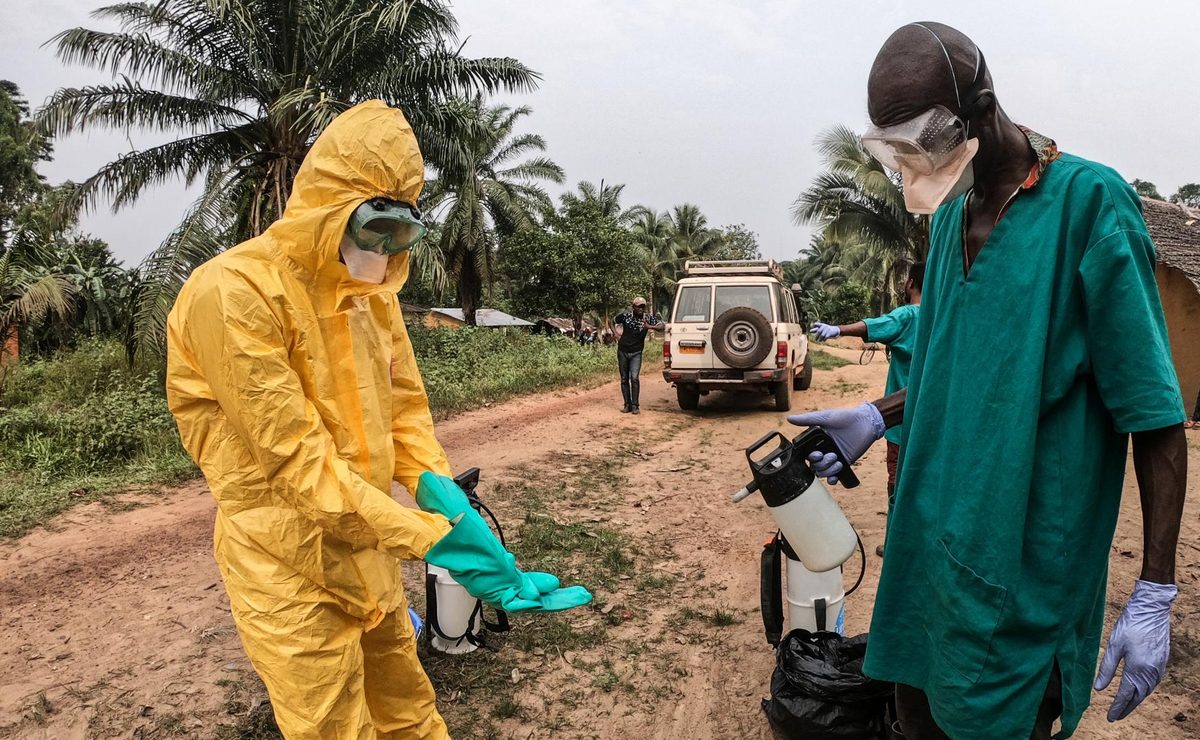
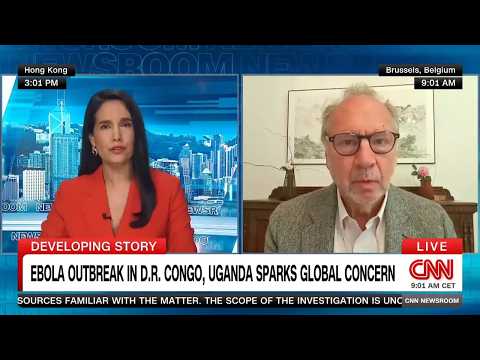
WHO Director-General Tedros warned on May 25 that the epidemic is 'outpacing' containment efforts. More than 900 suspected cases and 220 suspected deaths have been recorded across three DRC provinces. The virus has reached parts of North and South Kivu governed by Rwanda-backed M23 rebels, whose parallel administration in Goma has blocked use of the city's main airport.
Uganda has five confirmed cases and two deaths in Kampala, all linked to travelers from DRC. Dr. Peter Stafford, the American surgeon at Charité Berlin, told family he is 'cautiously optimistic'; his wife and four children are also at Charité under monitoring. A second American from the same area, Dr. Patrick LaRochelle, was evacuated to Prague for isolation after high-risk exposure at a Bunia hospital.
Why it matters
No vaccine exists for this strain, the outbreak is outpacing the response, and rebel-controlled territory is blocking the main supply airport into the outbreak zone.
Questions about this story
Free account needed to ask — your question is kept and asked for you right after sign-up. Answers are public.
0
Can ebola spread far? I thought it was a disease that killed too fast to spread well.
Your instinct is partly right — Ebola's high lethality does slow it down — but it's a brake, not a stop, and the Bundibugyo strain in this outbreak is significantly less fatal than Zaire Ebola, giving infected people longer to spread it.
Why it matters: A lower-fatality strain spreading through conflict zones with blocked airports and porous borders is precisely the scenario that turns a contained outbreak into a regional epidemic.
—Ebola's average R0 (reproduction number) is roughly 1.95 — low compared to measles (~15) or COVID, but above 1, meaning each case on average infects nearly two more without intervention, enough to sustain chains across borders.
—The 2014 West Africa outbreak — the largest in history — proved the 'kills too fast' idea wrong at scale: 28,000+ cases spread across Guinea, Sierra Leone, and Liberia, with further transmission to Nigeria, the US, and Spain via air travel, mostly while patients were febrile but still mobile.
—Bundibugyo's case fatality rate runs 25–40%, versus 60–90% for Zaire ebolavirus — so more infected people survive long enough to travel, making geographic spread more likely than in past outbreaks.
—The current outbreak spans three DRC provinces plus Kampala (Uganda's capital of 1.7 million), driven by mining-related population movement, conflict displacement, and cross-border travel — exactly the conditions that gave the 2014 outbreak its reach.
Some epidemiologists argue Ebola's pandemic risk remains inherently limited: unlike respiratory pathogens, it requires direct contact with bodily fluids, so even a mobile, lower-fatality strain faces a hard ceiling on global spread that COVID-style transmission never did.
Others — including WHO's Emergency Committee — counter that urban spread into Goma and Kampala, combined with conflict-disrupted response capacity and no approved Bundibugyo vaccine, means the current outbreak has more runway than any Ebola event since 2014–2016.
AI-generated with web search — may be wrong. Check the linked sources.
Key Indicators
220
Suspected deaths
Reported across DRC and Uganda as of May 25, 2026, per WHO Director-General briefing. Confirmed deaths total 10.
~900
Suspected cases
101 confirmed; remainder suspected. Spread now confirmed across three DRC provinces — Ituri, Nord-Kivu, and Sud-Kivu — plus five confirmed cases in Uganda.
Up to 50%
Case fatality rate for Bundibugyo strain
Based on prior outbreaks of this Ebola species since 2007.
0
Approved vaccines for Bundibugyo
Ervebo is licensed only for the Zaire strain. CEPI-funded mRNA and viral vector candidates from Moderna and Oxford are in early-stage development; none is deployable at scale. The WHO IHR Emergency Committee confirmed on May 22 that no approved therapeutics exist for Bundibugyo virus disease.
1.7M
Population of Kampala
Five confirmed Bundibugyo cases and two deaths recorded in the Ugandan capital as of May 25. All cases link to travelers from DRC.
18 events
Latest: May 25th, 2026 · 4 months ago
Showing 8 of 18
JK to step
Tap a bar to jump to that date
Jump to
May 2026
Tedros warns epidemic 'outpacing us'; suspected deaths hit 220
LatestCase update
At a press briefing, Tedros said the outbreak 'will get worse before it gets better,' with more than 900 suspected cases and 220 suspected deaths. He said health workers are 'playing catch-up.'
M23 rebel control and community distrust slow response in eastern DRC
Response challenge
NPR and The New Humanitarian reported attacks on treatment centers and community distrust of authorities. Large areas of North and South Kivu are under M23 rebel control; Goma's airport is non-operational, and M23 will allow it to reopen only under its own control — a condition Kinshasa is unlikely to accept.
Uganda confirms three more cases; total rises to five in Kampala
Case update
Uganda's Ministry of Health announced three additional confirmed Bundibugyo cases, all in Kampala and all with clear epidemiological links to DRC travelers. Uganda's total reached five confirmed cases and two deaths.
WHO IHR Emergency Committee issues temporary recommendations
International alert
The first IHR Emergency Committee meeting on the PHEIC published temporary recommendations. The committee confirmed the outbreak does not meet the threshold for a pandemic emergency and noted that no approved vaccine or therapeutic exists for Bundibugyo virus disease.
CDC expands Ebola entry screening to Atlanta; Houston to follow
Travel restriction
Enhanced airport screening expanded to Hartsfield-Jackson Atlanta International Airport effective May 22, with Houston's George Bush Intercontinental set to follow within days. Travelers from DRC, Uganda, and South Sudan may now enter the US only through Dulles, Atlanta, or Houston for mandatory health checks.
Outbreak confirmed in South Kivu, spanning three DRC provinces
Geographic spread
A case in Sud-Kivu Province — linked to travel from Tsopo Province — made South Kivu the third DRC province in the outbreak, alongside Ituri and Nord-Kivu.
Stafford family arrives at Charité Berlin; surgeon says 'cautiously optimistic'
International case
Dr. Peter Stafford's wife Dr. Rebekah Stafford and their four children were admitted to Charité Berlin's special isolation ward, all asymptomatic and under monitoring. Stafford told family he had feared 'wasn't going to make it' before evacuation but is now improving and 'cautiously optimistic.'
White House denies delaying Dr. Stafford's evacuation to the US
Political
The Washington Post reported the White House had resisted allowing Dr. Stafford to return to the US for treatment, citing concerns about the optics of an Ebola patient entering the country. White House spokesman Kush Desai called the account 'absolutely false.'
Second American physician Dr. Patrick LaRochelle evacuated to Prague
International case
Dr. Patrick LaRochelle, an Internal Medicine and Pediatrics physician working in Bunia's Ituri Province, was evacuated to a Prague hospital in a BioBox isolation chamber after high-risk exposure to Bundibugyo ebolavirus. He remained asymptomatic.
WHO reports nearly 600 suspected cases; spread confirmed in North Kivu
Case update
At a media briefing, Tedros reports 51 confirmed cases in Ituri Province and North Kivu — including Goma — with 139 suspected deaths and almost 600 suspected cases. WHO assesses risk as high regionally, low globally.
American physician Dr. Peter Stafford evacuated to Berlin
International case
Dr. Stafford, a missionary surgeon at Nyankunde Hospital in Bunia, was flown to Charité hospital in Germany after testing positive for Bundibugyo ebolavirus. His wife, Dr. Rebekah Stafford, and their four children remain in DRC under monitoring. A second physician, Dr. Patrick LaRochelle, is also being monitored.
US bans entry from DRC, Uganda, and South Sudan
Travel restriction
The United States imposed an entry ban on non-US passport holders who visited DRC, Uganda, or South Sudan in the previous 21 days. The 30-day order does not apply to US citizens or permanent residents. It is the first US entry restriction ever imposed in response to an Ebola outbreak.
WHO declares PHEIC
International alert
Director-General Tedros declares the outbreak a Public Health Emergency of International Concern after Emergency Committee review.
First Ugandan death confirmed
Fatality
A second case is confirmed in Kampala. The patient dies the same day, the first lab-confirmed Bundibugyo death outside DRC in this outbreak.
First confirmed case in Kampala
Cross-border spread
Ugandan health authorities confirm a laboratory-positive Bundibugyo case in Kampala, the country's capital of 1.7 million.
April 2026
WHO activates regional response
Response
The WHO deploys staff and supplies to Goma and Bunia, and warns that the licensed Ervebo vaccine will not protect against this strain.
DRC confirms Bundibugyo Ebola
Lab confirmation
DRC's national reference laboratory identifies the pathogen as Bundibugyo ebolavirus, a rare strain not seen in an outbreak since 2012.
March 2026
Unexplained haemorrhagic deaths in Ituri
Outbreak origin
Health workers in DRC's Ituri province report a cluster of unexplained haemorrhagic fever deaths near the Ugandan border.
Scenarios
1
Outbreak contained at under 1,000 cases through traditional methods
Contact tracing, isolation wards, safe burials, and movement restrictions hold transmission in check. Uganda's response infrastructure, built for the 2022 Sudan-strain outbreak, scales up in Kampala. Ituri clusters wind down through the summer. This is the path WHO modelers consider most likely if cross-border tracing holds.
2
Experimental Bundibugyo therapeutic deployed under emergency use
Possible
Resolves by Nov 30, 2026
Discussed by: Science magazine, CEPI, Sabin Vaccine Institute researchers
Pressure builds on regulators to authorize an experimental monoclonal antibody or vaccine candidate against Bundibugyo under emergency use frameworks. The candidate pool is thin — Sabin's cAd3-EBO-B vaccine entered Phase 1 in 2023 — but a PHEIC unlocks pathways used during the 2014 West Africa response.
3
Outbreak escalates beyond DRC and Uganda
Possible
Resolves by Oct 31, 2026
Discussed by: Africa CDC, Reuters health desk, Imperial College outbreak modelers
Bundibugyo Ebola reaches a third country through movement from Kampala or Ituri. Likely first detections: Kenya, Rwanda, or South Sudan, all of which share porous borders and high travel volume with the affected zone. Africa CDC has flagged this as the central risk justifying the PHEIC.
4
Outbreak grows past 2,000 confirmed and probable cases
Unlikely
Resolves by May 17, 2027
Discussed by: WHO Africa Regional Office, NPR, Manila Times reporting
Urban transmission in Kampala outpaces contact tracing. Without a vaccine to break transmission chains, the outbreak follows a trajectory closer to the 2014-16 West Africa epidemic than the 2018-2020 Kivu response. Underreporting and conflict in Ituri compound counts.
5
M23 control of eastern DRC blocks response access for months
Possible
Resolves by Q3 2026
Discussed by: NPR, The New Humanitarian, The Standard (Kenya)
Rwanda-backed M23 rebels govern large areas of North and South Kivu where cases are now confirmed. Goma airport — the region's main logistics hub for response personnel and supplies — is non-operational. M23 has stated it will allow the airport to reopen only if placed under its control, which Kinshasa is unlikely to accept. If no agreement is reached, the response in those provinces will depend on slower overland routes and secondary airstrips, limiting the speed of case detection and treatment access.
Historical Context
3 moments from history that rhyme with this story — and how they unfolded.
1 of 3
November 2007 – February 2008
Bundibugyo strain first identified (2007)
An outbreak of haemorrhagic fever in Uganda's Bundibugyo district turned out to be a previously unknown species of Ebola. The strain killed 37 of 149 cases — a 25% fatality rate, lower than the Zaire strain but still severe. Ugandan and US CDC scientists characterized the new species and named it after the district.
Then
Uganda contained the outbreak in three months using contact tracing and isolation. No vaccine existed for any Ebola strain at the time.
Now
Bundibugyo joined the four other known Ebola species but received minimal vaccine development attention, because Zaire strain caused most outbreaks and most deaths.
Why this matters now
The 2007 response is the template Uganda is using now. The vaccine gap that existed then still exists for this strain.
2 of 3
August 2014 – March 2016
West Africa Ebola PHEIC (2014)
The WHO declared its third-ever PHEIC after Zaire-strain Ebola spread through Guinea, Sierra Leone, and Liberia. The outbreak killed more than 11,300 people and infected over 28,600 across ten countries before it was declared over. Emergency use of the experimental rVSV-ZEBOV vaccine in Guinea in 2015 showed near-complete protection.
Then
Cases peaked in late 2014 with weekly counts above 950. The PHEIC was lifted in March 2016 after sustained low transmission.
Now
rVSV-ZEBOV became the licensed Ervebo vaccine in 2019, transforming Zaire-strain response. No equivalent shot exists for Bundibugyo or Sudan strains.
Why this matters now
Shows what an Ebola outbreak looks like without a vaccine in place. The 2026 response starts from roughly the same pharmacological position for this strain.
3 of 3
July 2019 – June 2020
Kivu Ebola PHEIC (2019)
WHO declared a PHEIC for the Zaire-strain outbreak in DRC's North Kivu and Ituri provinces after the virus reached Goma, a city of two million. The outbreak killed 2,287 of 3,470 cases — a 66% fatality rate — but ring vaccination with rVSV-ZEBOV reached over 300,000 people and helped end it.
Then
The outbreak ended in June 2020. Vaccination, combined with monoclonal antibody treatments, kept the death toll well below West Africa levels.
Now
Confirmed that ring vaccination plus therapeutics could contain Ebola even in conflict zones. Set the response template DRC is now trying to replicate without the vaccine.
Why this matters now
The 2026 outbreak is in the same region with the same response apparatus, but the central tool of 2019 — Ervebo — does not work against Bundibugyo.