



Pull to refresh
Logo
Daily Brief
Following
Why
Countries race to end mother-to-child transmission of HIV and syphilis

Countries race to end mother-to-child transmission of HIV and syphilis

New Capabilities
By Newzino Staff |

Denmark becomes the first European Union nation validated by the World Health Organization, joining a growing list of 23 countries

Yesterday: Denmark becomes first EU country validated for EMTCT

Overview

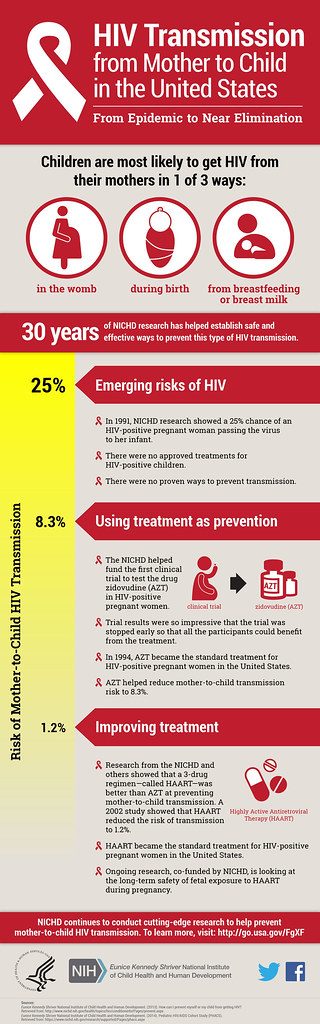
Every year, roughly 120,000 children worldwide are born with HIV they could have avoided. Denmark just proved that number can be zero. On February 27, 2026, the World Health Organization validated Denmark as the first European Union country to eliminate mother-to-child transmission of both HIV and syphilis, confirming that routine prenatal screening and treatment drove new infant infections to zero across four consecutive years.

Key Indicators

23
Countries validated
Total countries and territories validated by the World Health Organization for eliminating mother-to-child transmission of HIV, syphilis, or hepatitis B
0
New infant HIV infections in Denmark
Mother-to-child HIV transmission reduced to zero through routine prenatal screening and treatment
95%+
Screening coverage required
WHO validation requires at least 95% of pregnant women to receive prenatal HIV and syphilis testing
120,000
Children born with HIV globally (2024)
Down 62% from 310,000 in 2010, but still far from elimination worldwide
4.4M
Infant infections prevented since 2000
Children who avoided HIV through prevention-of-mother-to-child-transmission programs globally

Interactive

Exploring all sides of a story is often best achieved with Play.

Ever wondered what historical figures would say about today's headlines?

Sign up to generate historical perspectives on this story.

Sign Up

Debate Arena

Two rounds, two personas, one winner. You set the crossfire.

People Involved

Tedros Adhanom Ghebreyesus
Director-General, World Health Organization (Leading the WHO's Triple Elimination Initiative)
Sophie LΓΈhde
Sophie LΓΈhde
Denmark's Minister for the Interior and Health (Overseeing Denmark's public health response)
Hans Kluge
Hans Kluge
WHO Regional Director for Europe (Leading WHO Europe's elimination efforts)

Organizations Involved

WO
World Health Organization
United Nations Specialized Agency
Status: Administering the global validation process for EMTCT elimination

The United Nations agency responsible for international public health, which created and administers the validation framework countries must meet to be certified for elimination of mother-to-child transmission.

DA
Danish National Health System
National Healthcare System
Status: Validated for EMTCT elimination; pursuing hepatitis B validation

Denmark's universal healthcare system provides free prenatal care including routine HIV, syphilis, and hepatitis B screening to all pregnant women, forming the backbone of the country's elimination achievement.

Timeline

  1. Denmark becomes first EU country validated for EMTCT

    Milestone

    WHO formally announces that Denmark has eliminated mother-to-child transmission of HIV and syphilis, making it the first European Union member state and twenty-third country or territory globally to achieve the certification.

  2. Brazil validated as largest country to achieve EMTCT of HIV

    Milestone

    WHO validates Brazil for elimination of mother-to-child HIV transmission, making it the most populous country and first nation of over 100 million people to earn the certification.

  3. Maldives achieves world's first Triple Elimination

    Milestone

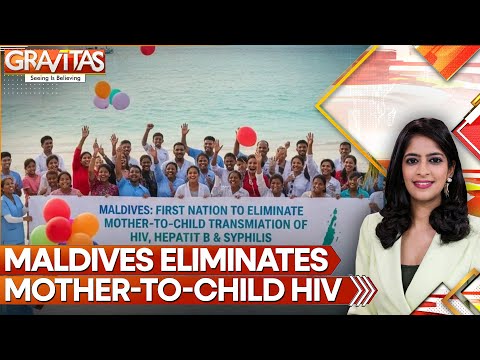
    The Maldives becomes the first country to achieve elimination of mother-to-child transmission of all three diseases: HIV, syphilis, and hepatitis B.

  4. Global committee confirms Denmark meets all targets

    Assessment

    WHO's Global Validation Advisory Committee confirms Denmark has met all required criteria for EMTCT elimination, including transmission rates, screening coverage, and human rights standards.

  5. WHO Regional Committee reviews Denmark's data

    Assessment

    WHO's Regional Validation Committee for Europe assesses Denmark's data on prenatal screening coverage, treatment rates, and transmission outcomes from 2021 to 2024.

  6. World Health Assembly endorses Triple Elimination strategy

    Policy

    The World Health Assembly expands the elimination goal to include hepatitis B alongside HIV and syphilis, creating the Triple Elimination Initiative targeting all three infections by 2030.

  7. Thailand validated as first in Asia

    Milestone

    Thailand becomes the first country in Asia to receive WHO validation for EMTCT of HIV and syphilis, and the first with a large HIV epidemic to achieve elimination.

  8. Cuba becomes first country validated for EMTCT

    Milestone

    WHO validates Cuba as the first country in the world to eliminate mother-to-child transmission of both HIV and syphilis, proving nationwide elimination is achievable.

  9. WHO launches Global Plan to end child HIV infections

    Policy

    The Joint United Nations Programme on HIV/AIDS and the World Health Organization launch the Global Plan towards elimination of new HIV infections among children by 2015, setting the framework for country-by-country validation.

Scenarios

1

Multiple EU nations achieve validation by 2030

Discussed by: WHO Regional Office for Europe, public health analysts tracking the Triple Elimination Initiative

Denmark's validation creates a template for other EU member states with strong universal healthcare systems. Countries like Sweden, Finland, and the Netherlands already have robust prenatal screening programs and may pursue formal WHO validation. Hans Kluge has framed Denmark's achievement as a signal to the rest of the European region. If several EU nations follow within two to three years, it could trigger a domino effect across high-income countries.

2

Denmark achieves Triple Elimination, adding hepatitis B

Discussed by: WHO and Danish Ministry of Health officials who noted Denmark is already on track for hepatitis B validation

Denmark is pursuing validation for elimination of mother-to-child hepatitis B transmission in addition to its HIV and syphilis certification. If successful, it would become the second country after the Maldives to achieve Triple Elimination. WHO is actively working with Denmark on this process, and the country's existing screening infrastructure already covers hepatitis B testing in pregnancy.

3

Global progress stalls as congenital syphilis surges in high-income holdouts

Discussed by: Centers for Disease Control and Prevention (United States), European Centre for Disease Prevention and Control, global health researchers

While the validated-country list grows, congenital syphilis rates are rising sharply in the United States and parts of Europe. The United States reported nearly 4,000 cases in 2024, up 700% in a decade. If countries with fragmented prenatal care fail to adopt universal screening, the global target of elimination by 2030 becomes unreachable even as individual nations succeed. The divergence between countries that screen universally and those that don't could widen.

4

WHO validates 30 or more countries by 2030, approaching regional elimination

Discussed by: WHO Triple Elimination Initiative planners, UNAIDS

The pace of validations has accelerated, from one country in 2015 to multiple validations per year by 2025. If the trend continues and more countries in sub-Saharan Africa follow Botswana and Namibia's path toward certification, the initiative could cross 30 validated countries well before 2030. Brazil's validation showed that even large, complex nations can achieve the target using subnational phased approaches.

Historical Context

Cuba's EMTCT validation (2015)

June 2015

What Happened

Cuba became the first country in the world to receive WHO validation for eliminating mother-to-child transmission of both HIV and syphilis. An international expert mission visited Cuba in March 2015 and confirmed that in 2013, only two babies were born with HIV and five with congenital syphilis in the entire country. Cuba achieved this through universal prenatal care, partner testing, treatment, cesarean deliveries, and breastfeeding substitution for HIV-positive mothers.

Outcome

Short Term

The validation proved that nationwide elimination of mother-to-child transmission was achievable, not just a theoretical target. It created the template other countries would follow.

Long Term

Cuba's success launched a wave of validations, particularly in the Caribbean and small island nations, and prompted WHO to expand the initiative to include hepatitis B and create the Triple Elimination framework.

Why It's Relevant Today

Cuba demonstrated the proof of concept that Denmark and 21 other countries have now replicated. The core mechanism is the same: universal screening early in pregnancy, immediate treatment, and follow-through at delivery. Denmark's achievement extends this model into the European Union for the first time.

Thailand's EMTCT validation (2016)

June 2016

What Happened

Thailand became the first country in Asia and the first with a large HIV epidemic to achieve WHO validation. In 2000, an estimated 1,000 Thai children were infected with HIV through mother-to-child transmission annually. By 2015, that number had fallen to 85, with 98% of pregnant women living with HIV receiving antiretroviral therapy.

Outcome

Short Term

Thailand's validation showed that countries with significant HIV burdens, not just low-prevalence nations, could achieve elimination through systematic screening and treatment.

Long Term

Thailand's success encouraged higher-burden countries in Africa and South America to pursue validation, leading to Botswana, Namibia, and eventually Brazil joining the list.

Why It's Relevant Today

Thailand proved that elimination is not limited to small or low-burden countries. Denmark's case adds another dimension: it shows that wealthy EU nations with strong healthcare systems, which might have assumed the problem was already solved informally, benefit from the rigor of formal WHO validation.

Global smallpox eradication certified (1980)

May 1980

What Happened

The World Health Assembly formally declared smallpox eradicated on May 8, 1980, three years after the last naturally occurring case was found in Ali Maow Maalin, a hospital cook in Merca, Somalia, in October 1977. A Global Commission of scientists from 19 nations certified the eradication in December 1979 after intensive country-by-country verification.

Outcome

Short Term

Routine smallpox vaccination ceased worldwide, saving billions of dollars annually and ending a disease that had killed an estimated 300 million people in the twentieth century alone.

Long Term

Smallpox remains the only human disease ever fully eradicated. It established the model of independent expert commissions verifying country-by-country elimination that WHO now uses for the EMTCT initiative.

Why It's Relevant Today

WHO's EMTCT validation process directly descends from the smallpox eradication verification model: independent expert committees, standardized criteria, and country-by-country certification. The difference is that EMTCT elimination must be continuously maintained rather than achieved once, making each validation an ongoing commitment rather than a permanent victory.

Sources

(12)