
Pull to refresh
Logo
Daily Brief
Following
Why Sign Up
Africa's HPV vaccine scale-up

Africa's HPV vaccine scale-up

New Capabilities
By Newzino Staff |

Sub-Saharan nations roll out cervical cancer prevention at population scale

Today: Burundi launches national HPV vaccination program

Overview

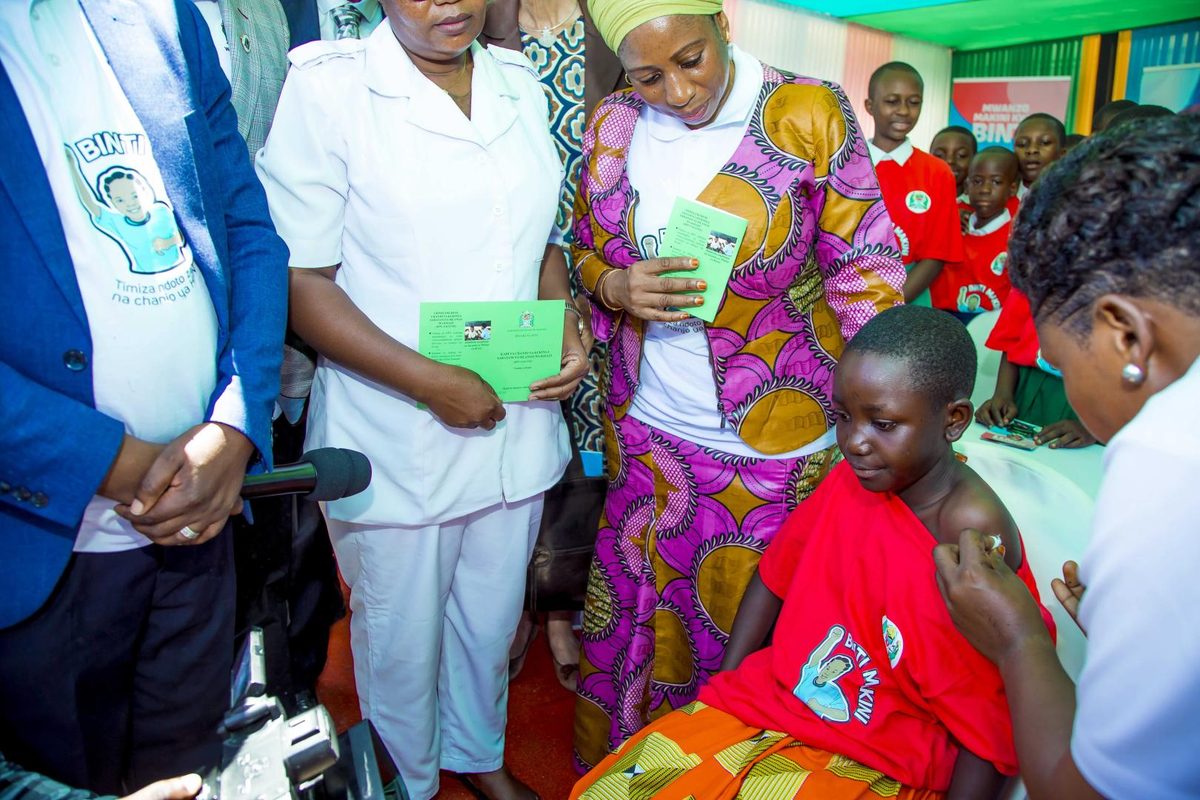
Cervical cancer kills roughly one African woman every seven minutes. On April 29, 2026, Burundi became the latest country to give its girls a shot at avoiding that fate, launching a national human papillomavirus (HPV) vaccination program with backing from Gavi, UNICEF, and the World Health Organization (WHO).

Why it matters

Nearly all cervical cancer is caused by a virus a vaccine can prevent—and the women dying from it are overwhelmingly in countries that until recently had no access.

Key Indicators

350K
Annual cervical cancer deaths worldwide
About 94% occur in low- and middle-income countries.
31
African countries with HPV programs
Up from 11 in 2019; Burundi joins the list in 2026.
47%
Africa HPV coverage at end of 2024
More than double the 18% recorded in 2019.
90%
WHO target by 2030
Share of girls fully vaccinated by age 15 needed for elimination.
1.4M
Future deaths Gavi projects averted
From the 86 million girls reached through its program by end of 2025.
1,126
Burundi cervical cancer deaths, 2017-2022
From 1,581 diagnosed cases over the same period.

Interactive

Exploring all sides of a story is often best achieved with Play.

Ever wondered what historical figures would say about today's headlines?

Sign up to generate historical perspectives on this story.

Sign Up

Debate Arena

Two rounds, two personas, one winner. You set the crossfire.

People Involved

Organizations Involved

Timeline

  1. Burundi launches national HPV vaccination program

    Program Launch

    Burundi adds HPV vaccine to routine immunization for girls aged 9-14, combining school-based delivery with community outreach to reach girls outside the education system.

  2. Sierra Leone exceeds HPV vaccination target

    Program Milestone

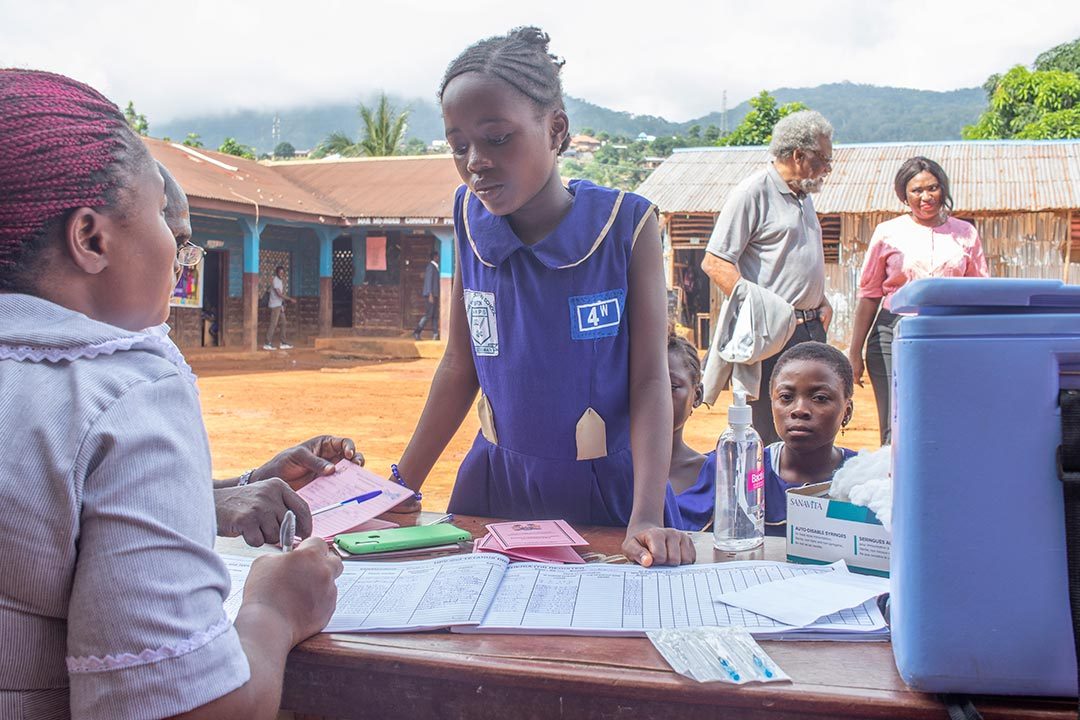
    A government-led campaign reaches 116% of its target, vaccinating more than one million adolescent girls.

  3. Nigeria launches HPV program for 7.7 million girls

    Program Launch

    Africa's most populous country begins HPV vaccination, dramatically expanding the regional total of girls covered.

  4. Gavi approves $600M+ HPV program revitalization

    Funding

    Gavi's board commits over $600 million through 2025 with a new target of reaching 86 million girls and averting 1.4 million future cervical cancer deaths.

  5. WHO recommends single-dose HPV schedule

    Policy

    After data showed one dose offers comparable protection to two or three, WHO endorses single-dose schedules, cutting program cost and logistics roughly in half.

  6. WHO launches global cervical cancer elimination strategy

    Policy

    WHO formally adopts the 90-70-90 targets, defining what elimination means in measurable terms and giving countries a shared scoreboard.

  7. Burundi begins HPV pilot in Ngozi and Rumonge

    Pilot

    A two-year pilot vaccinates more than 12,000 girls aged 9-13 across two health districts, achieving 85% coverage and laying the operational groundwork for a national program.

  8. Rwanda becomes first African country to launch national HPV program

    Program Launch

    Rwanda vaccinates 93,888 sixth-grade girls in its first round, reaching 95% coverage and proving population-scale HPV vaccination is feasible in a low-income country.

Scenarios

1

Africa hits 90% HPV coverage target by 2030

Discussed by: WHO Regional Office for Africa, Gavi, The Lancet Global Health

Continental coverage continues its current trajectory—from 18% in 2019 to 47% in 2024—and reaches 90% by 2030. This requires the remaining African countries without programs to launch quickly, current programs to scale toward universal reach, and donor funding to hold through the next Gavi replenishment cycle. A handful of countries including Rwanda, Botswana, and Sierra Leone are already at or above the threshold, providing a template.

2

Funding shortfalls slow rollout, leaving coverage stalled below 70%

Discussed by: Gavi, Devex, World Bank

Donor fatigue, competing health priorities, and post-pandemic budget constraints leave Gavi unable to fully fund continued scale-up. Gavi has publicly estimated that current funding gaps could result in 600,000 fewer lives saved by the end of the decade. Coverage plateaus in the 50-70% range across much of the continent—enough to prevent many deaths but not enough to drive cervical cancer toward elimination.

3

Single-dose schedule and self-sampling screening accelerate elimination

Discussed by: WHO, IARC, The Lancet

The 2022 single-dose recommendation roughly halves per-girl program cost, freeing resources for the screening and treatment legs of the 90-70-90 strategy. Combined with rapid scale-up of HPV self-sampling screening in adult women, the next decade sees not just rising vaccination but the first measurable decline in cervical cancer incidence in sub-Saharan Africa.

Historical Context

Rwanda's national HPV launch (2011)

April 2011

What Happened

Rwanda became the first African country—and the first low-income country anywhere—to introduce HPV vaccination at population scale, after President Paul Kagame's government negotiated direct access to Merck's Gardasil. In its first round, 93,888 sixth-grade girls received the vaccine, reaching 95% coverage.

Outcome

Short Term

Rwanda demonstrated that high HPV coverage was achievable in a low-income setting, contradicting the assumption that the vaccine was only viable for wealthy countries.

Long Term

Subsequent surveillance showed HPV-16/18 infection rates in vaccinated cohorts falling sharply, providing the first hard evidence that the vaccine works at population scale in sub-Saharan Africa and giving every later rollout a working template.

Why It's Relevant Today

Burundi's launch follows the operational model Rwanda established 15 years earlier: school-based delivery anchored to a specific girls' age group, with community outreach for those outside school. Rwanda showed it could be done; Burundi is one more country choosing to do it.

WHO smallpox eradication (1980)

1967-1980

What Happened

WHO's intensified smallpox eradication program coordinated mass vaccination across more than 50 countries, ending in the disease's certified eradication in 1980—the only human disease ever fully eliminated.

Outcome

Short Term

Smallpox transmission ceased, ending an estimated 300 million deaths the disease had caused in the 20th century alone.

Long Term

The campaign established the playbook for vaccine-led disease elimination: clear targets, coordinated international financing, and country-level execution backed by global technical guidance.

Why It's Relevant Today

WHO's 90-70-90 framework borrows directly from the smallpox model. Cervical cancer cannot be eradicated like smallpox—HPV will keep circulating—but the disease it causes can be driven below epidemiological significance using the same combination of vaccination, surveillance, and global coordination.

Australia's HPV elimination trajectory

2007-present

What Happened

Australia launched a national HPV program in 2007 with high coverage of both girls and, from 2013, boys. By the early 2020s, modeling showed Australia on track to become the first country to eliminate cervical cancer as a public health problem, possibly by 2035.

Outcome

Short Term

HPV infection rates among young Australian women fell more than 90% within a decade, and rates of high-grade cervical lesions dropped sharply in vaccinated cohorts.

Long Term

Australia is now the canonical proof point that elimination is achievable in a real population—not just a modeling exercise—provided coverage is high and screening is integrated.

Why It's Relevant Today

Australia shows what the destination looks like when the 90-70-90 strategy works. Burundi and its peers are at the start of a path Australia walked with vastly more resources—the question is whether the single-dose schedule and Gavi's financing can let lower-income countries arrive at the same place.

Sources

(9)