


Pull to refresh
Logo
ICON raises $200M to scale its robotic home construction systems

ICON raises $200M to scale its robotic home construction systems

Money Moves

Baillie Gifford and BlackRock co-lead the round at a $1.4 billion valuation as the Austin company pivots from building homes to selling the robots.

Yesterday: ICON raises $200M Series D

Overview

Updated 2 hours ago

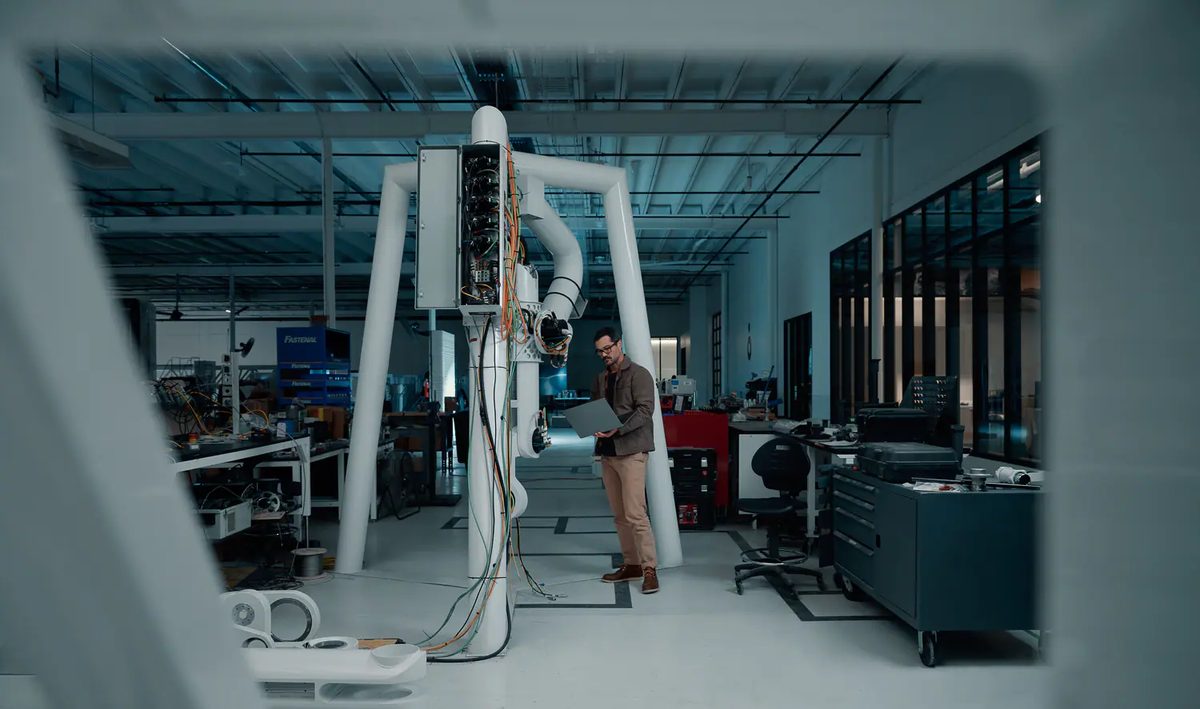
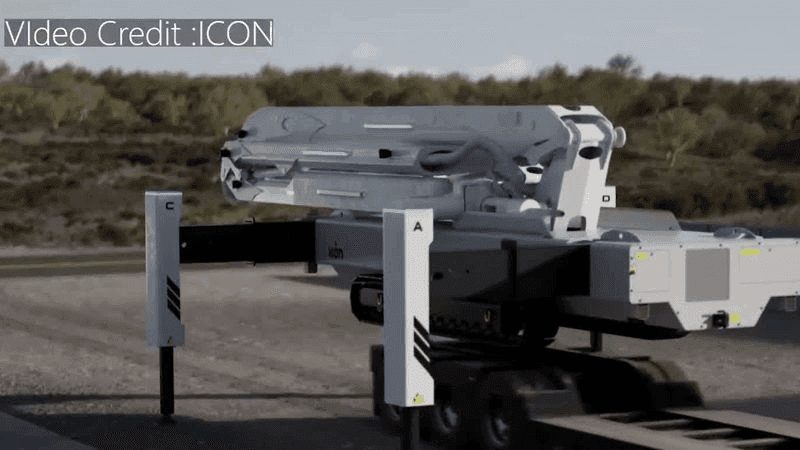
ICON printed its 270-plus homes with its own robots. Now it's selling the robots — the Austin company raised $200 million on October 13 to manufacture the Titan multi-story printing system and put it in other builders' hands.

Construction is a $16 trillion industry that has barely changed in decades. The US is short an estimated 4 million homes, and 41% of the construction workforce is expected to retire by 2031. Baillie Gifford and BlackRock are betting robotics close that gap.

Why it matters

If robotic construction scales, American homes get built faster and cheaper against a 4-million-unit shortage and a retiring workforce.

Questions about this story

Free account needed to ask — your question is kept and asked for you right after sign-up. Answers are public.

No questions yet — be the first to ask.

Key Indicators

$200M
Series D raise
New funding round co-led by Baillie Gifford and BlackRock.
$1.4B
Post-money valuation
ICON's valuation after the Series D; total funding now $700 million.
270+
Homes and structures built
Across five US states and two countries since founding.
4x
2026 revenue growth pace
ICON says it is on track to quadruple revenue this year.
10x
Titan reservations vs forecast
CEO Jason Ballard says paid deposits for Titan systems run 10 times what the company projected for next year.

Voices

Curated perspectives — historical figures and your fellow readers.

Ever wondered what historical figures would say about today's headlines?

Sign up to generate historical perspectives on this story.

People Involved

Organizations Involved

Timeline

2017 October 2026

5 events Latest: Yesterday
Tap a bar to jump to that date
  1. ICON raises $200M Series D

    Latest Funding

    Baillie Gifford and BlackRock co-lead the round at a $1.4 billion valuation, bringing total funding to $700 million.

  2. Wells Fargo partnership announced

    Partnership

    Wells Fargo becomes ICON's preferred lender, offering builder financing for Titan systems and buyer incentives.

  3. Titan printing system launches commercially

    Product Launch

    ICON's multi-story robotic construction system becomes available to external builders for the first time.

  4. Fort Bliss barracks groundbreaking

    Deployment

    ICON breaks ground on 10 barracks for the US Army, its largest military deployment of robotic construction.

  5. ICON founded in Austin

    Founding

    Jason Ballard, Evan Loomis, and Alex Le Roux start ICON to develop robotic construction systems.

Scenarios

1

ICON deploys 100+ Titan systems as robot construction goes mainstream

Likely Resolves by End of 2027

Discussed by: ICON leadership and investors, citing 10x reservation demand from both large public builders and small private firms

Titan reservations are running ten times ICON's forecast, and Wells Fargo financing removes the mortgage barrier. If production at the Austin factory ramps on schedule, Titan systems spread across Texas, Florida, and Washington, DC, and the company's revenue growth — already on a 4x pace for 2026 — would compound through 2027.

2

ICON files for IPO after reaching construction-scale revenue

Possible Resolves by End of 2028

Discussed by: Jason Ballard in CNBC interview; industry analysts watching construction-tech exits

Ballard said he sees a potential IPO in the future. If the 4x revenue pace for 2026 holds and the company at least doubles again in 2027 — as Ballard predicted — ICON would have the growth profile for a public listing. A filing would let early investors, including Baillie Gifford and BlackRock, realize returns.

3

Titan adoption stalls as builders resist new construction methods

Possible Resolves by End of 2027

Discussed by: Skeptics including valueaddvc.com, which noted 270 homes after nine years is small against the 4-million-home gap

Construction is a conservative industry, and builders may resist changing workflows even with lower costs. Regulatory approval for new building methods varies by jurisdiction, and the 40% cost reduction requires sustained demand. If Titan deployments stall, ICON's revenue growth would fall short of projections and the company would need another funding round before reaching profitability.

Historical Context

3 moments from history that rhyme with this story — and how they unfolded.

March 2006

Amazon Web Services launch (2006)

Amazon had spent years building massive internal computing infrastructure for its retail business. In 2006 it began selling that infrastructure — storage and computing capacity — to outside customers as Amazon Web Services.

Then

AWS became Amazon's profit engine, generating billions in revenue within a decade.

Now

Amazon transformed from an online retailer into a platform company, and cloud computing became a core industry.

Why this matters now

ICON is making the same shift: it built printers for its own homes, proved the technology, and now sells the Titan system to other builders. The question is whether robotic construction becomes the AWS of housing.

2012-2018

Tesla production ramp (2012-2018)

Tesla proved electric vehicles with the Roadster and Model S, then faced the brutal problem of scaling production with the Model 3. The company nearly failed — hitting production hell, cash crunches, and factory bottlenecks — before eventually reaching volume manufacturing.

Then

Tesla lost billions during the ramp but established EVs as viable mass-market products.

Now

The company became the most valuable automaker and forced the industry to follow.

Why this matters now

ICON's Titan expansion faces the same hurdle: going from building a few hundred structures with company-owned machines to manufacturing and deploying systems at scale. The hard part is not the printer — it's the production line.

1947-1951

Levittown mass-produced housing (1947-1951)

William Levitt used assembly-line construction methods to build affordable single-family homes for returning WWII veterans. His four bedroom houses sold for under $8,000, and 17,000+ homes went up in a few years.

Then

Levittown made homeownership attainable for millions of Americans and became the model for postwar suburbs.

Now

The mass-production approach proved housing demand responds to lower costs — but construction methods stayed manual.

Why this matters now

The demand for faster, cheaper homes is 75 years old. What's new is replacing assembly-line labor with robots that print walls on-site. ICON's FormCrete material is rated for 175 mph winds and 2+ hour fire resistance — structural properties manual framing can't match.

Sources

(6)