
Pull to refresh
Logo
Hexagon to acquire Rocscience, linking live ground monitoring to engineering simulation

Hexagon to acquire Rocscience, linking live ground monitoring to engineering simulation

Money Moves

Swedish technology group pays $535 million for Toronto geotechnical software maker

Today: Hexagon signs $535 million deal for Rocscience

Overview

Updated 1 hour ago

Hexagon AB, the Swedish measurement-technology group, agreed on October 9 to buy Rocscience, a Toronto maker of geotechnical engineering software, for $535 million. The seller is private-equity firm TA Associates along with Rocscience's founders and management; closing is expected in the fourth quarter of 2026.

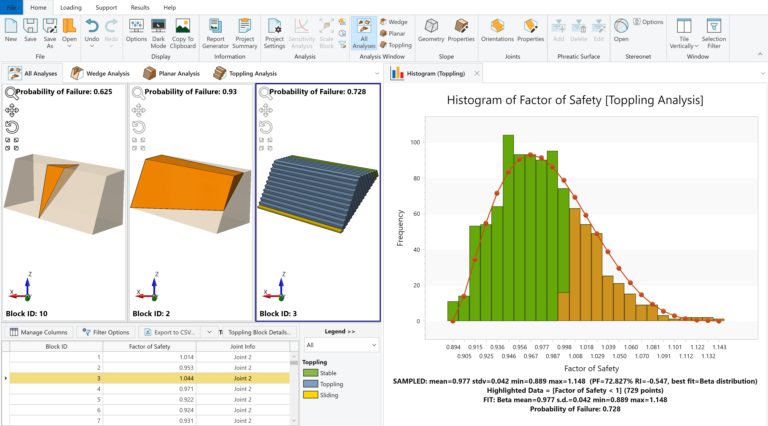
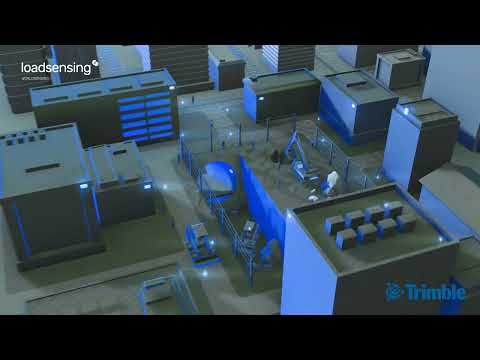
The deal pairs Hexagon's radar sensors, which continuously measure ground movement and structural conditions, with Rocscience's models of how rock, soil, and structures behave. Together they create a loop in which live sensor data automatically recalibrates engineering models from design through construction and operations — earlier detection of emerging risks, faster intervention, and less manual analysis time for mining and infrastructure customers.

Why it matters

If it closes, mining and infrastructure engineers get a closed loop where live radar data keeps recalibrating ground-stability models instead of being analyzed by hand.

Questions about this story

Free account needed to ask — your question is kept and asked for you right after sign-up. Answers are public.

No questions yet — be the first to ask.

Key Indicators

$535M
Enterprise value of Rocscience
Price on a cash-free, debt-free basis.
~$50M
Expected 2026 revenue
Approaching $50 million in calendar 2026.
80%+
Share of revenue from recurring subscriptions
Annual recurring revenue is over 80 percent of total revenue.
40%+
EBITAC margin
Earnings margin expected above 40 percent, helping make the deal accretive from closing.
125
Countries where Rocscience software is used
Customers span mining, civil engineering, and energy sectors.

Voices

Curated perspectives — historical figures and your fellow readers.

Ever wondered what historical figures would say about today's headlines?

Sign up to generate historical perspectives on this story.

People Involved

Organizations Involved

Timeline

January 1996 October 2026

3 events Latest: Today
  1. Hexagon signs $535 million deal for Rocscience

    Today Acquisition

    Hexagon agrees to buy Rocscience at a $535 million enterprise value; TA sells its full stake, closing expected in Q4 2026.

  2. TA Associates takes first institutional stake

    Investment

    TA becomes Rocscience's first institutional investor and works with the company on acquisitions and AI product work.

  3. Rocscience founded in Toronto

    Founding

    Dr. John Curran establishes Rocscience as an independent company at the University of Toronto.

Scenarios

1

Hexagon closes Rocscience deal, launches integrated monitoring platform

Likely Resolves by End of 2026

Discussed by: Hexagon's own announcement, which frames closing as expected in Q4 2026

The acquisition clears customary closing conditions and closes as scheduled. Hexagon then begins pairing Rocscience's modeling software with its radar monitoring hardware, releasing a combined offering that feeds live sensor data into ground-stability models. The deal is modest in size for Hexagon but demonstrates the sensor-to-simulation convergence the company is betting on.

2

Closing slips past Q4 2026 on regulatory or procedural delays

Unlikely Resolves by Q1 2027

Discussed by: Standard antitrust and merger-control review for a cross-border software deal

Customary conditions — merger control review, regulatory approvals — take longer than expected, pushing the closing into 2027. The deal remains on track but misses the announced timeline. This would be a schedule issue rather than a deal-killer, since geotechnical software faces little antitrust scrutiny.

3

Hexagon ships a combined monitoring-simulation product in 2027

Possible Resolves by End of 2027

Discussed by: The strategic rationale in Hexagon's announcement, which describes a continuous sensor-to-model feedback loop

After closing, Hexagon integrates Rocscience's products with its Radar & Monitoring Division and brings a combined offering to market — for example, radar slope monitoring that automatically recalibrates stability models. This scenario tests whether the promised 'closed loop' becomes an actual product, not just a slide in a press release.

Historical Context

2 moments from history that rhyme with this story — and how they unfolded.

2010

Hexagon's acquisition of Intergraph (2010)

Hexagon bought Intergraph, a U.S. geospatial software company, in a deal that made the Swedish group a major player in mapping and location intelligence software, not just measurement hardware.

Then

Intergraph became a core division and the foundation of Hexagon's geospatial software franchise.

Now

It established a pattern of Hexagon buying software companies to complement its hardware, the same playbook behind the Rocscience deal.

Why this matters now

The Rocscience acquisition follows the model Hexagon has used for over a decade: acquire software that sits on top of its sensing hardware and pair the two into an integrated offering.

2010s-present

Growth of digital twin modeling in mining and infrastructure (2010s-present)

Mining and civil engineering operators began building 'digital twins' — live computer models of physical assets updated by sensor data — to monitor slope stability, tunnel deformation, and dam performance in near real time.

Then

Monitoring systems and modeling software grew into adjacent markets sold by different vendors.

Now

The trend set up the convergence Hexagon and Rocscience are betting on: live sensor feeds that automatically update engineering models rather than manual analysis.

Why this matters now

Rocscience's models and Hexagon's radar sensors sit on opposite sides of the same digital-twin workflow. The acquisition aims to close the gap between them.

Sources

(5)