Sixty-five percent of American households can't afford a median-priced new home, with the typical house costing more than five times median household income—the worst gap since the early 1970s. The country is short four million homes and falling further behind each year.
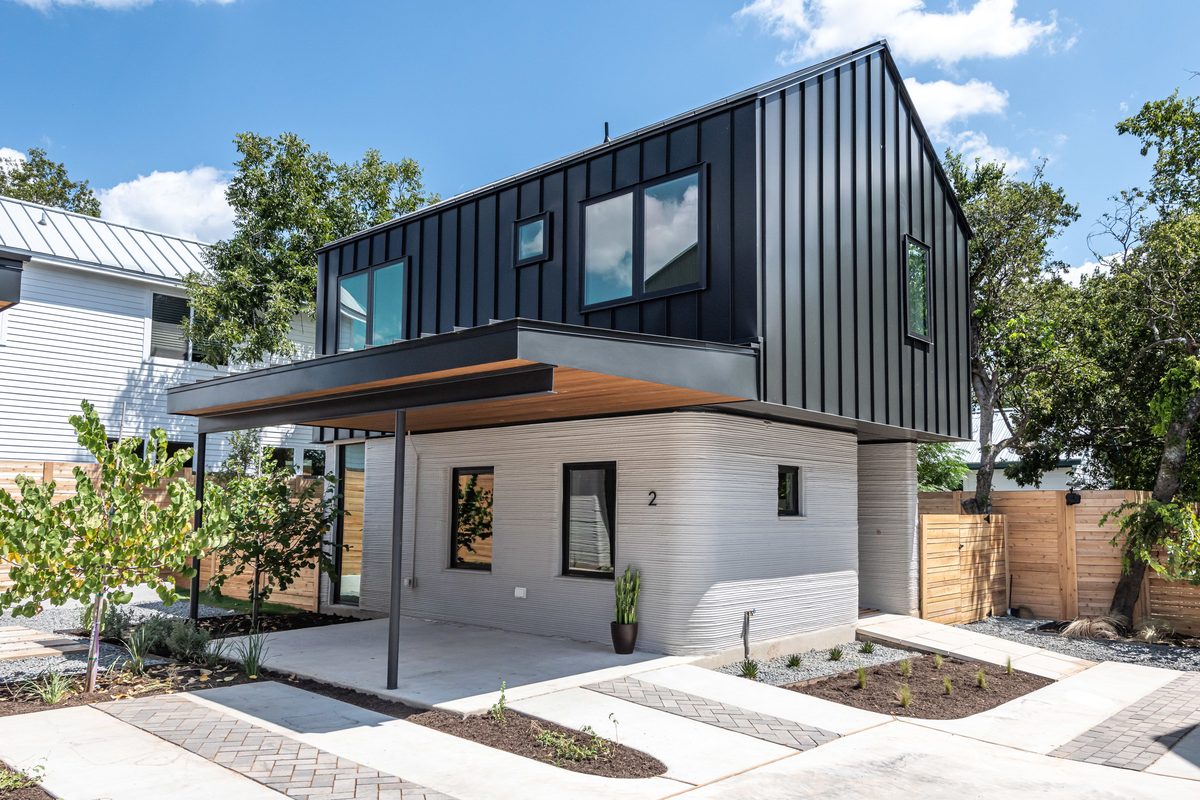
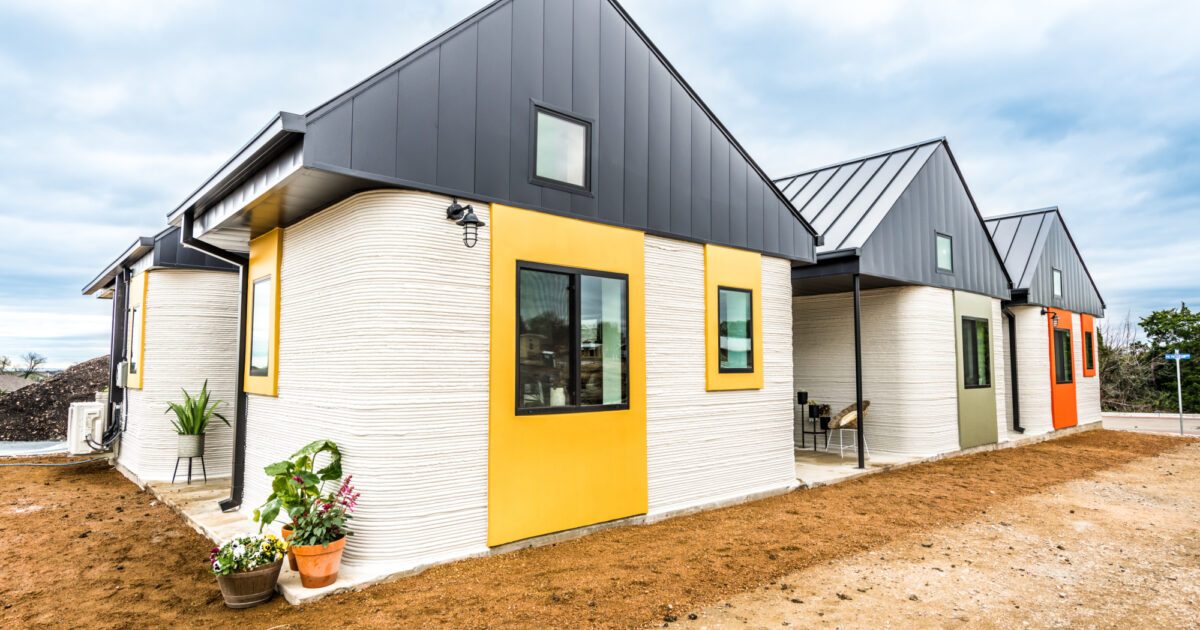
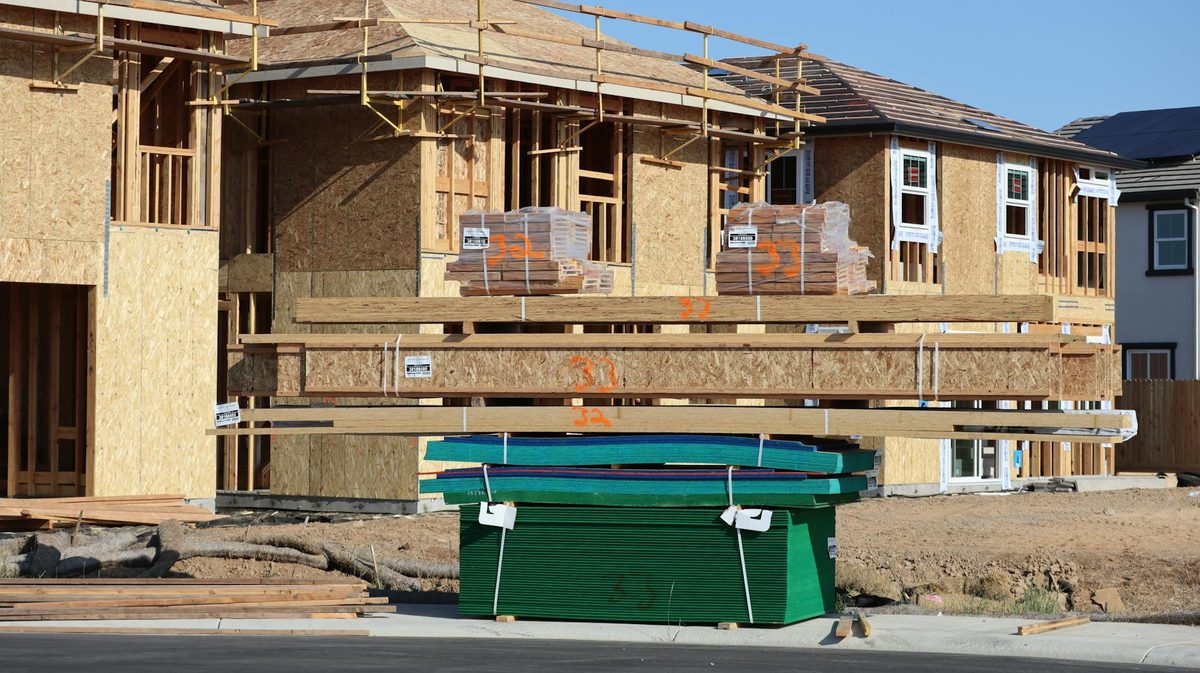
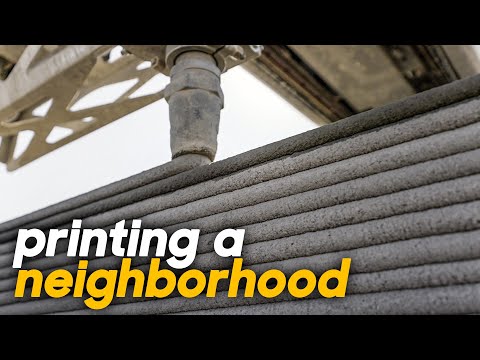
Startups are betting the bottleneck is construction methods, not supply. Geoship, developing factory-made geodesic domes from bioceramic composites, is the latest entrant in a growing field that includes ICON's 3D-printed concrete neighborhoods in Texas, Alquist 3D's printed homes in rural Virginia, and cross-laminated timber construction. Each approach targets stick-built construction's main problems: it's slow, labor-intensive, and increasingly expensive, with skilled workers retiring four times faster than new ones enter.
Why it matters
With four million fewer homes than needed and construction costs rising faster than wages, how homes get built determines who can afford one.
15 events
Latest: April 10th, 2026 · 3 months ago
Showing 8 of 15
JK to step
Tap a bar to jump to that date
Jump to
April 2026
Geoship launches affordable bioceramic dome homes
LatestProduct Launch
Geoship announced the launch of its bioceramic geodesic dome homes, factory-produced from calcium-phosphate composite panels and designed for rapid on-site assembly at a target price of $50,000 to $150,000.
March 2026
US housing shortage surpasses four million units
Data
Realtor.com reported the national housing inventory gap grew to 4.03 million homes, up from 3.8 million the prior year, as construction failed to keep pace with household formation.
February 2026
Housing for the 21st Century Act passes the House
Policy
The House of Representatives passed legislation aimed at modernizing housing finance and incentivizing supply-side construction reforms.
December 2025
US mass timber projects surpass 2,500
Milestone
The number of multi-family, commercial, or institutional mass timber projects in progress or completed in the United States reached 2,598.
August 2025
Bipartisan housing supply bill introduced in Congress
Policy
The Revitalizing Opportunities and Avenues for Development to Housing Act was introduced to increase affordable housing supply through financial incentives and regulatory reform.
February 2025
ICON raises another $56 million
Funding
ICON raised $56 million in additional funding led by Norwest and Tiger Global to expand its 3D-printed home platform.
August 2024
Portland airport opens with mass timber terminal
Construction
Portland International Airport opened its new main terminal, one of the world's most ambitious mass timber construction projects.
January 2024
Hempcrete enters US building code
Regulation
Hemp-based building materials were included as an appendix in the 2024 International Residential Code, marking the first federal code recognition of the material.
September 2023
Mighty Buildings raises $52 million
Funding
Mighty Buildings raised $52 million to scale its 3D-printed prefabricated panel production in Oakland, California.
December 2022
World's largest 3D-printed neighborhood breaks ground
Construction
ICON began construction on Wolf Ranch in Georgetown, Texas—100 homes co-designed with Bjarke Ingels Group, priced from $400,000 to $600,000.
November 2022
First 3D-printed zero-net-energy home completed
Milestone
Mighty Buildings completed what it called the world's first 3D-printed zero-net-energy home in California.
ICON wins $60 million NASA lunar construction contract
Contract
NASA awarded ICON a contract to develop 3D-printing technology for building structures on the moon.
February 2022
ICON valued at $2 billion
Funding
ICON raised an additional $185 million in a round led by Tiger Global, bringing its valuation to approximately $2 billion.
August 2021
ICON raises $207 million for 3D-printed housing
Funding
ICON closed a $207 million Series B round led by Norwest Venture Partners after reporting 400% year-over-year revenue growth.
March 2018
First permitted 3D-printed home in the US
Milestone
ICON debuted a 350-square-foot 3D-printed house at South by Southwest in Austin, Texas, printed in approximately 48 hours.
Historical Context
3 moments from history that rhyme with this story — and how they unfolded.
1 of 3
1947-1951
Levittown and postwar mass production housing (1947-1951)
After World War II, six million Americans were doubled up with relatives and 500,000 lived in surplus military Quonset huts. William Levitt adapted automobile assembly-line techniques to homebuilding on Long Island, New York, completing one house every 16 minutes at peak production. He built 17,500 homes priced at $7,000 each—purchasable with zero down payment at $58 per month.
Then
Levittown proved that factory-inspired methods could slash housing costs and construction time, spawning imitators across the country and establishing the template for postwar suburban development.
Now
The single-family-home-on-a-large-lot model Levitt popularized became encoded in zoning laws nationwide. Those same zoning restrictions now constitute the primary legal barrier to building the denser, more affordable housing the country needs—an ironic legacy of the last great housing affordability breakthrough.
Why this matters now
Today's alternative construction startups are attempting what Levitt did in 1947: apply industrial production methods to an industry that still builds largely by hand. The question is whether bioceramic domes and 3D-printed concrete can overcome the same regulatory and cultural resistance that ultimately constrained manufactured housing.
2 of 3
1960-1976
The manufactured housing boom (1960s-1976)
Factory-built mobile homes surged in the 1960s, and by the early 1970s they accounted for more than one-third of all new single-family homes sold in the United States—the only time factory-built housing achieved mass-market scale without government subsidies. A typical manufactured home cost 20-35% less per square foot than a site-built equivalent.
Then
The boom made homeownership accessible to millions of lower-income families. Today approximately 22 million Americans live in manufactured homes.
Now
The 1976 federal manufactured housing code (the Housing and Urban Development Code) standardized quality but also created regulatory rigidity. Zoning restrictions in most municipalities banned manufactured homes from desirable neighborhoods. Financing remained difficult—manufactured homes were classified as personal property rather than real estate, carrying higher interest rates. The Federal Reserve Bank of Minneapolis has called this 'the first and only manufactured housing boom,' noting that regulatory and financial barriers prevented a repeat.
Why this matters now
The manufactured housing story illustrates both the promise and the peril for today's innovators. Factory production demonstrably cuts costs—but zoning exclusion, financing barriers, and social stigma can prevent even proven, affordable alternatives from reaching the people who need them most.
3 of 3
2015-2021
Katerra's collapse (2015-2021)
Katerra, a construction technology startup backed by SoftBank's Vision Fund, raised approximately $2 billion to vertically integrate modular construction—designing, manufacturing, and assembling buildings under one roof. The company promised to cut construction costs by up to 50% through factory production and software-driven design. At its peak it employed over 8,000 people across multiple countries.
Then
Katerra filed for bankruptcy in June 2021, burning through its capital on rapid expansion, multiple acquisitions, and a costly pivot from commercial to residential construction. Thousands of workers lost their jobs and projects were left incomplete.
Now
The failure chilled venture capital enthusiasm for construction technology and became a cautionary tale about the gap between Silicon Valley speed and construction-industry reality. It demonstrated that abundant capital alone cannot overcome the fragmented, locally regulated nature of the building industry.
Why this matters now
Every new construction technology company—Geoship, ICON, and others—operates in Katerra's shadow. Investors and observers now scrutinize whether startups have a realistic path from prototype to profitable production, not just compelling technology demonstrations.