



Pull to refresh
Logo
Power Electronics breaks ground on massive Houston inverter campus

Power Electronics breaks ground on massive Houston inverter campus

Built World

Spanish manufacturer's 40 GW Texas plant targets US solar, storage and data center demand

Yesterday: Construction Review publishes project details

Overview

Updated 1 hour ago

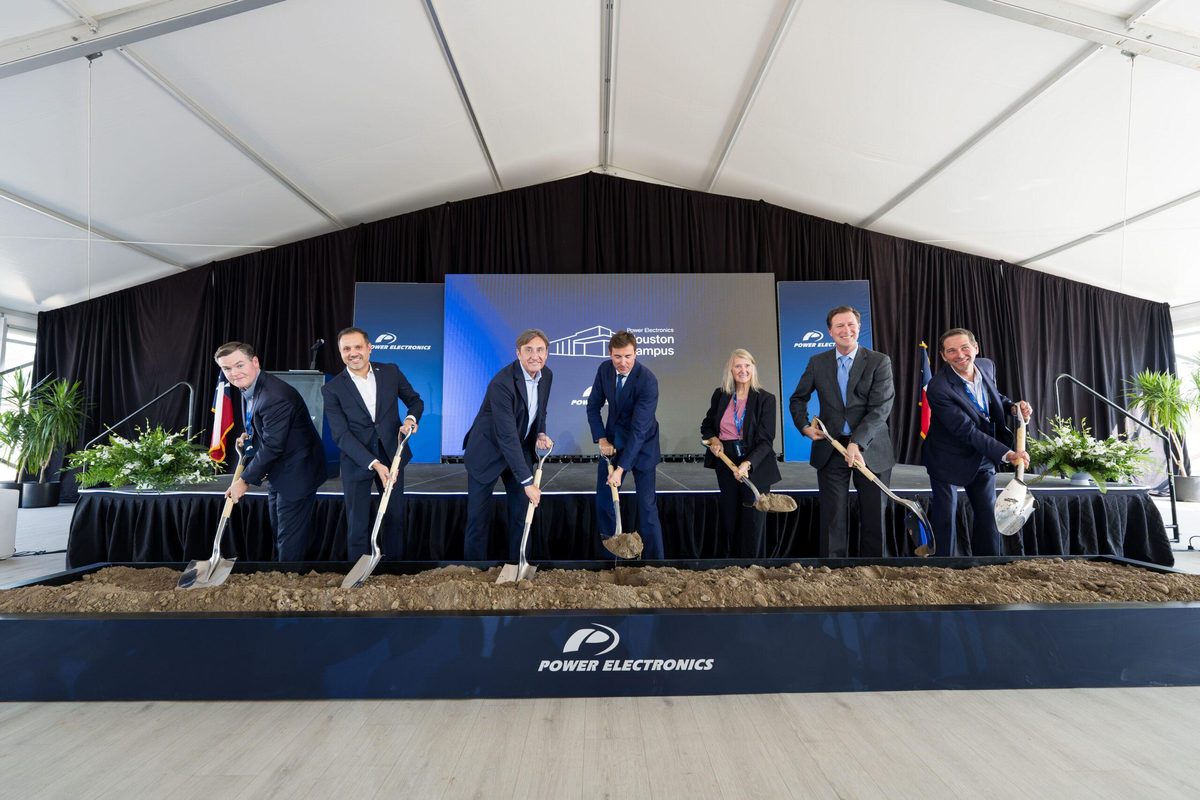
Power Electronics broke ground September 24 on a 53-acre manufacturing campus in northwest Houston. The Spanish inverter maker calls the project its largest international expansion and says it will reach 40 GW of annual production capacity at full buildout.

The factory feeds a US market racing to add utility solar, battery storage and data center capacity, all of which need power conversion equipment. It also responds to a push by buyers for domestically sourced gear. Power Electronics has not disclosed the project's cost, a construction timetable, or a ramp-up schedule.

Why it matters

US solar, storage and data center growth depends on inverters; this plant brings 40 GW of that capacity onshore, shortening a supply chain now tilted toward imports.

Questions about this story

Free account needed to ask — your question is kept and asked for you right after sign-up. Answers are public.

No questions yet — be the first to ask.

Key Indicators

40 GW
Target annual production capacity at full ramp
Equivalent to the AC output of roughly 400 solar plants of 100 MW each per year.
400+
Jobs planned in the Houston area
Company projection once the campus is fully operational.
105 GW
Power Electronics global annual capacity after expansion
Adds the Houston campus to an expanded factory in Llíria, Valencia, Spain.
850,000 sq ft
Floor space across two planned buildings
A 150,000 sq ft building for offices, R&D and electronics manufacturing; 700,000 sq ft for production and logistics.

Voices

Curated perspectives — historical figures and your fellow readers.

Ever wondered what historical figures would say about today's headlines?

Sign up to generate historical perspectives on this story.

People Involved

Organizations Involved

Timeline

March 2024 September 2026

3 events Latest: Yesterday
  1. Construction Review publishes project details

    Latest Reporting

    Trade outlet reported the 40 GW capacity target, noting the company disclosed no investment figure, construction timetable or ramp-up date.

  2. Groundbreaking at Fairbanks North Houston Road

    Construction

    Power Electronics broke ground on the 53-acre Houston campus at 9220 Fairbanks North Houston Road, attended by company leadership and officials.

  3. Power Electronics sets US expansion strategy

    Strategy

    Company outlined roughly €300 million in investment across Spain and the US for 2024-2027, targeting over 20 GW of additional US capacity by 2026.

Scenarios

1

Power Electronics reaches 40 GW Houston capacity

Uncertain Resolves by End of 2030

Discussed by: Company statements; no external analyst has issued a forecast, since Power Electronics has not set a ramp date

The campus completes both buildings, production lines scale across solar and storage inverter lines, and Power Electronics publicly confirms the 40 GW annual target. This is the optimistic case, requiring sustained US demand and smooth construction. The company has given no date for reaching it.

2

Houston campus opens but ramps below target

Possible Resolves by End of 2028

Discussed by: Trade press noting the company disclosed no initial capacity or product split

First production starts within a few years, but the plant operates well below 40 GW, with no full-ramp commitment. Demand softens, supply chains slip, or the company intentionally matches output to orders. This matches the pattern of US inverter plants that announce large targets but scale gradually.

3

Houston construction delays production past 2027

Possible Resolves by End of 2027

Discussed by: No named analyst; flagged by the absence of a construction timeline or named general contractor

With no contractor named and no construction schedule published, the project slips. No production start is announced by end of 2027. This scenario tracks an unforced risk: large industrial campuses routinely miss early schedules, and Power Electronics has not committed to a date.

Historical Context

2 moments from history that rhyme with this story — and how they unfolded.

2014-2016

Tesla Gigafactory Nevada (2014-2016)

Tesla and Panasonic built a massive lithium-ion battery plant in the Nevada desert to supply cells for vehicles and, later, grid storage. It became a template for single-site energy manufacturing at gigawatt scale.

Then

The plant scaled battery output through the late 2010s and anchored Tesla's storage business.

Now

It showed that US energy transition hardware can be manufactured at enormous scale domestically, though ramp-up took years longer than initial targets.

Why this matters now

The Houston campus is a similar bet on US-scale energy manufacturing, and like the Gigafactory it faces the gap between announced capacity and actual ramp.

August 2022 - ongoing

US solar manufacturing boom under the Inflation Reduction Act (2022-2026)

The Inflation Reduction Act, signed in August 2022, offered tax credits for domestically produced solar panels, cells and inverters. A wave of US factory announcements followed, from module plants in Georgia and Ohio to cell and polysilicon facilities in the Southeast.

Then

US solar manufacturing capacity grew sharply, though inverter and cell capacity lagged panel assembly.

Now

The credits created the domestic content market Power Electronics is now building to serve.

Why this matters now

The Houston campus is part of this same industrial policy wave: buyers qualify for incentives by sourcing US-made gear, which pulls inverter production onshore.

Sources

(6)