



80,000-year-old stone points may be the world's oldest arrowheads
New CapabilitiesTiny projectile points from Uzbekistan closely match weapons used by Homo sapiens in France 25,000 years later
Yesterday: ScienceDaily reports the discoveryNew here? Follow stories to track developments over time. Create a free account to get updates when stories you care about change.
Overview
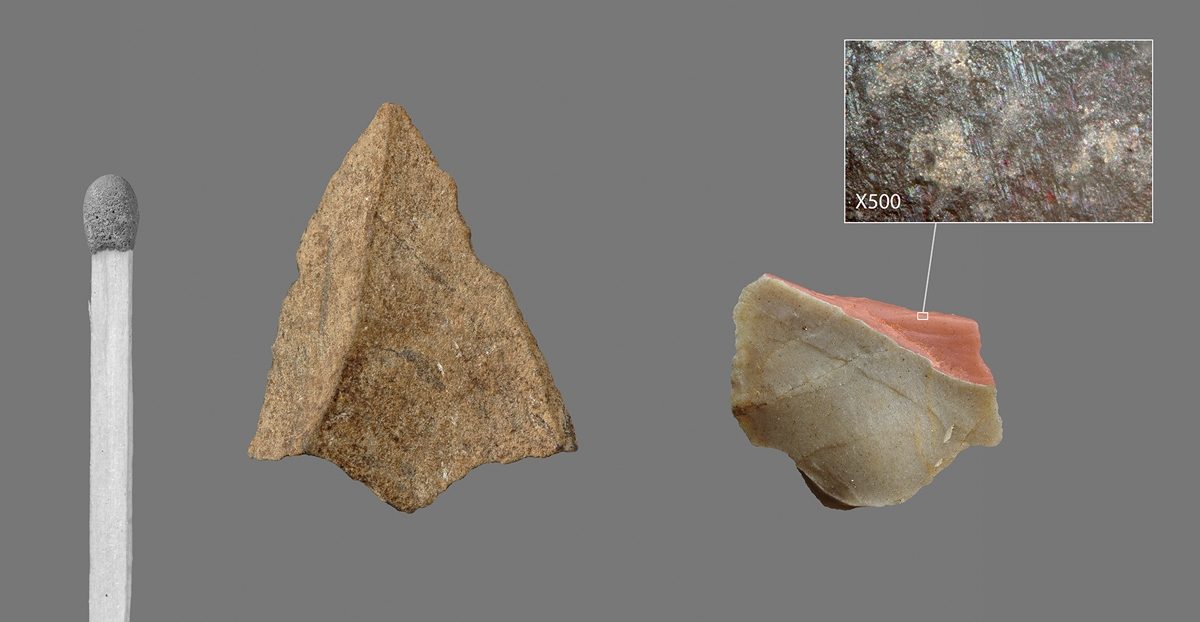
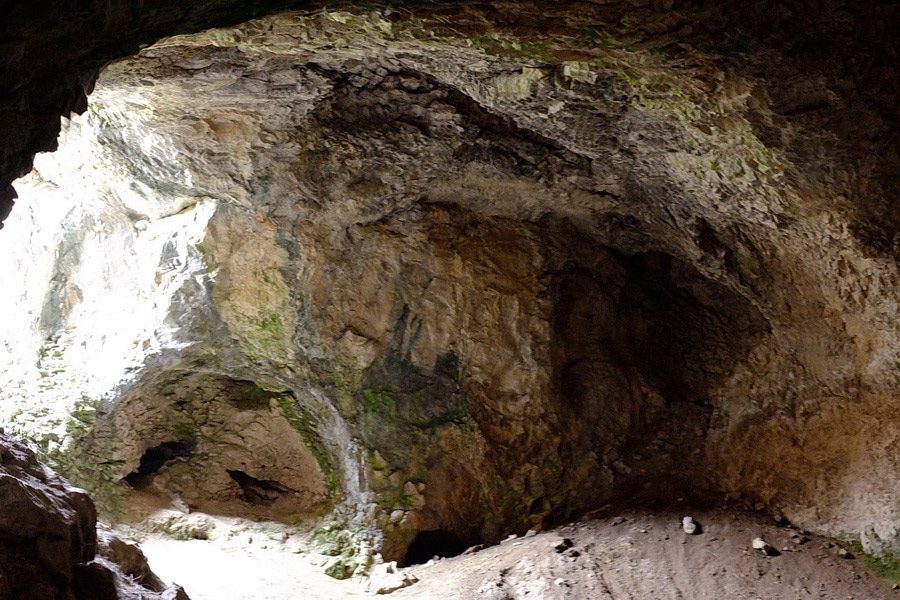
Updated 54 minutes agoTiny triangular stone points found in a Central Asian cave appear to be 80,000-year-old arrowheads, the oldest known in the world. The artifacts from Uzbekistan's Obi-Rakhmat site predate comparable points from Ethiopia by roughly 6,000 years.
The points closely match weapons used at the Mandrin site in France 25,000 years later, where a Homo sapiens milk tooth was found. That similarity suggests modern humans were established in Eurasia well before moving into Europe. It complicates the standard account of a direct 45,000-year-old migration from Africa.
Why it matters
The finding pushes back the oldest known archery by thousands of years and suggests Homo sapiens reached Eurasia far earlier than previously assumed.
Questions about this story
Free account needed to ask — your question is kept and asked for you right after sign-up. Answers are public.
No questions yet — be the first to ask.
Key Indicators
Voices
Curated perspectives — historical figures and your fellow readers.
Play
Exploring all sides of a story is often best achieved with Play.
Higher or Lower
A number from this story, against one from elsewhere in the news — guess which is bigger, then keep the chain going. 5 rounds, 3 strikes; a miss costs a strike and resets your streak.
Keyboard: ↓/L lower · ↑/H higher
0 points — sign up to put that on the leaderboard.
Connections
Sixteen names from the news. Find the four hidden groups of four. Four mistakes max.
Sign up to keep a daily streak — a new puzzle lands every day.
Exit debate?
Your progress in this debate will be lost.
- 1 Two AI personas square off on this story.
- 2 You predict who'll win each round — correct picks earn XP.
- 3 One crossfire question is yours to fire. Pick it carefully.
Couldn't generate a topic
Select Your Champions
Choose one persona for each side of the debate
DEBATE TOPIC
Choose personas with different perspectives for a more dynamic debate.
Select debater for this side:
No debate personas available right now.
Select debater for this side:
No debate personas available right now.
Who's Got This Round?
Make your prediction before the referee scores
The referee scores both sides on
Round Results
Set the Crossfire
Pick the question both personas must answer in the final round
Debate Oracle! You called every round!
Sharp Instincts! You know your debaters!
The Coin Flip Strategist! Perfectly balanced!
The Contrarian! Bold predictions!
Inverse Genius! Try betting the opposite next time!
XP Breakdown
Prediction History
People Involved
Organizations Involved
Open-access journal published by the Public Library of Science.
Russian research institute focused on Siberian and Central Asian archaeology.
Timeline
2022 circa 8
-
Micro-points made at Obi-Rakhmat
Upcoming Archaeological contextTiny triangular stone points used at Obi-Rakhmat cave, possibly as arrowheads.
-
Identical points used at Mandrin
Upcoming Archaeological contextSimilar micro-points in use at Mandrin site, France, alongside Homo sapiens remains.
-
ScienceDaily reports the discovery
Latest Press coverageScienceDaily reports the discovery, drawing wide public attention.
-
Obi-Rakhmat study published in PLOS One
PublicationPLOS One publishes study of 80,000-year-old projectile points at Obi-Rakhmat.
-
Mandrin micro-points documented; dispersal model proposed
PublicationStudy documents identical micro-points at Mandrin; Slimak proposes Eurasian dispersal model.
-
Homo sapiens tooth identified at Mandrin
PublicationResearchers identify a Homo sapiens milk tooth from the Mandrin layer.
Historical Context
3 moments from history that rhyme with this story — and how they unfolded.
Homo floresiensis, the 'hobbit' hominin (2003)
Excavations at Liang Bua cave on Flores island, Indonesia, uncovered the partial skeleton of a small-statured hominin, nicknamed 'the hobbit,' dating to as recently as ~50,000 years ago.
Years of intense debate over whether the bones were a new species, a dwarfed H. erectus, or a pathological modern human.
Became widely accepted as evidence of diverse hominin lineages coexisting deep into the Late Pleistocene.
Shows how a single site with surprising artifacts can upend the presumed narrative of human evolution and dispersal.
Apidima skull pushes H. sapiens in Europe back by 150,000 years (2019)
Fossils found in a Greek cave in the 1970s were re-dated in 2019. One partial skull was identified as Homo sapiens at roughly 210,000 years old, over 150,000 years older than any previously known modern human in Europe.
Paleoanthropologists debated the identification, arguing the skull's features were fragmentary.
The dating was widely accepted, pushing the known age of H. sapiens in Europe far earlier than the classic Out of Africa model allowed.
Like Obi-Rakhmat, a single-site discovery that pushed the known antiquity of Homo sapiens in Eurasia far beyond textbook timelines.
Projectile points from Ethiopia (~74,000 years ago)
Archaeologists working in Ethiopia's Middle Awash region found pointed stone artifacts with impact fractures dating to about 74,000 years ago, among the oldest evidence of projectile weaponry.
These points stood as some of the oldest known arrowheads in the archaeological record.
The Obi-Rakhmat finds, about 6,000 years older, now claim that position and place early projectile technology deep in Central Asia.
Directly frames why Obi-Rakhmat matters: it beats the previous record by 6,000 years and sits far outside Africa.
