
Ancient tooth proteins suggest link between Homo erectus and modern humans
New CapabilitiesSix 400,000-year-old teeth from China carry a mutation shared with Denisovans — and, possibly, with some people alive today
Yesterday: CAS alert on discovery circulates widelyNew here? Follow stories to track developments over time. Create a free account to get updates when stories you care about change.
Overview
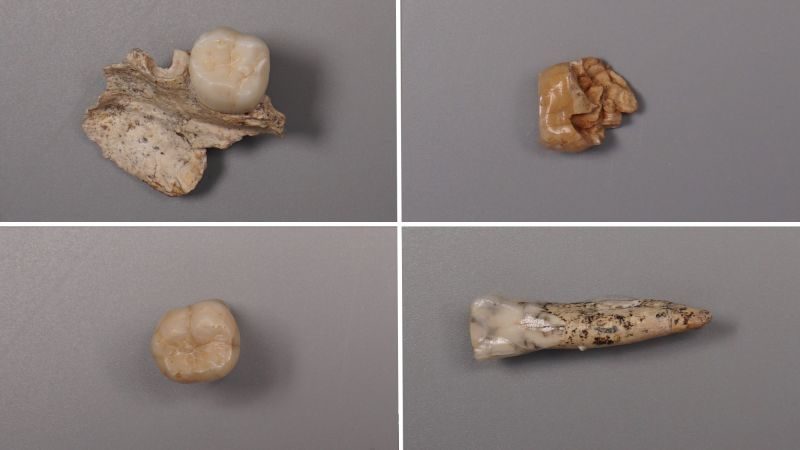
Updated 50 minutes agoSix 400,000-year-old Homo erectus teeth from China have yielded the oldest hominin proteins ever recovered in East Asia. The proteins carry two mutations that tie these ancient humans to a single evolutionary lineage, and one of them also appears in Denisovans, an archaic human group that interbred with modern humans.
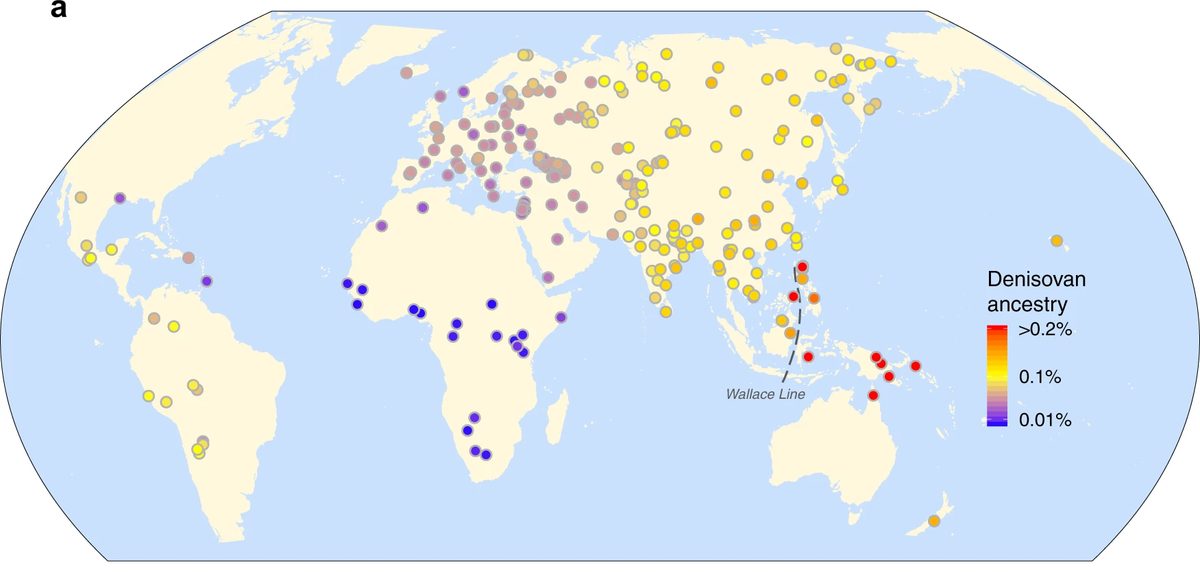
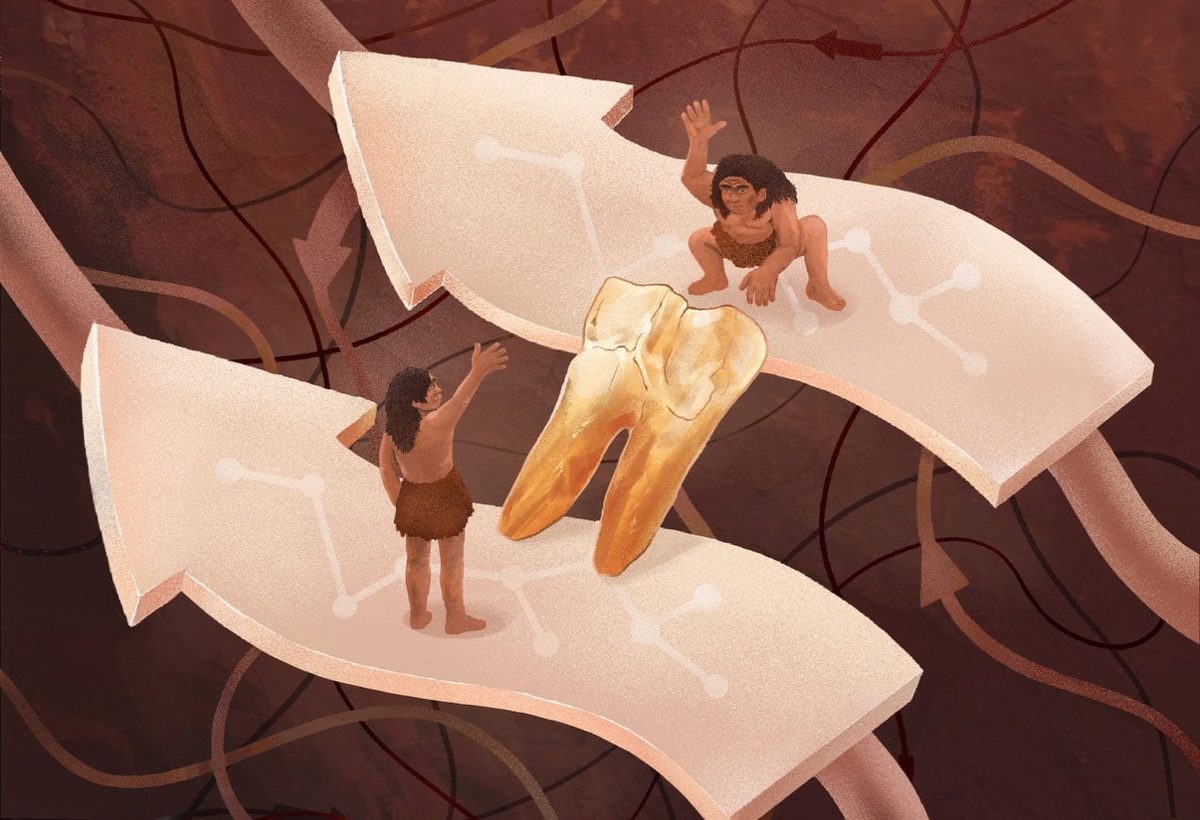
Chinese Academy of Sciences researchers propose that mutation passed from Homo erectus into Denisovans, then into modern populations in Southeast Asia and Oceania. If correct, it is the first molecular evidence that Homo erectus contributed to the ancestry of living people. Some paleoanthropologists dispute the interpretation, arguing the teeth may actually be Denisovan.
Why it matters
If confirmed, Homo erectus contributed DNA to living humans through Denisovans — rewriting the human family tree.
Questions about this story
Free account needed to ask — your question is kept and asked for you right after sign-up. Answers are public.
No questions yet — be the first to ask.
Key Indicators
Voices
Curated perspectives — historical figures and your fellow readers.
Play
Exploring all sides of a story is often best achieved with Play.
Higher or Lower
A number from this story, against one from elsewhere in the news — guess which is bigger, then keep the chain going. 5 rounds, 3 strikes; a miss costs a strike and resets your streak.
Keyboard: ↓/L lower · ↑/H higher
0 points — sign up to put that on the leaderboard.
Connections
Sixteen names from the news. Find the four hidden groups of four. Four mistakes max.
Sign up to keep a daily streak — a new puzzle lands every day.
Exit debate?
Your progress in this debate will be lost.
- 1 Two AI personas square off on this story.
- 2 You predict who'll win each round — correct picks earn XP.
- 3 One crossfire question is yours to fire. Pick it carefully.
Couldn't generate a topic
Select Your Champions
Choose one persona for each side of the debate
DEBATE TOPIC
Choose personas with different perspectives for a more dynamic debate.
Select debater for this side:
No debate personas available right now.
Select debater for this side:
No debate personas available right now.
Who's Got This Round?
Make your prediction before the referee scores
The referee scores both sides on
Round Results
Set the Crossfire
Pick the question both personas must answer in the final round
Debate Oracle! You called every round!
Sharp Instincts! You know your debaters!
The Coin Flip Strategist! Perfectly balanced!
The Contrarian! Bold predictions!
Inverse Genius! Try betting the opposite next time!
XP Breakdown
Prediction History
People Involved
Organizations Involved
Chinese Academy of Sciences institute specializing in vertebrate paleontology and paleoanthropology.
China's main government funding agency for basic research.
Timeline
May 2026 September 2026
-
CAS alert on discovery circulates widely
Latest AnnouncementChinese Academy of Sciences alert on the teeth findings reaches broader audiences via ScienceDaily and other outlets.
-
NSFC touts findings as breakthrough
StatementFunding agency highlights the study as clarifying East Asian hominin evolution.
-
Nature publishes enamel protein study
PublicationFu Qiaomei's team reports proteins from six Homo erectus teeth across three Chinese sites.
Historical Context
3 moments from history that rhyme with this story — and how they unfolded.
Peking Man excavations begin (1929)
Excavations at Zhoukoudian near Beijing, led by Chinese and Western researchers, uncovered skulls and teeth of Homo erectus dating from roughly 700,000 to 200,000 years ago. The site gave East Asian Homo erectus its iconic place in the human story, though the original skulls were lost during the Second World War.
Established Homo erectus as a central chapter in human evolutionary history in Asia.
A century of morphological debate over whether East Asian H. erectus was one lineage or several — a question the new protein data addresses directly.
Zhoukoudian is one of the three sites in the new study; the same fossils that defined East Asian Homo erectus are now yielding proteomic data.
First Denisovan discovery (2010)
A team led by Svante Pääbo at the Max Planck Institute sequenced DNA from a roughly 40,000-year-old finger bone in Siberia's Denisova Cave. The DNA belonged to an unknown hominin group, later named Denisovans, that was neither Neanderthal nor modern human.
Revealed a new archaic human population that had interbred with ancestors of modern Melanesians and other Asian groups.
Established that multiple archaic hominin groups interbred with modern humans, reshaping models of human migration and ancestry.
Denisovans are the same group the new study proposes interbred with East Asian Homo erectus — a direct sequel to that 2010 discovery.
Homo antecessor enamel proteome (2020)
Researchers including Frido Welker recovered dental enamel proteins from an 800,000-year-old Homo antecessor fossil at Atapuerca, Spain, the oldest hominin proteins then known. The work proved proteins can survive far beyond the reach of ancient DNA.
Showed paleoproteomics could recover evolutionary information from fossils too old for DNA.
Opened a new window into deep-time hominin relationships; the new China study extends that record in East Asia to at least 400,000 years.
The acid-etching technique used on the Chinese teeth builds directly on this protein-recovery breakthrough.
