
Pull to refresh
Logo
Amazon rainforest emits more carbon than it absorbs, 15-year study finds

Amazon rainforest emits more carbon than it absorbs, 15-year study finds

New Capabilities

Wildfires release 1.47 billion tons of CO₂ annually, overwhelming the forest's absorption capacity

October 2026: Study confirms Amazon is net carbon source

Overview

Updated 1 hour ago

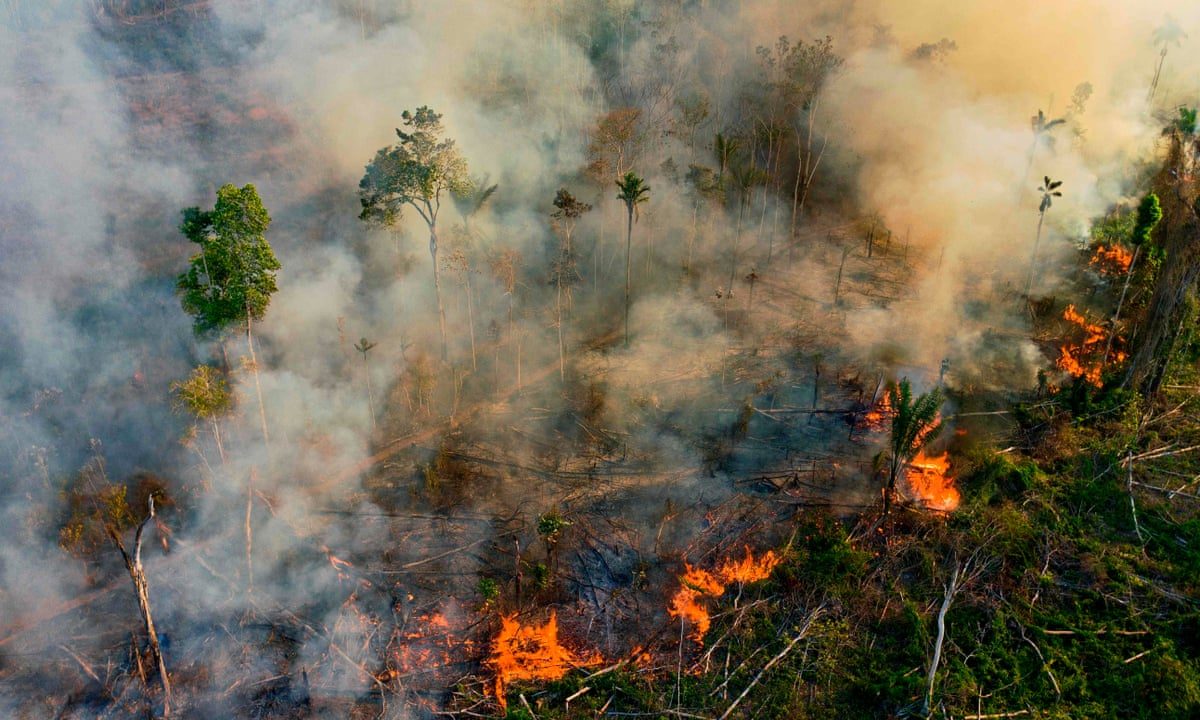
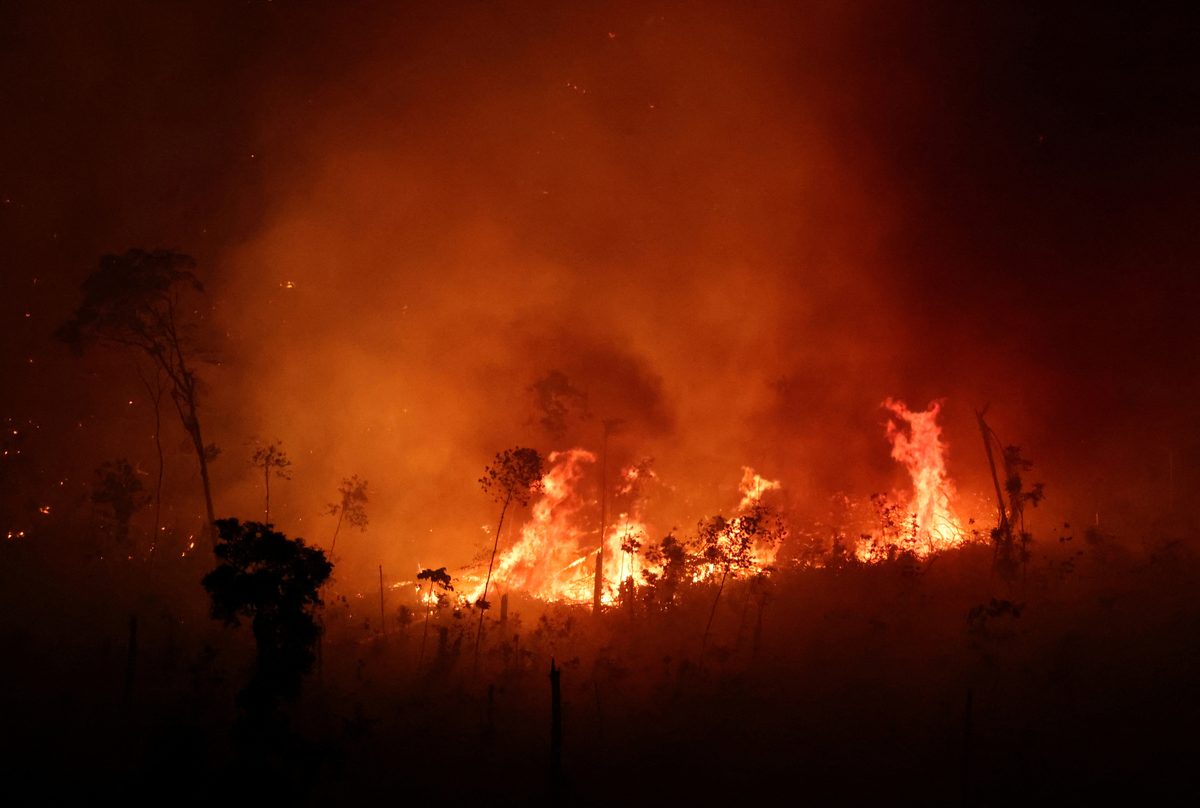
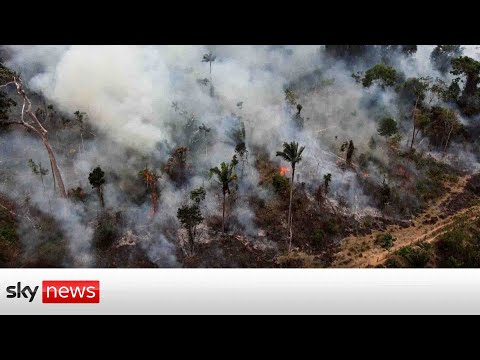
The Amazon rainforest released a net 1.17 billion metric tons of carbon dioxide each year from 2010 to 2024, according to a 15-year study published in Nature. Wildfires were the dominant source, emitting 1.47 billion tons annually, while the forest absorbed roughly 300 million tons per year.

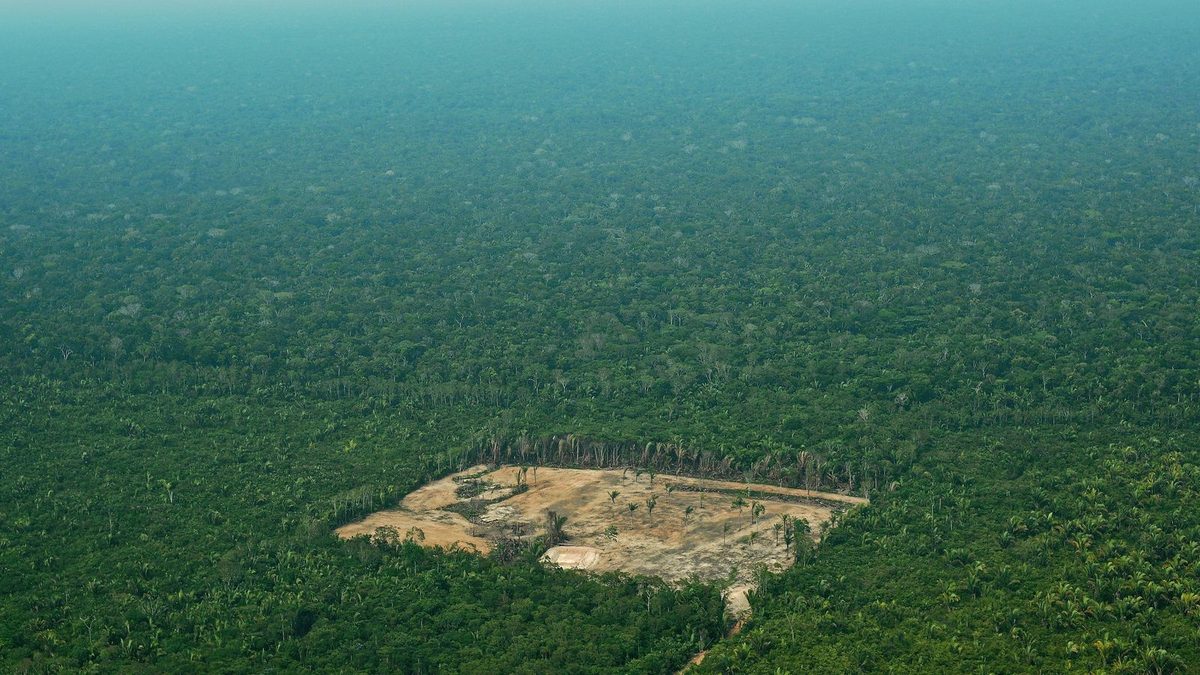
The finding shows the largest tropical rainforest on Earth has flipped from a carbon sink to a net source under pressure from human activity and climate stress. Researchers warn that continued deforestation and degradation could push the biome past a tipping point, after which it may no longer sustain itself as rainforest.

Why it matters

A carbon-absorbing Amazon helps slow climate change. If it becomes a permanent carbon source, global emissions budgets tighten and climate targets slip.

Questions about this story

Free account needed to ask — your question is kept and asked for you right after sign-up. Answers are public.

No questions yet — be the first to ask.

Key Indicators

1.17 billion tons
Net annual CO₂ emissions, 2010-2024
Average carbon dioxide the Amazon released beyond what it absorbed each year.
1.47 billion tons
Annual wildfire CO₂ emissions
Fires were the largest carbon source, far exceeding forest uptake.
300 million tons
Forest CO₂ absorption capacity
Annual carbon uptake by existing trees, insufficient to offset fire emissions.
8%
Reduction in annual rainfall over 46 years
Deforestation and degradation cut precipitation; dry-season rainfall fell 20%.
1.13°C
Rise in average annual temperature
Warming was sharper in the dry season, reaching 1.81°C, fueling fire risk.

Voices

Curated perspectives — historical figures and your fellow readers.

Ever wondered what historical figures would say about today's headlines?

Sign up to generate historical perspectives on this story.

People Involved

Organizations Involved

Timeline

2010 October 2026

5 events Latest: October 2026
Tap a bar to jump to that date
  1. Study confirms Amazon is net carbon source

    Latest Research

    15-year analysis published in Nature shows Amazon released 1.17 billion tons of CO₂ annually.

  2. El Niño returns, fire activity jumps

    Climate

    Hot, dry conditions combine with degraded forest; fire activity up 92% in drought years.

  3. Deforestation and fires surge

    Policy

    Deforestation up 97% and fires up 25% versus 2010-2018, even with low climate stress.

  4. Record El Niño drives high emissions

    Climate

    Strongest El Niño on record dries the forest; fires release large carbon stocks.

  5. Measurement record begins amid severe drought

    Climate

    First year of atmospheric CO₂ sampling; a major drought hits the Amazon, killing trees and drying the forest.

Scenarios

1

Brazil returns Amazon deforestation to near zero

Unlikely Resolves by End of 2029

Discussed by: Study authors at INPE and Brazilian environmental policy circles

Brazil's government restores enforcement of environmental laws, cracks down on illegal ranching and mining, and reduces agricultural burning. INPE's annual deforestation data would show steady decline toward the roughly 2,000 km² per year lows of the early 2010s, and the carbon balance would begin recovering toward neutral.

2

Amazon crosses a permanent tipping point

Possible Resolves by End of 2031

Discussed by: Study authors and researchers studying Amazon tipping points, including Carlos Nobre

Continued degradation, drying, and warming make wet-season recovery impossible. The eastern and southern Amazon transition toward degraded savanna. A peer-reviewed study would document the Amazon as a net CO₂ source even in a wet year with below-average fire activity, showing the loss is no longer driven by fires alone.

3

Emissions plateau below the 15-year average

Likely Resolves by End of 2030

Discussed by: International climate monitoring community

Partial policy measures slow deforestation and fire use, but the forest stays a net source for years. Annual emissions remain positive but stop rising, buying time for restoration programs to take hold.

Historical Context

3 moments from history that rhyme with this story — and how they unfolded.

2015-2016

2015-2016 El Niño drought

The strongest El Niño on record dried the Amazon, causing widespread tree death and fire spread. It remains one of the highest-emission periods in the new study, grouped with 2010, 2023, and 2024 as climate-stressed years.

Then

The forest released more carbon than it absorbed during the drought, setting a record at the time.

Now

The event showed how climate stress and prior human degradation amplify fire-driven carbon losses.

Why this matters now

The current study treats 2015-16 as a benchmark, showing that droughts once considered rare now combine with deforestation to push the forest into sustained net emissions.

2018

Nobre-Lovejoy tipping point paper (2018)

Scientists Carlos Nobre and Thomas Lovejoy published a widely cited analysis warning that roughly 20-25% deforestation or 3-4°C of warming could push the Amazon past a tipping point, converting much of it to degraded savanna.

Then

The tipping point concept entered mainstream climate policy debate.

Now

It became the standard framing for Amazon risk, which the 2026 study's warnings directly echo.

Why this matters now

The new 15-year data provides empirical support for the feedback loop Nobre and Lovejoy described: deforestation reduces rainfall, raising temperatures, which makes remaining forest more flammable.

2024

Record atmospheric CO₂ growth with Amazon fires (2024)

Research documented an unprecedented role for Amazon fires in 2024's record annual increase in atmospheric CO₂. It was the final year of the study's measurement period and one of its five hottest, driest years.

Then

2024 set records for both fire emissions and atmospheric CO₂ growth.

Now

Modeling projects Amazon fire emissions rising 43-73% by mid-century under various climate scenarios.

Why this matters now

2024 sits in the study's highest-emission group, showing that the trend toward net carbon release is accelerating rather than leveling off.

Sources

(8)