


Pull to refresh
Logo
Mantle convection may explain the billion years missing from Earth's rock record

Mantle convection may explain the billion years missing from Earth's rock record

New Capabilities

University of Wollongong modellers tie the Great Unconformity to continental uplift, Snowball Earth glaciers and slow subsidence

Overview

Updated 1 hour ago

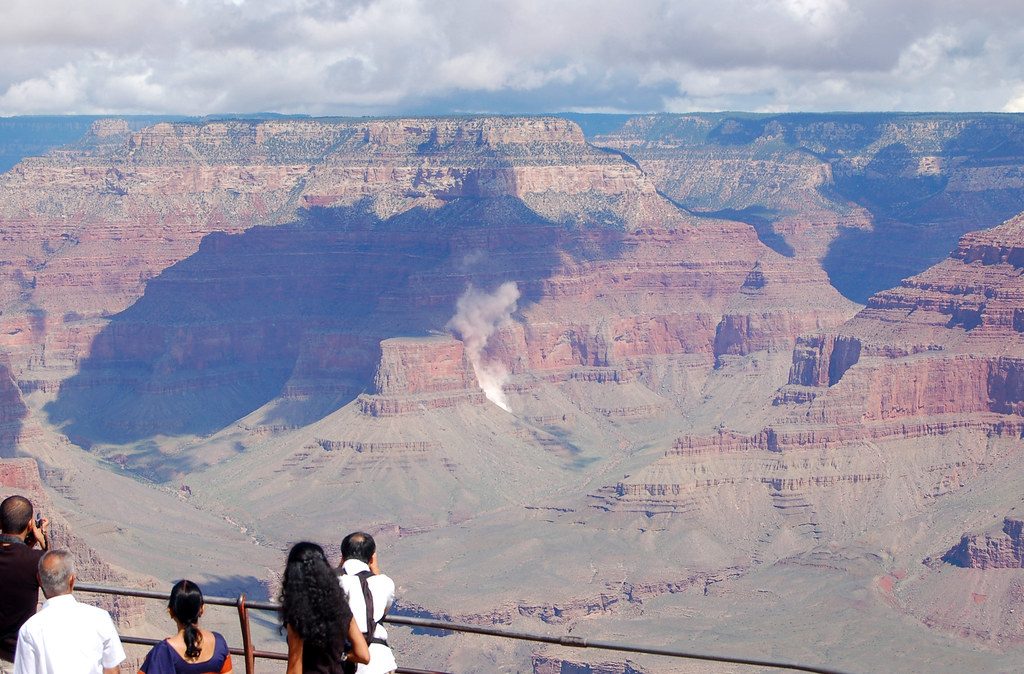
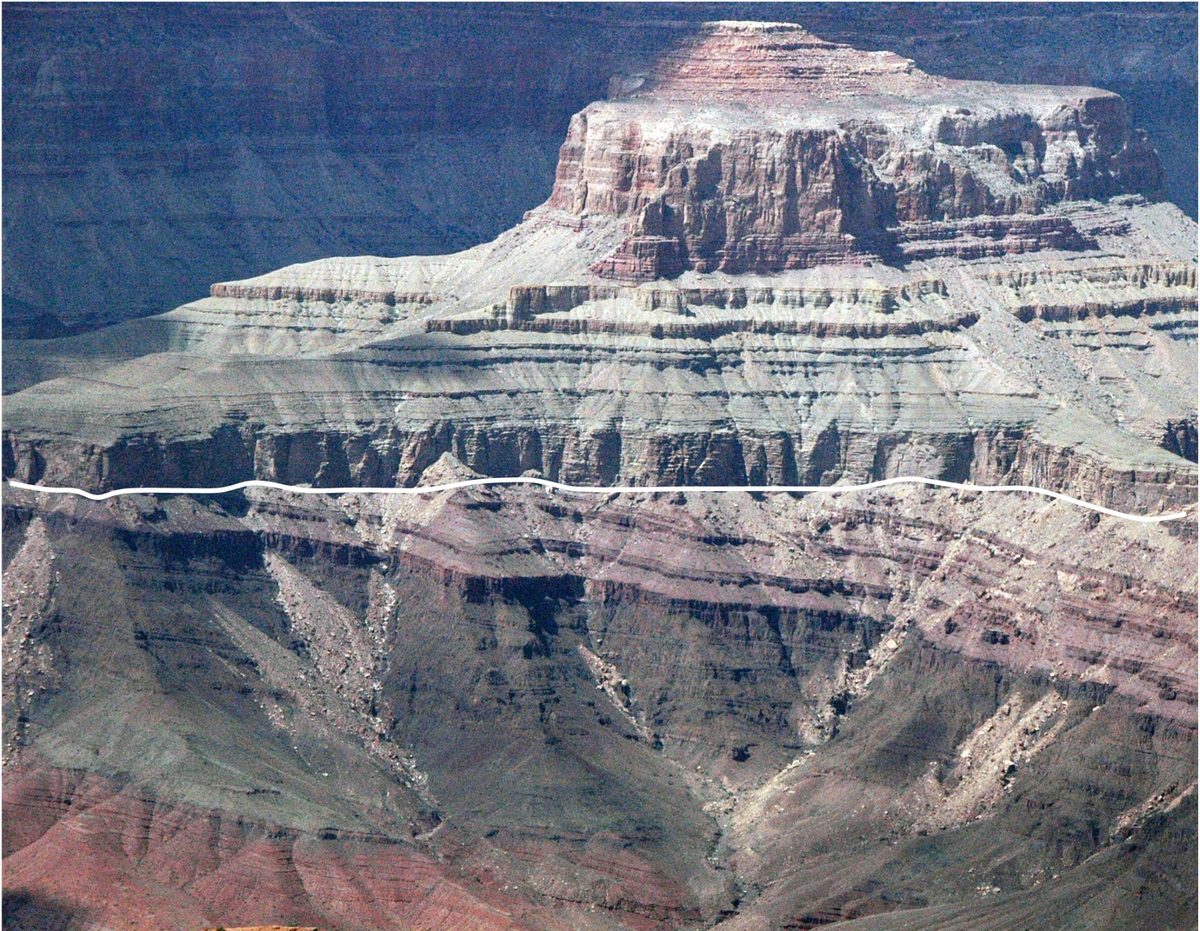
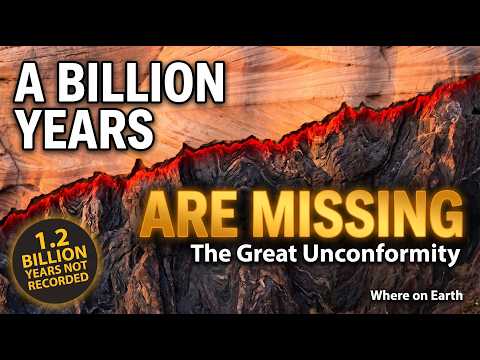
At the Grand Canyon, rock laid down about 500 million years ago sits directly on rock roughly 2 billion years old. The layers in between, up to 1.2 billion years of Earth history, are gone.

Geologists at the University of Wollongong ran mantle-convection models on Australia's Gadi supercomputer to test why. Their answer: the continents Laurentia, Baltica and North China were lifted for hundreds of millions of years, scoured by Snowball Earth ice sheets, then sank and were buried again. Those three regions are where the gap is best preserved today.

Why it matters

The erosion may have flushed nutrients into the oceans just as animal body plans were diversifying in the Cambrian explosion.

Questions about this story

Free account needed to ask — your question is kept and asked for you right after sign-up. Answers are public.

No questions yet — be the first to ask.

Key Indicators

1.2 billion years
Rock record missing at the Grand Canyon
The gap between roughly 500-million-year-old layers and 2-billion-year-old basement rock.
720 million years ago
Approximate start of Snowball Earth glaciation
Ice sheets slid across the uplifted continents for tens of millions of years.
3
Continents the model singles out
Laurentia, Baltica and North China, where the unconformity is best documented.
900 million years
Length of the modelled uplift-to-subsidence cycle
The paper argues such a long, single cycle is rare in Earth history.

Voices

Curated perspectives — historical figures and your fellow readers.

Sign up to generate historical perspectives on this story.

People Involved

Organizations Involved

Timeline

1870s November 2026

3 events Latest: Today
  1. ScienceAlert reports the explanation to a general audience

    Today Coverage

    ScienceAlert publishes its account of the study, framing the missing rock as a book with a section torn out.

  2. Mantle-convection model published in Nature

    Research

    University of Wollongong researchers report that dynamic topography lifted Laurentia, Baltica and North China, then sank them.

  3. Grand Canyon surveyors notice layers out of order

    Discovery

    Geologists find thick rock sequences resting directly on layers roughly 2 billion years old, and name the gap the Great Unconformity.

Scenarios

1

Independent models reproduce the uplift-and-subsidence pattern

Possible Resolves by End of 2029

Discussed by: The paper's authors, who flag testing the predictions as the next step

The Wollongong result rests on one set of mantle reconstructions and one set of assumptions about how stiff the mantle is. If a separate group, working from different plate reconstructions, gets the same long-wavelength rise and fall for Laurentia, Baltica and North China, the mechanism moves from a candidate explanation to the leading one.

2

North China field data match the predicted erosion window

Possible Resolves by End of 2028

Discussed by: Geoscientists who note the model makes testable predictions about timing

The model does not just explain where the unconformity is; it says when the rock should have been removed. Thermochronology and stratigraphy from the North China craton can check that. A single long uplift followed by steady burial would support the mechanism. Two separate cycles would not.

3

Critics argue the mantle moved too little to strip that much rock

Possible Resolves by End of 2027

Discussed by: Geologists quoted in Ars Technica, who describe mantle dynamics as one factor rather than the pace-setter

The eroded volume implies kilometres of missing section. Dynamic topography is generally small compared with tectonic uplift, and some geologists argue glacial and rift-related erosion did most of the work while the mantle only nudged the continents into position. A published estimate showing the modelled uplift falls short by an order of magnitude would demote the hypothesis to a contributing factor.

Historical Context

3 moments from history that rhyme with this story — and how they unfolded.

1912-1960s

The plate tectonics revolution (1912-1960s)

Alfred Wegener argued in 1912 that continents had drifted apart. Geologists rejected the idea for four decades because nothing known could push continents through ocean floor. In the 1960s, seafloor spreading and mantle convection supplied the mechanism, and the theory was accepted within a few years.

Then

Continental drift was replaced by plate tectonics and textbooks were rewritten.

Now

Mantle convection became the standard engine for explaining surface geology.

Why this matters now

The Great Unconformity argument is another attempt to tie a surface feature to a process running hundreds of kilometres below it, and will be judged the same way: by whether the mechanism reproduces the observations.

1990s

The Snowball Earth hypothesis (1990s)

Researchers proposed that ice sheets reached the equator during the Neoproterozoic, covering the continents for tens of millions of years. Glacial deposits and cap carbonates in several regions were read as evidence for a planet-wide freeze.

Then

The idea was contentious, since it required the climate system to tip into and out of a frozen state.

Now

Snowball Earth became a standard frame for Neoproterozoic climate and biology.

Why this matters now

The Wollongong model depends on those ice sheets. Its argument is that uplift put the continents in the path of glaciers that were already grinding across them.

About 539 million years ago

The Cambrian explosion (about 539 million years ago)

Within roughly 20 million years, most major animal body plans appear in the fossil record. The timing follows the breakup of the Neoproterozoic world and a shift in ocean chemistry.

Then

Animal life moved from mostly soft-bodied forms to a diverse, skeleton-building fauna.

Now

The event marks the base of the Phanerozoic and the template for modern ecosystems.

Why this matters now

The paper argues that erosion of the uplifted continents released elements into the oceans and changed seawater chemistry just before this diversification, making the missing rock part of the story of animal life.

Sources

(9)