

Pull to refresh
Logo
Storm deposits in ancient rock follow a 405,000-year orbital cycle

Storm deposits in ancient rock follow a 405,000-year orbital cycle

New Capabilities

A study of half-billion-year-old Sichuan Basin sediment ties tempestite layers to an eccentricity cycle shaped by Venus and Jupiter

Overview

Updated 57 minutes ago

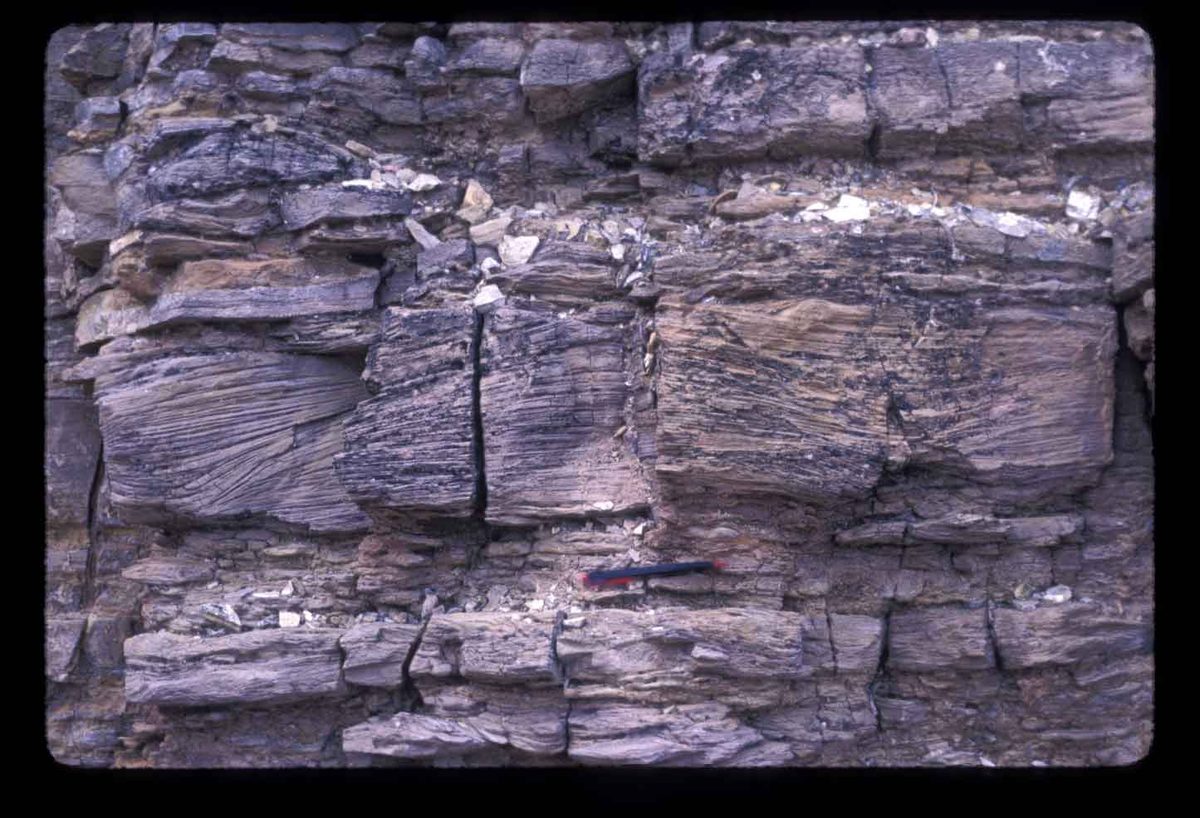
Rocks in China's Sichuan Basin preserve the deposits of storms that churned a tropical sea roughly half a billion years ago. Counting those layers across 24 million years of sediment, geologists found the thick, coarse ones bunch up on a 405,000-year rhythm.

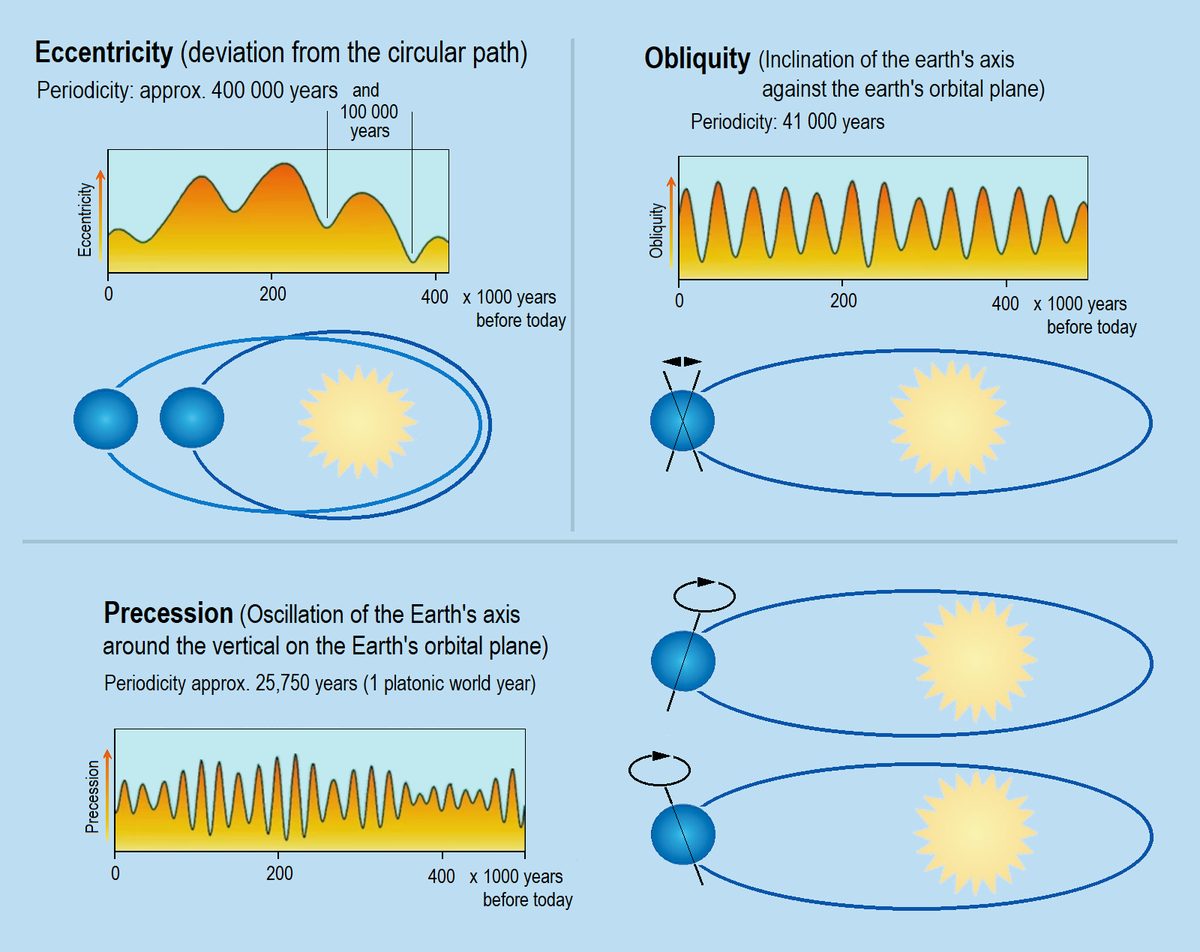
The number is not arbitrary. It matches an eccentricity cycle in Earth's orbit, a slow stretching and rounding of the planet's path driven mainly by the gravity of Venus and Jupiter. The authors think warm Cambrian seas pushed more energy into the atmosphere at the cycle's peak, but they also warn that sea level, sediment supply and preservation could create a similar pattern.

Why it matters

If storm layers track orbit, rocks become a clock for reading ancient climates long before ice cores existed.

Questions about this story

Free account needed to ask — your question is kept and asked for you right after sign-up. Answers are public.

No questions yet — be the first to ask.

Key Indicators

405,000
Length of the storm cycle, in years
Same period as one eccentricity cycle in Earth's orbit.
59
Cycles counted in the rock record
Identified across roughly 24 million years of Sichuan Basin sediment.
24 million
Years of geological history reconstructed
Built by matching repeating rock layers to known orbital cycles.
~500 million
Age of the host rocks, in years
Cambrian sediment from an ancient tropical sea.

Voices

Curated perspectives — historical figures and your fellow readers.

Sign up to generate historical perspectives on this story.

People Involved

Organizations Involved

Timeline

1970 November 2026

3 events Latest: Today
  1. Storm deposits found to follow a 405,000-year beat

    Today Study

    Shi and colleagues report 59 cycles in Sichuan Basin tempestites and propose orbital eccentricity as the driver, while flagging other possible causes.

  2. Cyclostratigraphy reviewed for Chinese basins

    Research

    A published review described how a 405,000-year cycle modulates a shorter orbital signal in Chinese sedimentary records, alongside tectonic and sediment-supply effects.

  3. Orbital cycles linked to the ice ages

    Research

    In the 1970s, scientists showed Milankovitch cycles paced repeated glacial and interglacial periods over the past few million years.

Scenarios

1

Second basin reproduces the 405,000-year storm rhythm

Possible Resolves by End of 2029

Discussed by: The study authors, who describe the orbital link as not yet definitive, and the standard test in cyclostratigraphy of finding the signal elsewhere

The strongest confirmation would come from tempestites in a different basin and a different geological period showing the same clustering at the same orbital phase. That would move the finding from a single Chinese record to a general rule about storms and eccentricity.

2

Reworking or sea-level change explains the pattern instead

Possible Resolves by End of 2029

Discussed by: The authors' own caveats: sea-level change, sediment supply and preservation conditions

The clustering could reflect when storm beds were preserved rather than when storms were stronger. A study showing that sea level or sediment delivery alone reproduces the 405,000-year spacing would break the orbital explanation without disputing the rock data.

3

The storm beat shows up in young rocks and modern records

Unlikely Resolves by End of 2030

Discussed by: The authors, who say it is unclear whether the pattern persists in today's climate

Extending the method forward would mean finding the same modulation in much younger storm deposits, or in instrumental records long enough to resolve a 405,000-year cycle. The second is impossible with human records, which is why the authors hesitate.

Historical Context

3 moments from history that rhyme with this story — and how they unfolded.

1970s

Orbital pacing of the ice ages (1970s)

In the 1970s, scientists showed that Milankovitch cycles — a 100,000-year eccentricity swing, a 41,000-year tilt cycle and a 21,000-year axial wobble — drove repeated warming and cooling, and the advance and retreat of ice ages over the past few million years.

Then

Orbital theory moved from proposal to accepted framework for explaining glacial cycles.

Now

Researchers still argue over inconsistencies in the data and how orbital forcing interacts with carbon dioxide.

Why this matters now

The Sichuan Basin study applies the same reasoning to storms rather than temperature, and to rocks far older than the ice-age record.

Late Triassic

Late Triassic lake cycles in eastern North America

Cores from Arizona and the New York-New Jersey basin recorded alternating wet and dry periods. Paul Olsen and Dennis Kent argued the 405,000-year eccentricity cycle acted as a master control: rain peaked when the orbit was most elliptical, filling deep lakes that left black shale, and the land dried when the orbit was most circular.

Then

The 405,000-year cycle gained a role as a stable metronome for dating and correlating rocks.

Now

It became an anchor for astronomical time scales reaching back hundreds of millions of years.

Why this matters now

It is the closest precedent for the new claim, but it concerns rainfall and lake levels, not storm strength.

September 2020

Cyclostratigraphy case studies from China (2020)

A review of cyclostratigraphy and astrochronology work in Chinese basins described a roughly 100,000-year oscillation modulated by a 405,000-year cycle, alongside regional tectonics and shifting river deltas that complicate the signal.

Then

Established the method's use in Chinese rock sequences and named its limits.

Now

Set the expectation that orbital signals in Chinese records must be separated from local geological noise.

Why this matters now

The new study uses the same approach on Sichuan Basin tempestites.

Sources

(3)