

Pull to refresh
Logo
Gravitational torque between Earth's inner core and mantle drives multidecadal day-length changes

Gravitational torque between Earth's inner core and mantle drives multidecadal day-length changes

New Capabilities

Nature study is first to reconstruct length-of-day record from modeled torques on the mantle

2 days ago: Nature publishes gravitational torque study

Overview

Updated 1 hour ago

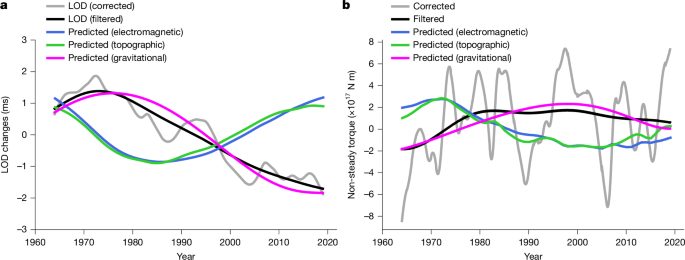
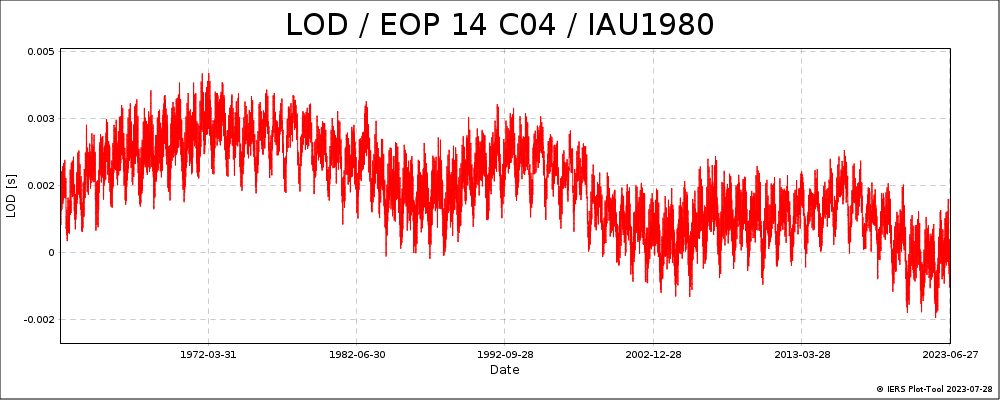
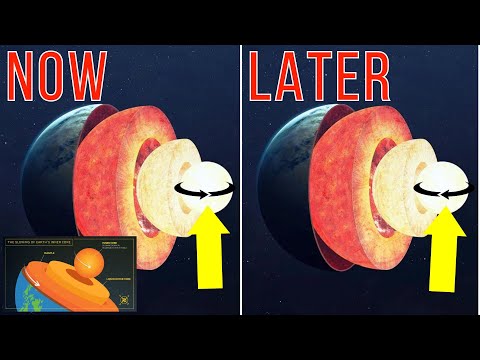
Earth's day is not a fixed 24 hours; it stretches and shrinks by fractions of a millisecond over cycles of roughly 60 to 70 years. A Nature paper published September 23 identifies the engine behind those changes: gravitational pull between the solid inner core and the rocky mantle above it.

That gravitational torque drives the multidecadal wobble, while electromagnetic and topographic forces at the core-mantle boundary push back against it. The paper is the first to reconstruct day-length changes from modeled torques on the mantle, closing a puzzle that has stood for more than 30 years.

Why it matters

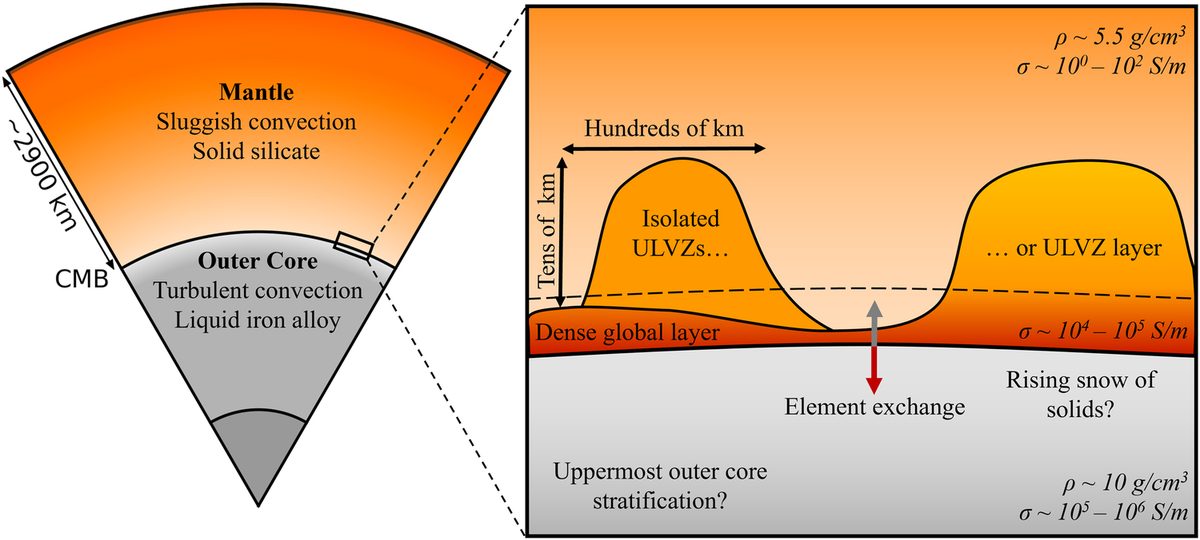
The result reveals the inner core deforms within years, not millennia, and the deepest mantle carries iron-rich, electrically conductive layers no instrument can reach directly.

Questions about this story

Free account needed to ask — your question is kept and asked for you right after sign-up. Answers are public.

No questions yet — be the first to ask.

Key Indicators

60-70 years
Period of multidecadal length-of-day oscillation
The day-length cycle the gravitational torque reproduces.
1.3 × 10¹⁹ N·m
Best-fit gravitational torque strength
Torque between inner core and mantle required to match observed day-length changes.
6-10 years
Inner core boundary viscous relaxation time
How quickly the inner core's topography relaxes toward alignment with the mantle.
1964-2019
Time window covered by the analysis
Seismic inner-core rotation records and core flows derived from magnetic field changes.

Voices

Curated perspectives — historical figures and your fellow readers.

Ever wondered what historical figures would say about today's headlines?

Sign up to generate historical perspectives on this story.

People Involved

Organizations Involved

Timeline

1 event Latest: 2 days ago
  1. Nature publishes gravitational torque study

    Latest Publication

    Zhang and Dumberry show gravitational torque between inner core and mantle drives multidecadal length-of-day changes, resisted by electromagnetic and topographic forces.

Scenarios

1

Independent inner-core rotation data confirms gravitational torque model

Likely Resolves by End of 2028

Discussed by: Nature News & Views; geophysics community

The model rests on a single seismic reconstruction of inner core rotation spanning 1964 to 2021. If follow-up studies with updated or independent rotation histories and longer core flow records reproduce the multidecadal day-length signal with gravitational torque dominant, the conclusion strengthens from a strong hypothesis to settled geophysics.

2

Core-mantle boundary torque shown to drive 10-30 year day-length signals

Possible Resolves by End of 2028

Discussed by: The paper's authors, in supplementary materials citing J. Aubert's dynamo results

The study predicts the gravitational torque is inefficient at periods shorter than a few decades, so decadal (10-30 year) day-length variations probably come from the electromagnetic or topographic torque at the core-mantle boundary. Higher-temporal-resolution core flow models could demonstrate this directly, completing the torque budget.

3

Seismic inner-core rotation reconstruction contested, weakening the model

Unlikely Resolves by End of 2028

Discussed by: Seismology groups working on inner-core rotation

The torque history depends on one seismically inferred rotation model from a 2020s study. If other groups publish conflicting rotation histories that fail to generate the required gravitational torque, the day-length explanation loses its observational anchor. The paper itself acknowledges the result is tied to the accuracy of that rotation model.

Historical Context

3 moments from history that rhyme with this story — and how they unfolded.

1936

Inner core discovered (1936)

Danish seismologist Inge Lehmann analyzed earthquake P-waves that passed through Earth's center and deduced a solid inner core inside the liquid outer core. The finding overturned the prevailing two-layer model of Earth's deep interior.

Then

Confirmed Earth has a layered interior and changed thinking about planetary formation and thermal evolution.

Now

Became the foundation for all later work on core dynamics, including differential rotation and core-mantle coupling.

Why this matters now

The same seismic method Lehmann pioneered underpins the inner-core rotation model the new paper relies on to build its gravitational torque prediction.

1996

Inner core differential rotation discovered (1996)

Seismologists Xiaodong Song and Paul Richards used seismic waves traveling through the inner core to show it rotates measurably faster than the mantle, contradicting the assumption of rigid co-rotation.

Then

Spurred a debate about what couples the inner core to the rest of the planet and whether differential rotation is steady or oscillatory.

Now

Differential rotation became a key observational constraint for models of core-mantle torque and the geodynamo.

Why this matters now

The new study converts this differential rotation into a gravitational torque prediction, which is why the 1996 discovery is a direct precursor.

Early 1990s

Core-mantle coupling established as cause of decadal day-length changes (~1990s)

Angular momentum budget calculations showed decadal variations in Earth's length of day must come from exchange of angular momentum between the core and mantle. The specific torque mechanism, however, remained unidentified for three decades.

Then

Researchers proposed electromagnetic, topographic, and gravitational coupling mechanisms but could not predict the length-of-day record from any of them.

Now

The unidentified torque became a standing puzzle in geophysics, a gap the new paper now fills.

Why this matters now

The 2026 paper is the first successful prediction of multidecadal day-length changes from modeled torques, closing the 30-year gap.

Sources

(8)