

Pull to refresh
Logo
Moth encodes 1,568 values across every qubit of an IBM quantum processor

Moth encodes 1,568 values across every qubit of an IBM quantum processor

New Capabilities

The London company's Tessa method lays data across a chip's own wiring diagram, so the 120-qubit run needs no routing gates.

Overview

Updated 47 minutes ago

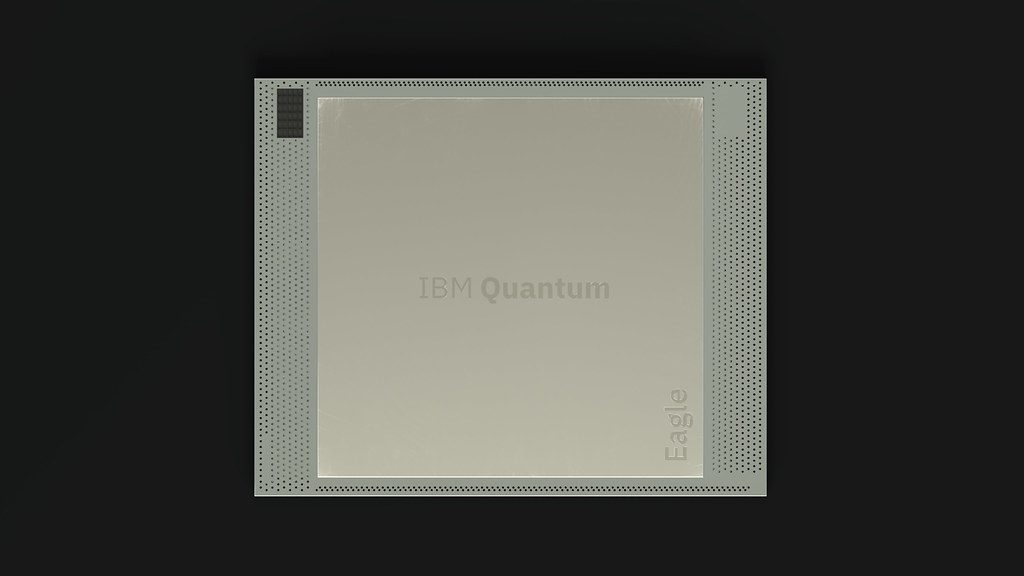
Quantum computers run on qubits but are fed ordinary data, and getting that data onto the chip has been the slow, awkward step before any experiment. On 16 November 2026, a London company called Moth said it had written 1,568 numbers, enough for a small colour image, across all 120 qubits of an IBM processor and then read them back.

The best previous round trip of this kind recovered 128 values from 12 qubits of a trapped-ion machine. Tessa, the method behind the new result, treats the chip's coupling graph as the layout: qubits alternate between address and data roles, so no swap or routing gates are needed. The cost is accuracy. The colour run matched its input at a correlation of 0.69, against 0.96 for grayscale, and the number of readout shots needed rises exponentially with each data qubit's local connections.

Why it matters

Every quantum machine-learning experiment starts by loading ordinary data. Until this result, the best published round trip handled 128 values.

Questions about this story

Free account needed to ask — your question is kept and asked for you right after sign-up. Answers are public.

No questions yet — be the first to ask.

Key Indicators

1,568
Values encoded and recovered
Colour image data written across 120 qubits of IBM's Phoenix processor and read back in two measurement bases.
128
Previous record for a full round trip
QCrank recovered this many values from 12 qubits of a trapped-ion machine.
120
Qubits used
Every qubit of the Phoenix processor took part in the encoding.
0.96
Grayscale correlation with input
Correlation of recovered values with the original image; the colour run scored 0.69.
8,192
Shots per measurement basis
Readout repetitions used in each full-chip run.

Voices

Curated perspectives — historical figures and your fellow readers.

Sign up to generate historical perspectives on this story.

Organizations Involved

Timeline

2 events Latest: Today
  1. Moth claims full-chip encoding record

    Today Announcement

    Moth says it wrote 1,568 numbers across all 120 qubits of an IBM processor and recovered them. The release names an IBM Nighthawk r2 chip; the paper describes runs on IBM's Phoenix and Fez machines.

  2. Tessa encoding paper posted to arXiv

    Research

    A paper describing the Tessa scheme is submitted to the arXiv preprint server, reporting 1,568 values encoded and decoded on IBM hardware.

Scenarios

1

An independent team recovers more than 1,568 values

Likely Resolves by Nov 16, 2027

Discussed by: The Tessa paper's own comparison table, which counts only experiments that wrote arbitrary real numbers and read them back

Capacity is the metric this record rests on, and the paper lists three groups already working near it: QCrank, a compilation study reporting up to 320 values, and a tensor-network approach that recovered 1,024 pixels from 13 qubits of Fez. A team with a larger chip or a cheaper readout could pass 1,568 without new physics. The authors note that amplitude encoding could in principle store far more per qubit, but routing costs have kept real circuits small.

2

Moth announces financing or a hardware partnership

Possible Resolves by May 16, 2027

Discussed by: Business-press coverage of the announcement, which reached investors through a mergers-and-acquisitions news feed

The record arrived as a corporate announcement rather than a conference talk, routed through a financial news wire. That is the pattern of a company raising its profile ahead of a funding round or a vendor alliance. A named partnership with a hardware maker would also give the method a route onto machines beyond IBM's.

3

Peer-reviewed version keeps the 1,568-value claim

Uncertain Resolves by May 16, 2028

Discussed by: The Tessa authors, who state that no error mitigation was used because the aim was to test the encoding itself

The result currently exists as a preprint submitted three days before the announcement. Reviewers would test the counting method, the use of two measurement bases, and the gap between hardware and simulated error. The paper already reports that gap plainly: value error on hardware ran two to three times the local-noise simulation in the colour runs.

Historical Context

2 moments from history that rhyme with this story — and how they unfolded.

October 2019

Google's quantum supremacy claim (2019)

Google reported that its 53-qubit Sycamore chip finished a random-circuit sampling task in about three minutes, a calculation the company said would take a classical supercomputer thousands of years.

Then

IBM disputed the classical cost estimate within days, arguing a better classical algorithm could finish the same task in days.

Now

The claim moved the field's attention from qubit counts toward what a machine can actually do with them.

Why this matters now

Tessa is judged the same way: not by qubit count alone, but by how much input data survives a round trip through the chip.

Before 2026

QCrank's 128-value round trip

A scheme called QCrank encoded 128 real values into 12 qubits of a trapped-ion quantum computer and read them back. It is the benchmark the Tessa paper measures itself against.

Then

It set the reference point for how much classical data a device could hold and return.

Now

Later compilation studies reported layouts carrying up to 320 values across six to twenty qubits, but ran only the smaller ones on hardware and simulated the largest.

Why this matters now

Tessa keeps QCrank's multiplexer structure and tiles it across a chip's coupling graph, which is where the added capacity comes from.

Sources

(2)