
Pull to refresh
Logo
Croatian court approves Nord Stream suspect's extradition to Germany

Croatian court approves Nord Stream suspect's extradition to Germany

Rule Changes

Volodymyr Zhuravlov, a Ukrainian diver linked to the 2022 pipeline sabotage, faces possible trial in Hamburg if the appeal fails.

Yesterday: Extradition ruling becomes public

Overview

Updated Yesterday

A Croatian court has approved handing Volodymyr Zhuravlov, a Ukrainian scuba diver suspected in the 2022 Nord Stream pipeline bombings, to German prosecutors. The September 18 ruling from the County Court in Pula is not final — his lawyers plan to appeal, so the extradition could still stall.

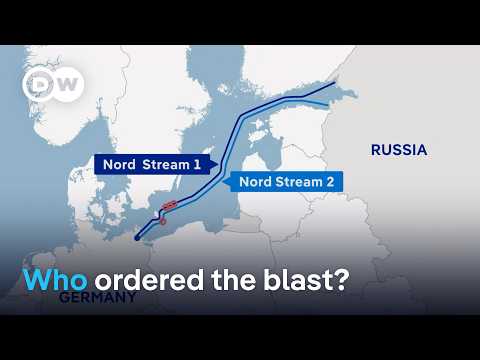
The case sits atop one of Europe's most delicate investigations. German prosecutors believe a Ukrainian state agency ordered the blasts to cut Russia's energy revenue, and Kyiv denies any role. A conviction in Germany would tie a wartime ally to sabotage of critical infrastructure.

Why it matters

Germany is prosecuting a wartime ally's suspected state-ordered sabotage; the outcome could strain Berlin-Kyiv relations and set a legal precedent.

Questions about this story

Free account needed to ask — your question is kept and asked for you right after sign-up. Answers are public.

No questions yet — be the first to ask.

Key Indicators

2
European arrest warrants against Zhuravlov
Germany issued warrants in June 2024 and August 2026; the second added a war-crime allegation.
15 years
Maximum prison sentence if convicted
German charges against Zhuravlov carry a 15-year ceiling.
4
Alleged divers in the sabotage team
German prosecutors say Zhuravlov was one of four trained divers who planted explosives.
3 of 4
Pipeline lines ruptured in the 2022 blasts
Explosions near Bornholm damaged all but one of the four Nord Stream lines.

Voices

Curated perspectives — historical figures and your fellow readers.

Ever wondered what historical figures would say about today's headlines?

Sign up to generate historical perspectives on this story.

People Involved

Organizations Involved

Timeline

September 2022 October 2026

11 events Latest: Yesterday Showing 8 of 11
Tap a bar to jump to that date
  1. Extradition ruling becomes public

    Latest Statement

    Croatian state media report the court's approval; defense lawyer confirms appeal plans.

  2. Zhuravlov detained in Croatia

    Arrest

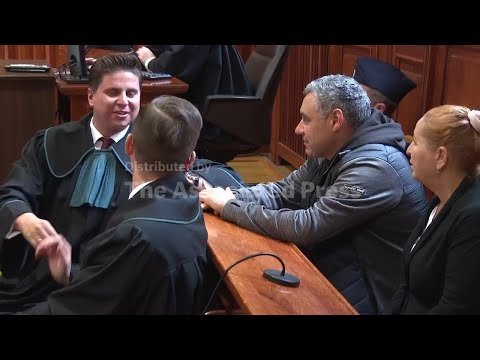
    Police hold him in Pula; he had arrived to consult on a film about the sabotage.

  3. Zhuravlov detained in Poland

    Arrest

    Polish police arrest him on Germany's warrant.

  4. Co-suspect Serhii K. arrested in Italy

    Arrest

    Italian police detain him in a village bungalow where he was staying with family.

  5. Nord Stream pipelines ruptured

    Sabotage

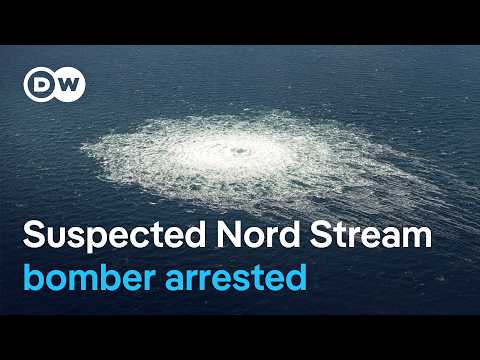
    Explosions damage three of four pipeline lines near Bornholm, Denmark.

Scenarios

1

Croatian appeals court blocks extradition

Possible Resolves by Q2 2027

Discussed by: Zhuravlov's defense team, which cites procedural and jurisdictional grounds

Zhuravlov's lawyers appeal to a higher Croatian court. They argue German law should not apply to explosions in international waters, that he cannot be tried twice for the same offense, and that the war-crime allegation belongs before the International Criminal Court. The Warsaw court's refusal in October 2025 gives the defense a precedent, though Croatian judges have said that ruling does not bind them.

2

Extradition finalized, Zhuravlov stands trial in Hamburg

Likely Resolves by Q2 2027

Discussed by: German prosecutors and standard reading of the September 18 ruling

If the appeal fails, Croatia's interior ministry transfers Zhuravlov to German authorities. He would face charges including being part of the sabotage team, and his trial could run alongside or after Serhii K.'s at the Hamburg Higher Regional Court. This is the most direct path to a verdict on the merits.

3

Political intervention halts the case

Unlikely Resolves by End of 2027

Discussed by: Commentators noting the diplomatic sensitivity between Berlin and Kyiv

Germany could downgrade or drop charges under political pressure, or the case could end through a negotiation that returns Zhuravlov to Ukraine. German government officials have pointed to the judiciary's independence when asked about the case, suggesting they do not currently control its outcome. This scenario would require the political cost to outweigh the evidence.

Historical Context

2 moments from history that rhyme with this story — and how they unfolded.

July 1985

Rainbow Warrior bombing (1985)

French intelligence agents sank the Greenpeace ship Rainbow Warrior in Auckland harbor, killing photographer Fernando Pereira. Two agents were arrested by New Zealand police and charged with murder and arson.

Then

Both agents pleaded guilty to manslaughter and were sentenced to prison.

Now

France pressured New Zealand and negotiated the agents' transfer to French custody after a year. The affair exposed state-ordered sabotage by a friendly nation and tested the rule of law against diplomatic interests.

Why this matters now

Shows how a friendly state's covert sabotage can land perpetrators in a third country's courts, and how hard diplomatic pressure can bend prosecutions afterward.

November 2006

Litvinenko poisoning (2006)

Alexander Litvinenko, a former Russian spy living in London, was poisoned with polonium-210 in a London hotel. British investigators later concluded the Russian state was responsible.

Then

British authorities charged two Russians in absentia and held a public inquiry that assigned blame to Russian intelligence.

Now

Prosecutions stalled for a decade because Russia refused cooperation. The case became a benchmark for the political difficulty of prosecuting state-ordered operations.

Why this matters now

Parallels Germany's challenge of prosecuting alleged state-ordered sabotage when the responsible state is a major diplomatic partner.

Sources

(9)