
Pull to refresh
Logo
EU ambassadors agree to lift sanctions on two Russian oligarchs, extend others for three years

EU ambassadors agree to lift sanctions on two Russian oligarchs, extend others for three years

Rule Changes

Package deal trades delistings for 36-month renewal of nearly 3,000 listings

Today: Ambassadors reconvene to finalize; sanctions expire at midnight

Overview

Updated 1 hour ago

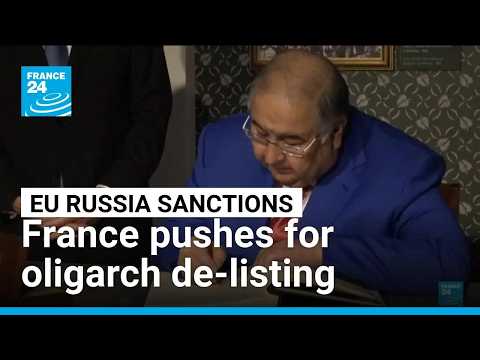
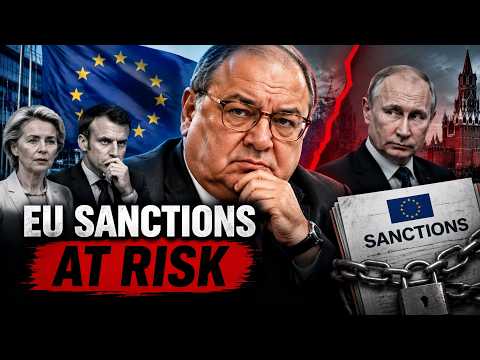
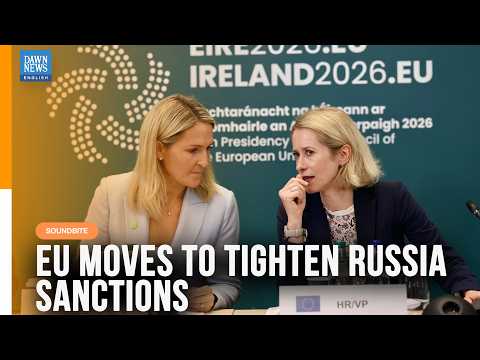
European Union ambassadors on September 21 provisionally agreed to remove Alisher Usmanov and Mikhail Fridman, two Russian billionaires, from the bloc's sanctions list. The move is part of a package that renews restrictions on nearly 3,000 other Russia-linked individuals and entities for three years.

The deal defuses a standoff that risked letting the entire sanctions list lapse at midnight on September 22. Ukraine, Poland, and the Baltic states oppose the delisting, warning it signals weakness to Moscow. The agreement remains provisional for a few hours, pending any objections, before ministers formally adopt it.

Why it matters

If finalized, the pact frees Usmanov and Fridman to move money and travel across the EU while committing the bloc to three years of sanctions on thousands of others.

Questions about this story

Free account needed to ask — your question is kept and asked for you right after sign-up. Answers are public.

No questions yet — be the first to ask.

Key Indicators

2
Russian oligarchs to be delisted
Alisher Usmanov and Mikhail Fridman to be removed from the EU sanctions list if the deal holds.
3,000
Russia-linked listings renewed for three years
The EU maintains asset freezes and travel bans on nearly 3,000 individuals and entities.
36 months
Extension period for sanctions
Renewal three times longer than the usual 6- or 12-month cycle, preventing similar impasses until 2029.

Voices

Curated perspectives — historical figures and your fellow readers.

Ever wondered what historical figures would say about today's headlines?

Sign up to generate historical perspectives on this story.

People Involved

Organizations Involved

Timeline

3 events Latest: Today
  1. Ambassadors reconvene to finalize; sanctions expire at midnight

    Today Deadline

    Coreper II scheduled another meeting at 8 a.m. Brussels time. Without unanimous approval, the entire list lapses at midnight.

  2. Provisional deal to delist Usmanov and Fridman

    Diplomacy

    EU ambassadors agree in principle to remove the two oligarchs and renew the rest for 36 months, pending no objections within hours.

  3. Temporary seven-day extension adopted

    Policy

    EU keeps sanctions on nearly 3,000 individuals and entities alive for seven days while negotiations continue.

Scenarios

1

EU formally adopts deal, delists two oligarchs

Likely Resolves by Q3 2026

Discussed by: Reuters, diplomats, Kyiv Independent

No member state objects within the window. Ministers adopt the decision, the Council publishes it in the Official Journal, and Usmanov and Fridman come off the sanctions list. The other 3,000 listings are renewed for 36 months, pushing the next renewal to 2029.

2

Objection blocks deal, sanctions list lapses

Unlikely Resolves by Sep 23, 2026

Discussed by: Ukraine, Poland, Baltic states (opponents)

A member state vetoes the package within the hours left. No compromise is reached, and because unanimity is required, the entire sanctions list for roughly 3,000 individuals and entities expires at midnight on September 22. The EU would have to rebuild the list from scratch, a lengthy and uncertain process.

Historical Context

2 moments from history that rhyme with this story — and how they unfolded.

2014-2015

EU sanctions on Russia after Crimea (2014)

After Russia annexed Crimea, the EU imposed asset freezes and travel bans on dozens of officials and oligarchs, renewing them every six months. Each renewal required unanimous approval, and some members used it to raise unrelated issues.

Then

Sanctions were renewed repeatedly, but each cycle became a negotiation.

Now

Established the pattern of short renewal windows that forces regular unanimity votes, allowing any one member state to hold the rest hostage.

Why this matters now

The current standoff is a direct descendant: a 36-month extension is an attempt to break the six-month veto cycle that has repeatedly enabled such brinkmanship.

July 2026

EU sanctions renewal concessions (July 2026)

When the EU renewed sectoral sanctions on Russia in July, it passed only after Greece won an exemption for its LNG carriers and Patriarch Kirill was left off the list. The package was a sectoral text, renewed for 12 months.

Then

Sanctions were renewed, but member states showed they could extract concessions for their votes.

Now

Set a precedent that unanimity is a bargaining chip; the September renewal saw France and Slovakia make similar demands on individual listings.

Why this matters now

Demonstrates the recurring mechanism: any member state can block a sanctions renewal to win a favor, which is exactly how the Usmanov and Fridman delistings emerged.

Sources

(8)