Anchor

Oregon farmer converts barley farm into wetland refuge for endangered fish
Built World70-acre project near Klamath Falls draws 140 bird species and raises rare suckers
Yesterday: Story goes viral on RedditNew here? Follow stories to track developments over time. Create a free account to get updates when stories you care about change.
Overview
Updated 1 hour agoIn 2021, Karl Wenner, a co-owner of Lakeside Farms near Klamath Falls, Oregon, bulldozed 70 of his 400 acres of barley fields into a wetland. Four years later it hosts at least 140 bird species and has successfully raised federally endangered suckers to adulthood.
The project was built to solve a phosphorus pollution problem: the farm's spring-fed runoff was exceeding state limits for Upper Klamath Lake. Instead of treating the water, he turned it into habitat. The wetland now acts as a natural filter, soaking up nutrients while providing sanctuary for migrating waterfowl and rearing ground for c'waam and koptu, two sucker species sacred to the Klamath Tribes.
Why it matters
This wetland proves that converting farmland to marsh can clean polluted water and help endangered fish survive to adulthood.
Questions about this story
Free account needed to ask — your question is kept and asked for you right after sign-up. Answers are public.
No questions yet — be the first to ask.
Key Indicators
140
Bird species documented at the wetland
Includes tens of thousands of ducks, geese, and swans during migration.
50
Adult endangered suckers recovered in 2025
Found after partially draining the rearing pond; fish were up to 16 inches long.
70 acres
Farmland converted from barley to wetland
Out of Lakeside Farms' total 400 acres.
Related Media
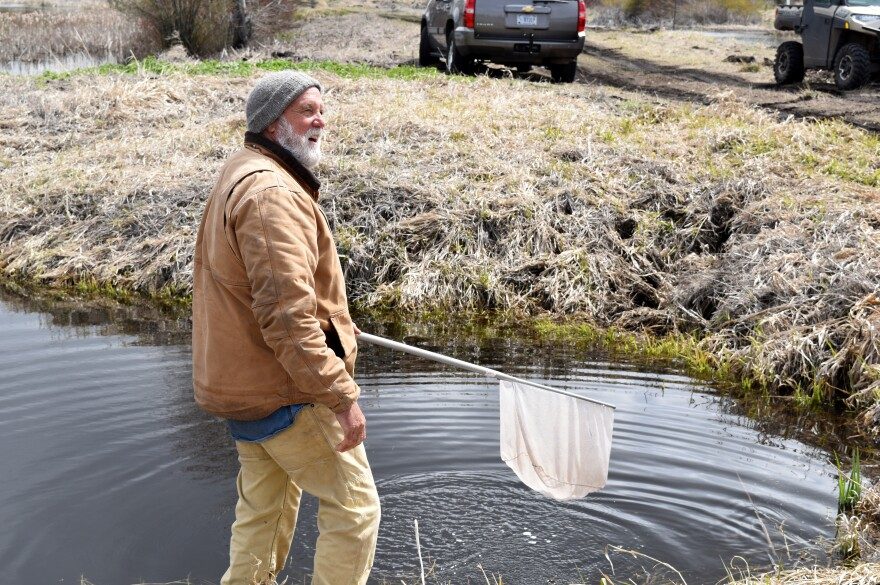
Endangered fish and waterfowl find refuge at the Klamath Basin's Lakeside Farms - OPB
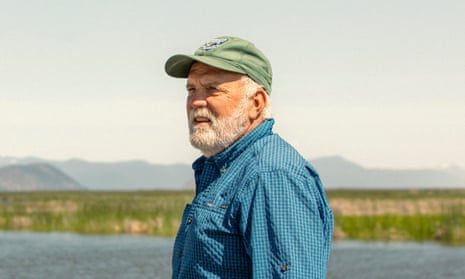
This place wanted to be a wetland': how a farmer turned his fields into a wildlife sanctuary | Climate crisis in the American west | The Guardian
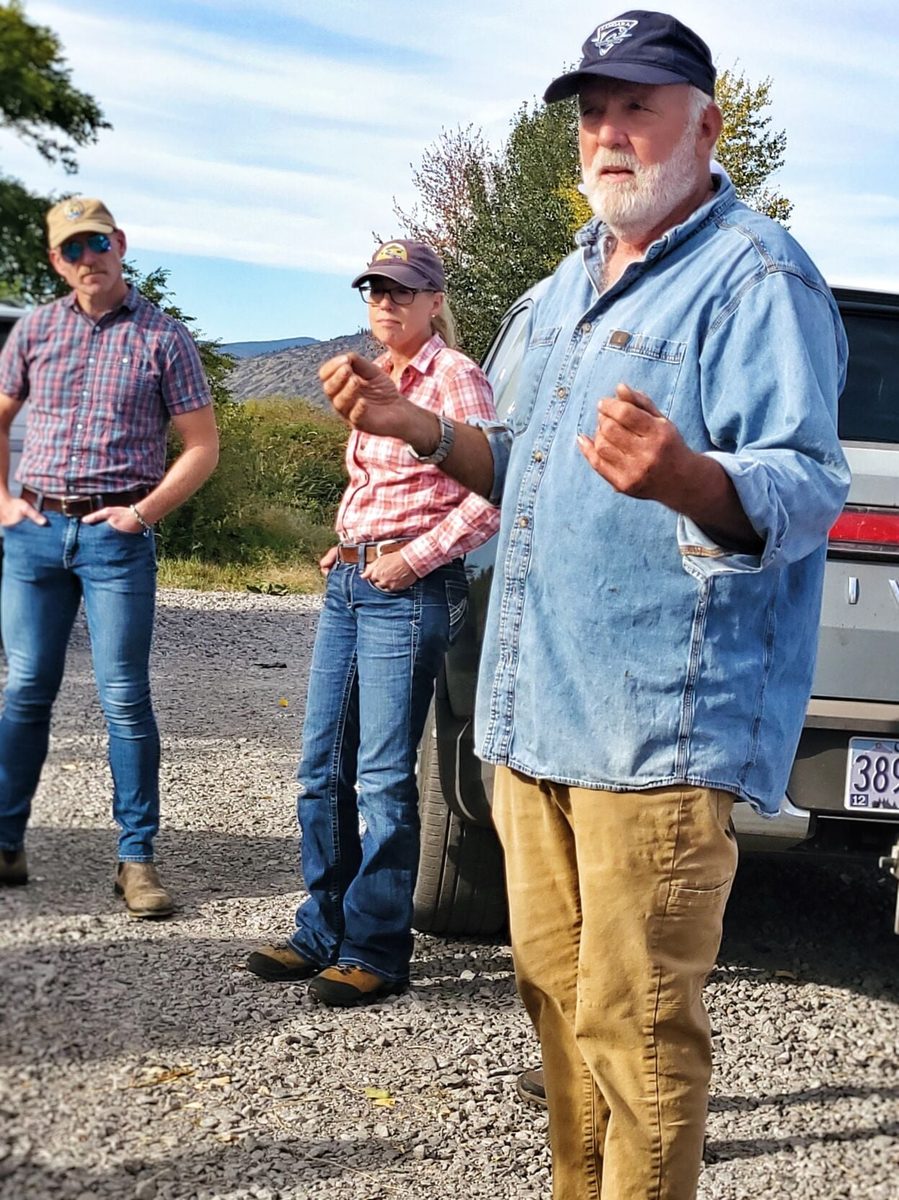
Lakeside Farms raises endangered C'waam, Koptu on 'walking wetlands' acreage | Local News | heraldandnews.com
6.4K views
6:48
Oregon Farmers Surprised to Find Fish in Fields
PBS NewsHour

7.9K views
13:15
Big trouble for Oregon's endangered suckers
Oregon Public Broadcasting
25.6K views
8:21
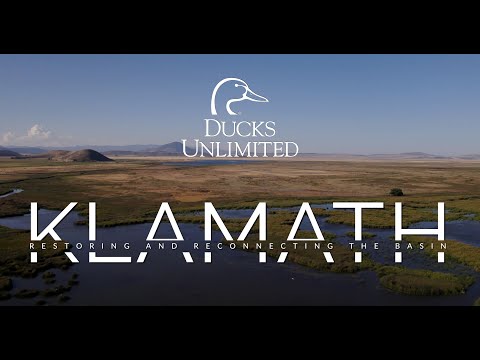
Restoring and Reconnecting the Klamath Basin
Ducks Unlimited
Images from Openverse under Creative Commons licenses. Videos from YouTube.
Voices
Curated perspectives — historical figures and your fellow readers.
Play
Exploring all sides of a story is often best achieved with Play.
Most of these play right now — no account needed. Sign up to save scores, keep a streak, and unlock Debate and Predict.
Log in
Sign Up
Higher or Lower
A number from this story, against one from elsewhere in the news — guess which is bigger, then keep the chain going. 5 rounds, 3 strikes; a miss costs a strike and resets your streak.
Example
Anchor
EU tariff revenue
$52B
Big for this kind of number
Mystery
Pentagon AI contract
?
Round 1
Streak: 0
Mystery
?
Keyboard: ↓/L lower · ↑/H higher
0 pts
Best streak: 0 · Rounds: 0
0 points — sign up to put that on the leaderboard.
Now try on this story
Connections
Sixteen names from the news. Find the four hidden groups of four. Four mistakes max.
Loading today's puzzle…
0/4 groups
Mistakes
Sign up to keep a daily streak — a new puzzle lands every day.
Now try on this story
Exit debate?
Your progress in this debate will be lost.
How it works
- 1 Two AI personas square off on this story.
- 2 You predict who'll win each round — correct picks earn XP.
- 3 One crossfire question is yours to fire. Pick it carefully.
Couldn't generate a topic
Select Your Champions
Choose one persona for each side of the debate
DEBATE TOPIC
Choose personas with different perspectives for a more dynamic debate.
SIDE A (PRO)
Select debater for this side:
No debate personas available right now.
SIDE B (CON)
Select debater for this side:
No debate personas available right now.
VS
Get ready to make your prediction...
Round of
Claim
Evidence
Stakes
Crossfire Answer
Closing Statement
Claim
Evidence
Stakes
Crossfire Answer
Closing Statement
Your Crossfire Question
Generating arguments...
Who's Got This Round?
Make your prediction before the referee scores
The referee scores both sides on
Correct predictions earn +20 XP
· Press 1 or 2 to pick
Evidence
40%
Logic
30%
Detail
20%
Style
10%
Round Results
Your Pick
Not this time
(%)
Overall Score
/10
Your Pick
Not this time
(%)
Overall Score
/10
Set the Crossfire
Pick the question both personas must answer in the final round
Crafting crossfire questions...
Choosing a question earns +10 XP crossfire bonus
🏆
Total XP Earned
Cred Change
Predictions
Debate Oracle! You called every round!
Sharp Instincts! You know your debaters!
The Coin Flip Strategist! Perfectly balanced!
The Contrarian! Bold predictions!
Inverse Genius! Try betting the opposite next time!
XP Breakdown
Base completion
+20 XP
Rounds played ( rounds x 5 XP)
+ XP
Correct predictions ( correct x 20 XP)
+ XP
Crossfire bonus
+10 XP
Accuracy
%
Prediction History
Round
You picked:
✓
✗
Now try on this story
Keep debating to level up your credibility and unlock achievements
People Involved
Organizations Involved
Lakeside Farms
Family-owned agricultural operation
400-acre barley farm with 70-acre restored wetland
A barley farm near Upper Klamath Lake that now integrates wetland restoration into its rotating crop cycle.
U.S. Fish and Wildlife Service
Federal agency
Partners in sucker-rearing experiment
Provides permits and technical support for the endangered fish experiment at Lakeside Farms.
Timeline
January 2017 September 2026
7 events
Latest: Yesterday
Tap a bar to jump to that date
-
Story goes viral on Reddit
Latest MediaA Reddit post in r/UpliftingNews shares the story, bringing national attention to the project.
-
Adult suckers recovered
MilestonePartial drainage of the wetland reveals 50 adult suckers, up to 16 inches long, some of breeding age.
-
Guardian feature story
MediaThe Guardian highlights the farm-to-wetland conversion and its wildlife abundance.
-
OPB reports on project
MediaOregon Public Broadcasting details the wetland's role in nutrient filtration and fish habitat.
-
Sucker juveniles stocked
ConservationNearly 5,500 young Lost River and shortnose suckers are introduced to the wetland pond.
-
Wetland construction begins
Infrastructure70 acres of barley fields are flattened, diked, and flooded with spring water, creating marshes with nesting islands.
-
Wenner buys into Lakeside Farms
OwnershipOrthopedic surgeon Karl Wenner purchases a stake in the barley farm, initially for duck hunting.
Historical Context
2 moments from history that rhyme with this story — and how they unfolded.
2023-2024
Klamath River dam removal (2023-2024)
Four aging hydroelectric dams on the Klamath River were removed—the largest dam removal project in U.S. history—reopening 400 miles of habitat for salmon and steelhead.
Then
Salmon returned to historic spawning grounds within months; water quality improved.
Now
Set a precedent for large-scale river restoration and tribal co-management of waterways.
Why this matters now
The dam removal and Lakeside Farms wetland are parallel parts of the Klamath Basin's ecological recovery, showing that both river and floodplain restoration are needed to revive native fish and bird populations.
1990s-present
Everglades restoration agricultural buffers (1990s–present)
Florida's Everglades, long polluted by agricultural runoff, saw the creation of vast stormwater treatment areas and buffer wetlands. These natural filters absorb phosphorus and nitrogen before water enters sensitive ecosystems.
Then
Reduced phosphorus loads in the Everglades, though recovery remains incomplete.
Now
Established 'treatment wetlands' as a standard tool for managing agricultural pollution at scale.
Why this matters now
Lakeside Farms applies the same principle on a much smaller scale, demonstrating that even a 70-acre wetland can measurably improve water quality and support endangered species.
Sources
(8)Related Stories
California strikes deal to buy Golden Gate Fields horse track for public park
Built World
Updated 4 days ago
Trump administration lifts work stoppage on Great Lakes invasive carp barrier
Built World
Updated 2 days ago
Pacific Power moves Oregon transmission line east after public pushback
Built World
Updated 2 days ago
From barren ranch to living forest: Instituto Terra's 2.5 million tree proof-of-concept
Built World
Updated May 20
PacWave South opens as first grid-connected wave energy test site in continental US
Built World
Updated Aug 27
Atmospheric river turns Western Washington’s rivers into record-breaking floods
Built World
Updated May 11