

Pull to refresh
Logo
4,000-year-old wall at Oued Beht is North Africa's oldest defensive structure outside Egypt

4,000-year-old wall at Oued Beht is North Africa's oldest defensive structure outside Egypt

New Capabilities

Excavations in northwest Morocco date a ditch-and-rampart system to the Bronze Age, pushing back the record for organized construction in the Maghreb

Overview

Updated 1 hour ago

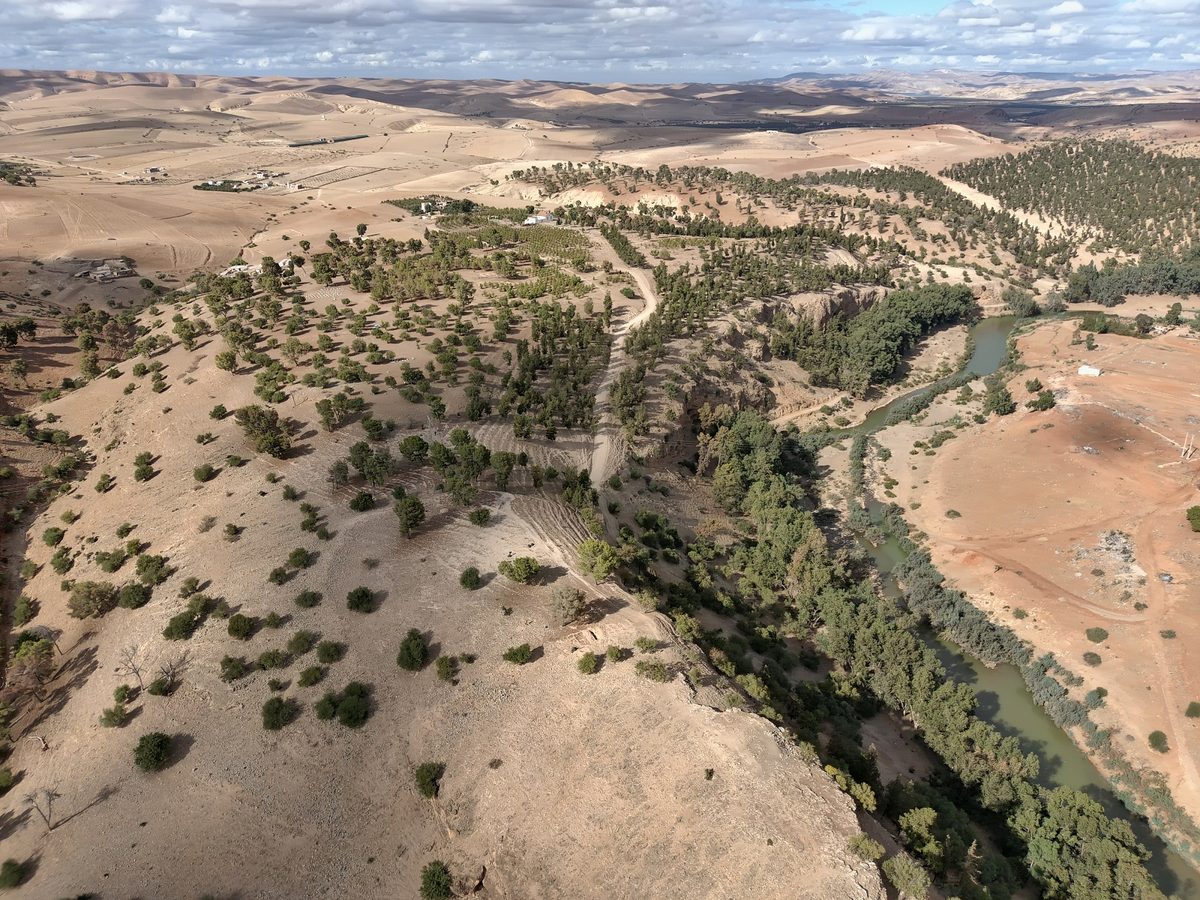
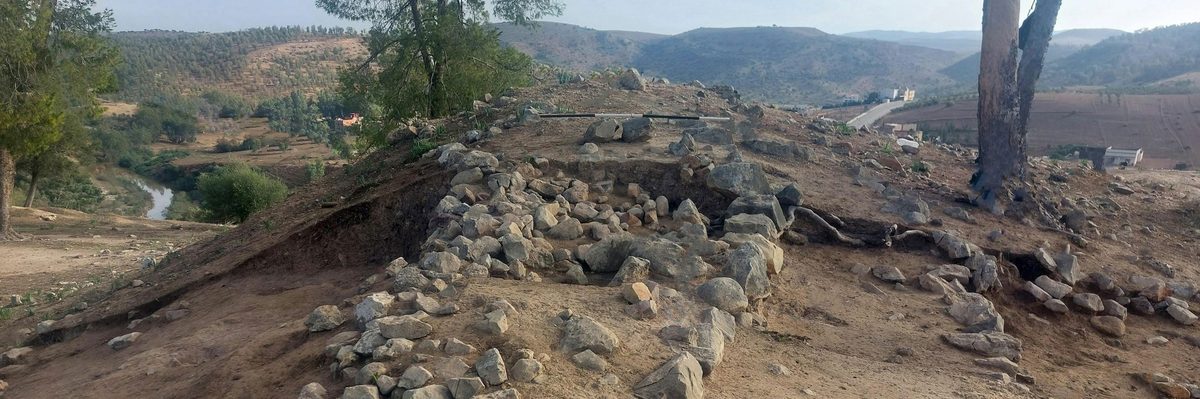
In the 1930s, the French archaeologist Armand Ruhlmann mapped three walls across a ridge above the Oued Beht river in northwest Morocco and guessed they were defensive. Nobody could date them. New excavations and 17 radiocarbon dates place the ditch and rampart at 3,500 to 4,000 years old, making it the oldest defensive construction found in North Africa outside the Nile Valley.

The wall encloses the tip of a ridge at a site that was already a farming and craft center centuries earlier, spread across at least ten hectares. It shows that communities in the Maghreb could plan and staff large construction projects at the same time fortified settlements were rising in southern Iberia.

Why it matters

The Maghreb's second-millennium BC communities could plan large defenses, which puts them inside Mediterranean history rather than outside it.

Questions about this story

Free account needed to ask — your question is kept and asked for you right after sign-up. Answers are public.

No questions yet — be the first to ask.

Key Indicators

3,500–4,000 years
Age of the defensive system
Radiocarbon dates from the ditch and rampart place construction in the second millennium BC.
10 hectares
Minimum extent of the site
Human activity spreads across at least this area of the ridge.
17
New radiocarbon dates
The dates let the team reconstruct the building sequence and its chronology.
5,400–4,900 years ago
Age of the earlier farming complex
The Final Neolithic phase at the site predates the wall by roughly 1,500 years.

Voices

Curated perspectives — historical figures and your fellow readers.

Sign up to generate historical perspectives on this story.

People Involved

Organizations Involved

Timeline

1930s October 2026

6 events Latest: Yesterday
Tap a bar to jump to that date
  1. Project's account reaches a wider English-language audience

    Latest Publication

    A piece by the excavators, first published in September, is republished and describes the wall and the site's medieval reuse.

  2. Research council announces the finding

    Statement

    Italy's National Research Council calls it the oldest defensive structure identified in North Africa beyond the Nile Valley.

  3. Study dates the wall to the second millennium BC

    Publication

    Seventeen radiocarbon dates place construction between roughly 2000 and 1500 BC, the Bronze Age of the western Mediterranean.

  4. Third season digs the southern ridge walls

    Excavation

    Excavators find a multi-phase ditch and rampart under the visible masonry and take samples for dating.

  5. Project finds a ten-hectare Neolithic complex

    Excavation

    Fieldwork reveals a farming community growing barley and wheat, keeping livestock and making polished stone axes and painted pottery.

  6. Ruhlmann maps three walls at Oued Beht

    Survey

    The French archaeologist records three walls with a natural scarp on the fourth side, calling it a barred spur. Their date stays unknown.

Scenarios

1

Excavators find second-millennium BC houses inside the walled spur

Possible Resolves by End of 2028

Discussed by: The Oued Beht project's own study, which notes that settlement focus shifted from the open northern area to the defensible southern ridge

The wall implies people were living or storing goods behind it. If later seasons uncover structures inside the enclosed southern tip with matching radiocarbon dates, the case for a defended Bronze Age settlement, rather than a bare refuge, gets much stronger.

2

A second Maghreb site yields a Bronze Age defensive structure

Uncertain Resolves by End of 2030

Discussed by: The study authors, who argue the Oued Beht wall reflects wider social changes across the western Mediterranean rather than an isolated local effort

If comparable ditches or ramparts are dated to the same window elsewhere in Morocco, Algeria or Tunisia, Oued Beht stops looking like an exception and starts looking like a regional pattern.

3

The medieval cemetery is dated and tied to the rebuilt wall

Likely Resolves by Q2 2029

Discussed by: The excavation team, which found a cemetery between the rebuilt wall and a hilltop settlement

The ridge was reoccupied in the 11th to 13th centuries AD, when the earlier line was rebuilt in stone and a hamlet or farm was established nearby. Dating the burials would pin down how that later community used the prehistoric earthworks.

Historical Context

2 moments from history that rhyme with this story — and how they unfolded.

2200–1550 BC

El Argar society in southeastern Iberia (c. 2200–1550 BC)

Communities in what is now Spain built planned hilltop settlements with fortified sites, produced bronze, and buried their dead in ways that show clear social ranks.

Then

Fortified, hierarchically organized settlements controlled surrounding territory.

Now

El Argar became the reference case for Bronze Age complexity in the western Mediterranean.

Why this matters now

The Oued Beht study compares the Moroccan wall directly to Argaric fortification, arguing the two shores were in contact rather than developing separately.

c. 19th century BC

Middle Kingdom Egyptian fortresses in Nubia

Egypt built large mud-brick fortresses along the Nile in Nubia, including at Buhen, with ditches, ramparts and planned internal streets.

Then

These forts secured a frontier and controlled river movement.

Now

They set the benchmark for monumental defensive architecture in Africa, all of it inside the Nile corridor.

Why this matters now

The phrase 'outside the Nile Valley' is the whole claim: until now, large-scale defensive construction in Africa was documented only in Egypt and Nubia.

Sources

(5)