
Pull to refresh
Logo
Sahara meteorite dated to 4.1 billion years, sampling ancient Martian crust

Sahara meteorite dated to 4.1 billion years, sampling ancient Martian crust

New Capabilities

Teghaza 001 carries a primordial mantle signature and signs of reaction with water before it left Mars

Overview

Updated 1 hour ago

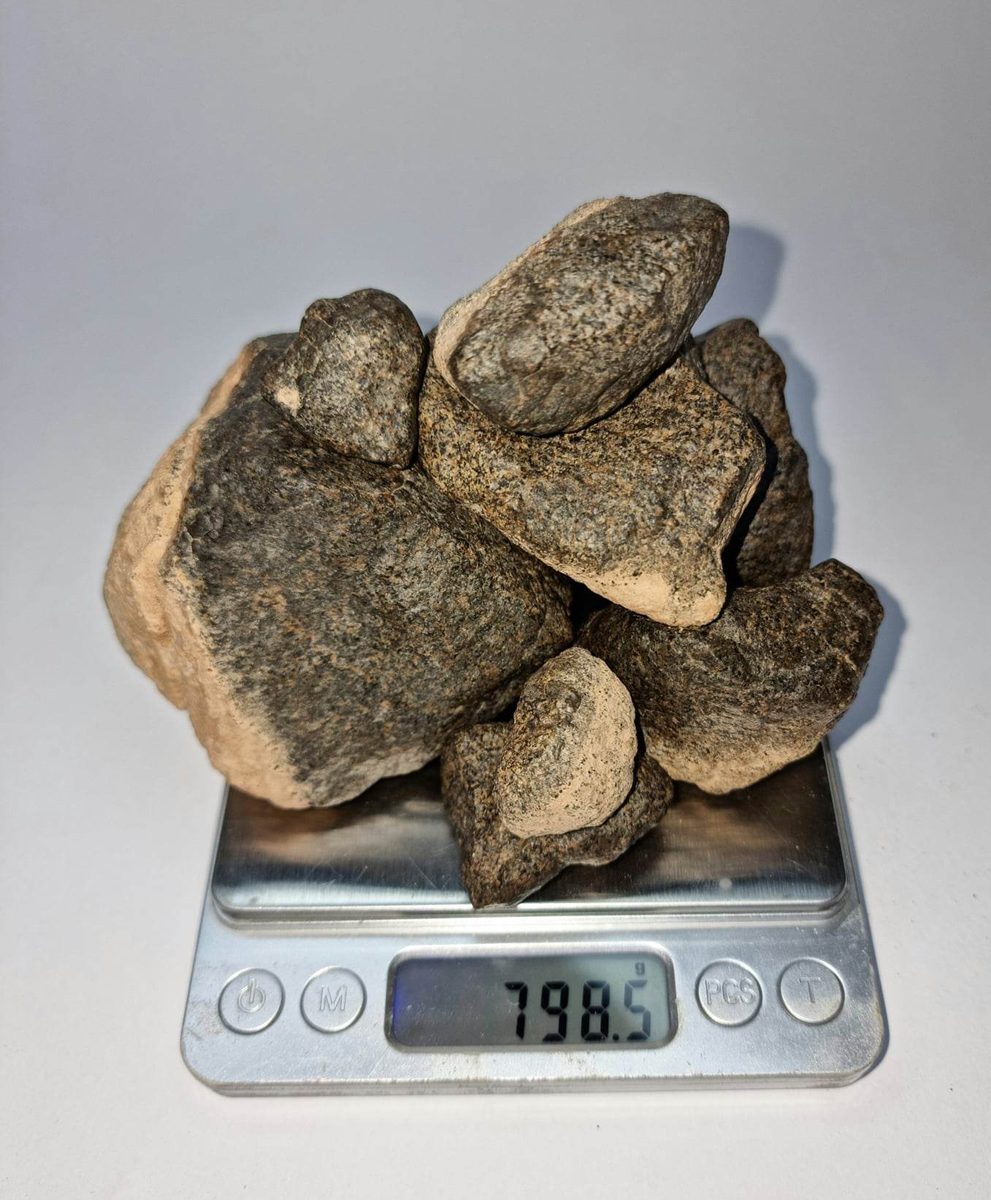
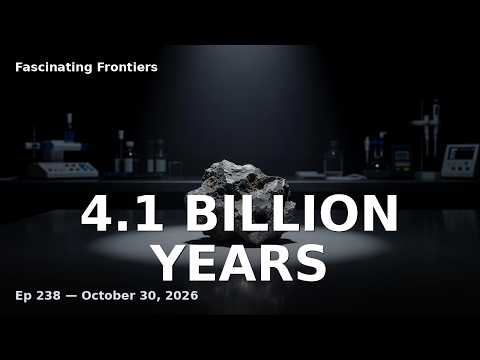
Of roughly 435 known Martian meteorites, almost all formed within the last 2.4 billion years. Teghaza 001, an 798.5-gram rock picked up in the Sahara in Mali in 2022, crystallized at least 4.1 billion years ago, during Mars' pre-Noachian period.

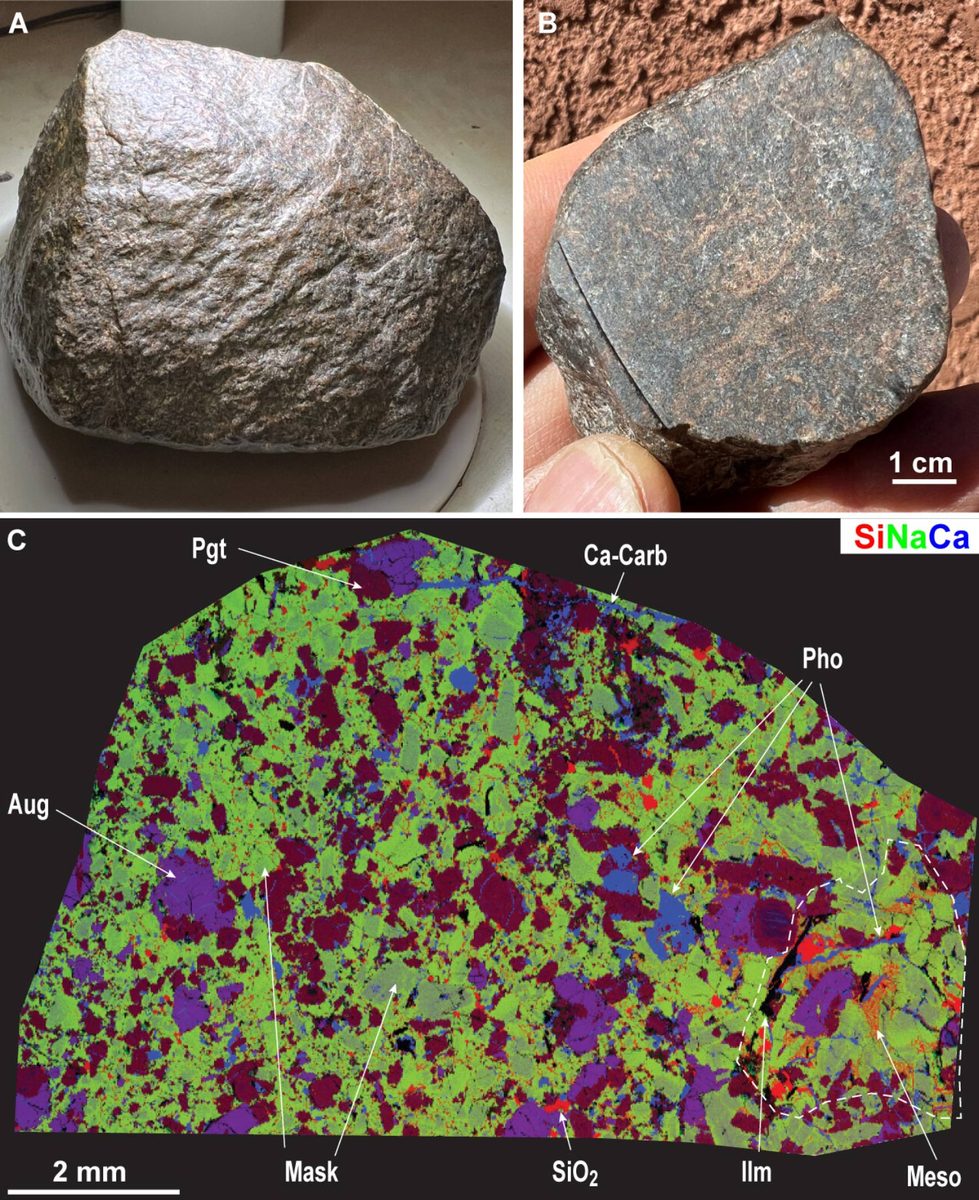
Its zircon crystals date to about 4,114 million years, its oxygen isotopes are roughly 2 per mille heavier than other Martian meteorites, and its trace elements point to a mantle source never sampled before. A companion paper uses its phosphates to estimate the deuterium-to-hydrogen ratio of Martian water at 4.1 billion years ago.

Why it matters

Most Martian meteorites sample a young planet. This one records Mars' crust, mantle and water before 4.1 billion years ago.

Questions about this story

Free account needed to ask — your question is kept and asked for you right after sign-up. Answers are public.

No questions yet — be the first to ask.

Key Indicators

4.1 billion years
Minimum formation age
Zircon uranium-lead and lead-lead ages cluster near 4,114 million years.
4,114 ± 17 million years
Zircon uranium-lead age
Weighted average of six measurements on shocked zircon grains.
798.5 g
Total recovered mass
Eight stones; the largest weighs 442 grams.
6.35 per mille
Bulk oxygen-18 enrichment
About 2 per mille above the average of other Martian meteorites, a sign of reaction with fluids.
435
Known Martian meteorites
Only two previously identified samples were older than 3 billion years.

Voices

Curated perspectives — historical figures and your fellow readers.

Sign up to generate historical perspectives on this story.

People Involved

Organizations Involved

Timeline

2022 October 2026

3 events Latest: 2 days ago
  1. Science paper dates the rock to at least 4.1 billion years

    Latest Publication

    Zircon, rubidium-strontium and phosphate chronometers converge on roughly 4.1 billion years.

  2. Companion paper estimates ancient Martian water chemistry

    Publication

    Phosphate measurements put the deuterium-to-hydrogen ratio of Mars' hydrosphere at 4.1 billion years ago near twice Earth seawater.

  3. Meteorite recovered in the Sahara

    Discovery

    Eight stones totaling 798.5 grams are found in Mali; the largest weighs 442 grams.

Scenarios

1

Independent labs reproduce the 4.1-billion-year age

Likely Resolves by End of 2028

Discussed by: Planetary science community; the authors invite comparison by other meteorite laboratories

A separate research group measures uranium-lead ages on Teghaza 001 zircon or phosphate and reports a formation age consistent with roughly 4.1 billion years. Reproduction would move the rock from a single-team result to a benchmark sample for early Martian chronology.

2

More ancient Martian meteorites enter the record

Possible Resolves by Q2 2029

Discussed by: Meteorite researchers, who note the scarcity of igneous Martian samples older than 3 billion years

The meteorite collection has long been skewed young, with only ALH 84001 and the Northwest Africa 7034 breccias representing the ancient planet. Teghaza 001 raises the prospect that more pre-Noachian igneous rocks are sitting in private and museum collections, awaiting classification and dating.

3

Orbital or rover data tie the rock to a source region

Unlikely Resolves by End of 2030

Discussed by: The study authors, who propose the Noachian southern highlands northwest of Hellas as the likely source

The team matched the rock's potassium, thorium, silicon and iron to remote sensing of plagioclase-rich Noachian crust. Confirmation would require spectral or in-situ data showing a region whose chemistry and mineralogy match Teghaza 001 closely enough to rule out other terrains.

Historical Context

2 moments from history that rhyme with this story — and how they unfolded.

2011-2013

Northwest Africa 7034, the 'Black Beauty' breccia (2011-2013)

A 320-gram stone bought in Morocco in 2011 was identified as a Martian regolith breccia containing zircon grains dated to about 4.4 billion years. Its 2013 description in Science made it the first sample of ancient Martian crust, older than any other Martian meteorite then known.

Then

The find pushed the known age of Martian crust back by hundreds of millions of years and became a reference point for early Mars geochemistry.

Now

It established that ancient crustal material survives in the meteorite record, and it set the standard against which later old Martian samples are compared.

Why this matters now

Teghaza 001 is the first ancient Martian igneous rock, rather than a breccia, to follow NWA 7034 into the record.

1984-1996

Allan Hills 84001 (1984-1996)

A 1.9-kilogram Martian meteorite was collected in Antarctica in 1984 and later dated to about 4.1 billion years. In 1996, a NASA team announced that carbonate structures and organic molecules inside it might be signs of ancient microbial life.

Then

The announcement prompted a presidential statement and a surge of public interest in Mars, along with sharp scientific debate over whether the features were biological.

Now

Most of the biological interpretations were rejected, but the episode cemented ALH 84001 as a benchmark ancient Martian sample and demonstrated how one old rock can redirect a field.

Why this matters now

ALH 84001 was one of only two Martian meteorites older than 3 billion years. Teghaza 001 adds a third and is the first of them to preserve an igneous crystallization history.

Sources

(8)