


Pull to refresh
Logo
Swiss court convicts former Belarusian security officer of 1999 enforced disappearance

Swiss court convicts former Belarusian security officer of 1999 enforced disappearance

Rule Changes

Yuri Harauski, who confessed to abducting Lukashenko opponents in 1999, gets a two-year suspended sentence in Switzerland's first enforced-disappearance conviction

Yesterday: Cantonal court convicts Harauski

Overview

Updated 1 hour ago

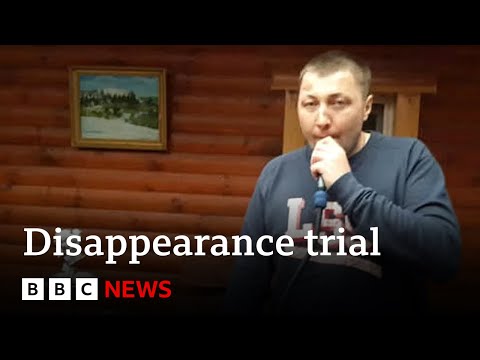
A Swiss court convicted Yuri Harauski on October 26 of the enforced disappearance of Belarusian businessman Anatol Krasousky, abducted in 1999 and later killed. The former SOBR special forces officer received a two-year suspended sentence and was acquitted in two other cases.

The ruling is Switzerland's first conviction under a 2017 law implementing the UN Convention on Enforced Disappearances. The St. Gallen cantonal court found Harauski's confession credible, overturning a 2023 acquittal that translation errors had cast into doubt. It accepted that Belarusian state forces committed the disappearances, putting the Lukashenko regime's role on a foreign judicial record.

Why it matters

A Swiss court ruled that Belarusian state forces committed enforced disappearances in 1999 — the first such finding on a foreign judicial record.

Questions about this story

Free account needed to ask — your question is kept and asked for you right after sign-up. Answers are public.

No questions yet — be the first to ask.

Key Indicators

2 years
Suspended prison sentence
Reduced from an 8-year baseline for full confession and cooperation.
8 years
Baseline sentence the court deemed appropriate
What the court said the enforced disappearance of Krasousky deserved before reductions.
27
Years between the 1999 disappearances and the verdict
From the abductions to the October 2026 conviction.
1 of 3
Charged disappearances that ended in conviction
Acquitted in two cases, one for lack of intent and one on procedural grounds.

Voices

Curated perspectives — historical figures and your fellow readers.

Ever wondered what historical figures would say about today's headlines?

Sign up to generate historical perspectives on this story.

People Involved

Organizations Involved

Timeline

May 1999 October 2026

8 events Latest: Yesterday
Tap a bar to jump to that date
  1. Harauski flees to Switzerland, confesses

    Statement

    The former SOBR officer seeks asylum and tells authorities he took part in the abductions and killings.

  2. Gonchar and Krasousky vanish together

    Crime

    Opposition politician Viktor Gonchar and businessman Anatol Krasousky are abducted on the same day and killed.

  3. Opposition leader Zakharenka disappears in Minsk

    Crime

    Former interior minister Yury Zakharenka is abducted from central Minsk and never seen again.

Scenarios

1

Federal court upholds Harauski conviction

Likely Resolves by Q2 2028

Discussed by: Swiss legal observers covering the St. Gallen verdict

Harauski has 30 days after the written judgment to appeal to the Swiss Federal Court, which reviews cantonal rulings for legal error. The cantonal court wrote a detailed credibility analysis of the confession, which observers expect to survive review. An upheld verdict would make the conviction final.

2

Federal court overturns the conviction

Unlikely Resolves by Q2 2028

Discussed by: Harauski's legal team

An appeal could argue the confession was tainted or the intent requirement misapplied. Success would erase the lone conviction and the judicial finding of Belarusian state responsibility. An acquittal would leave the victims' families without any foreign court ruling on the crimes.

3

Universal jurisdiction cases against Belarusian officials spread

Possible Resolves by End of 2028

Discussed by: FIDH and other human-rights groups

The verdict is the first universal-jurisdiction conviction for enforced disappearance, groups say. They hope it encourages Switzerland or other states to charge higher-ranking Belarusian officials responsible for the disappearances and other regime crimes. No such charges have been announced so far.

Historical Context

3 moments from history that rhyme with this story — and how they unfolded.

1976-1983

Argentina's disappeared (1976-1983)

During Argentina's military dictatorship, security forces abducted an estimated 30,000 people, most never seen again. The practice gained its own name, desaparecidos, and its own legal category: enforced disappearance.

Then

The 1985 Trial of the Juntas convicted top commanders, and later 'lesa humanidad' trials reached hundreds of lower-ranking officers.

Now

Argentina's experience gave rise to the UN Convention on Enforced Disappearances, the legal basis for the Swiss law used in the Harauski case.

Why this matters now

The crime Harauski was convicted of was named and defined through Argentina's disappeared. The case shows how accountability for enforced disappearance can come decades later, all the way down the chain of command.

2015-2016

Habré trial in Senegal (2015-2016)

Former Chadian dictator Hissène Habré was tried in a special African Union court in Senegal for crimes against humanity, torture and summary executions of tens of thousands of people during his 1982-1990 rule.

Then

Habré was convicted and sentenced to life in prison in 2016.

Now

The trial was the first in which an African court convicted a former African head of state for crimes against humanity, using a universal-jurisdiction model.

Why this matters now

Like the Harauski case, it held a foreign autocrat's regime accountable outside its own borders for state crimes the victims could not pursue at home.

1998

Pinochet's London arrest (1998)

A Spanish judge issued an international arrest warrant for former Chilean dictator Augusto Pinochet, who was detained in London over atrocities committed during his 1973-1990 rule.

Then

British courts ruled Pinochet could be extradited to Spain; he was later released on health grounds.

Now

The episode established that universal jurisdiction could reach senior foreign officials for crimes committed abroad, a principle the Harauski case extends to a low-level operative.

Why this matters now

Pinochet put foreign-regime accountability on the map. The St. Gallen verdict applies the same principle to a named officer of Belarus's state security rather than a head of state.

Sources

(7)