
Pull to refresh
Logo
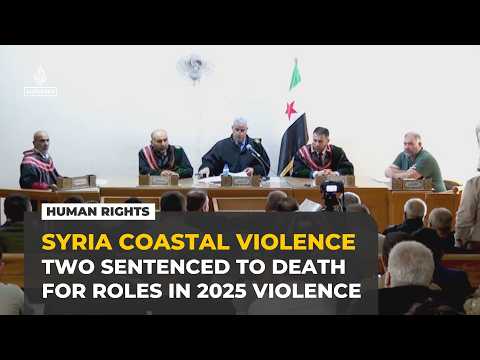
Syrian court sentences two to death over 2025 coastal violence

Syrian court sentences two to death over 2025 coastal violence

Rule Changes

First convictions of the new government's own security forces test whether post-Assad justice holds all sides accountable.

Yesterday: Court sentences two to death, convicts four security personnel

Overview

Updated Yesterday

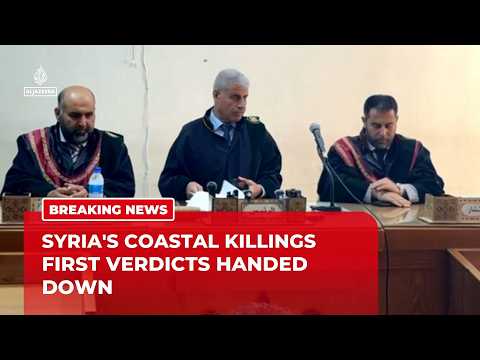
A Syrian military court sentenced two men to death on October 15 for their role in the 2025 coastal violence that killed more than 1,400 people. In the same rulings, it convicted four members of the new government's security forces for killings and torture. The same court's first verdicts in the case, on September 17, had already sentenced one man to death and a former government forces member to 20 years.

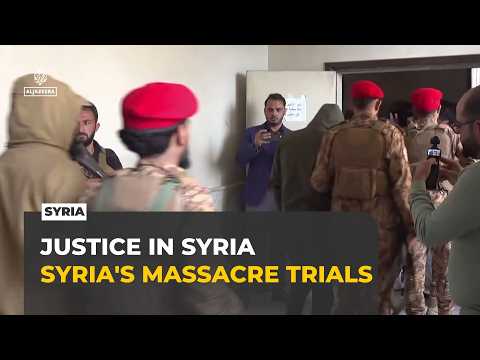
The verdicts test whether post-Assad Syria can deliver accountability for a massacre that engulfed both sides. Assad loyalists launched the uprising; government reinforcements responded with alleged revenge killings of Alawite civilians. Both groups now face charges.

Why it matters

The first convictions of Syria's own security forces test whether post-Assad justice holds all sides accountable, not just the ousted regime's loyalists.

Questions about this story

Free account needed to ask — your question is kept and asked for you right after sign-up. Answers are public.

No questions yet — be the first to ask.

Key Indicators

1,426
People killed in March 2025 coastal violence
Documented by the government investigation committee; most were Alawite civilians killed over several days.
298
Suspects identified by investigation committee
Includes both Assad loyalists and members of the new government's security forces.
10
Defendants on trial in the Aleppo proceedings
Three Assad loyalists and seven members of the new government's security forces.
4
Security personnel convicted in October 15 rulings
Sentences range from 20 years for intentional homicide to 2 months for a misdemeanor; two others were acquitted.

Voices

Curated perspectives — historical figures and your fellow readers.

Ever wondered what historical figures would say about today's headlines?

Sign up to generate historical perspectives on this story.

People Involved

Organizations Involved

Timeline

December 2024 October 2026

6 events Latest: Yesterday
Tap a bar to jump to that date
  1. Sectarian violence kills hundreds

    Conflict

    Government reinforcements respond in Alawite coastal areas; at least 1,426 people die, most civilians.

  2. Pro-Assad gunmen attack security forces

    Conflict

    Armed loyalists launch coordinated attacks on security forces around Jableh, killing at least 200 personnel.

  3. Assad regime falls

    Political

    Bashar al-Assad flees Syria as opposition forces take Damascus, ending 24 years of rule.

Scenarios

1

Syria extends prosecutions to remaining coastal violence suspects

Possible Resolves by End of 2027

Discussed by: Investigation committee findings reported by SANA

The government committee identified 298 suspects but only 10 have faced trial. If the process continues, additional defendants from both the Assad camp and the security forces will appear before the Aleppo court.

2

Selective-justice criticism crystallizes into documented accountability gap

Possible Resolves by Q2 2027

Discussed by: Syrian Observatory for Human Rights (SOHR)

SOHR has warned that holding one side accountable while ignoring the other would undermine the trials. If the government scales back prosecutions of its own forces, SOHR and other rights groups may document specific abuses that go unpunished.

3

Syria decides on its first executions since Assad's fall

Uncertain Resolves by Oct 31, 2028

Discussed by: DPA, death penalty observers

No executions have been carried out in Syria since Assad's ouster in late 2024. The death sentences against Ismail and Ali could be carried out, commuted, or left unresolved. The decision tests the new government's approach to capital punishment.

Historical Context

3 moments from history that rhyme with this story — and how they unfolded.

November 1945 - October 1946

Nuremberg Trials (1945-1946)

After World War II, Allied powers tried 22 senior Nazi leaders for war crimes, crimes against humanity, and crimes against peace. Twelve were sentenced to death.

Then

The trials marked the first time a defeated regime's leadership was held criminally responsible for atrocities in an international court.

Now

The Nuremberg principles became the foundation of modern international criminal law, including crimes against humanity and command responsibility.

Why this matters now

Established the template for post-defeat accountability, the same structural position Syria's new government faces in prosecuting Assad loyalists.

October 2005 - December 2006

Iraq's trials of Saddam-era officials (2005-2006)

After the 2003 US invasion, the Iraqi Special Tribunal tried Saddam Hussein and senior Ba'athist officials. Saddam was convicted of crimes against humanity for the 1982 Dujail massacre and executed in December 2006.

Then

The trials provided formal accountability but drew criticism as victor's justice, with the tribunal dominated by the new Shia-led government.

Now

Iraq never fully accounted for abuses by Shiite militias and its own forces, and the trials remain a contested model of post-dictator justice.

Why this matters now

Shows how a new government's selective pursuit of the old regime, while ignoring its own allies' abuses, erodes the legitimacy of transitional justice.

1994-2012

Rwanda's post-genocide trials (1994-2000s)

After the 1994 genocide that killed roughly 800,000 Tutsis, Rwanda's new government prosecuted hundreds of thousands of genocidaires through conventional courts and community gacaca courts.

Then

Rwanda convicted most genocide suspects but largely avoided prosecuting abuses by its own Rwanda Patriotic Front forces.

Now

The RPF accountability gap remains a documented criticism, even as Rwanda is cited as a successful transitional justice case.

Why this matters now

The same tension — prosecuting the defeated side while sparing one's own forces — is exactly what SOHR warns against in Syria.

Sources

(9)