
Pull to refresh
Logo
Third major US offshore wind farm reaches full commercial operation

Third major US offshore wind farm reaches full commercial operation

Built World

Revolution Wind's 65 turbines now supply Rhode Island and Connecticut, after two federal stop-work orders and with a new legal challenge pending

Overview

Updated 1 hour ago

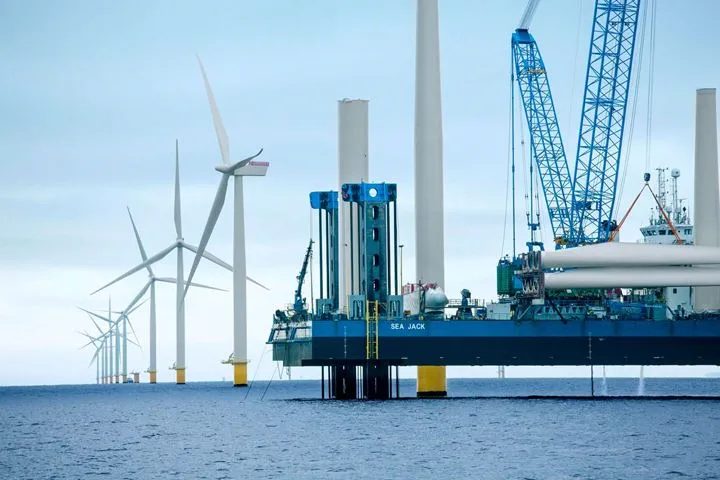
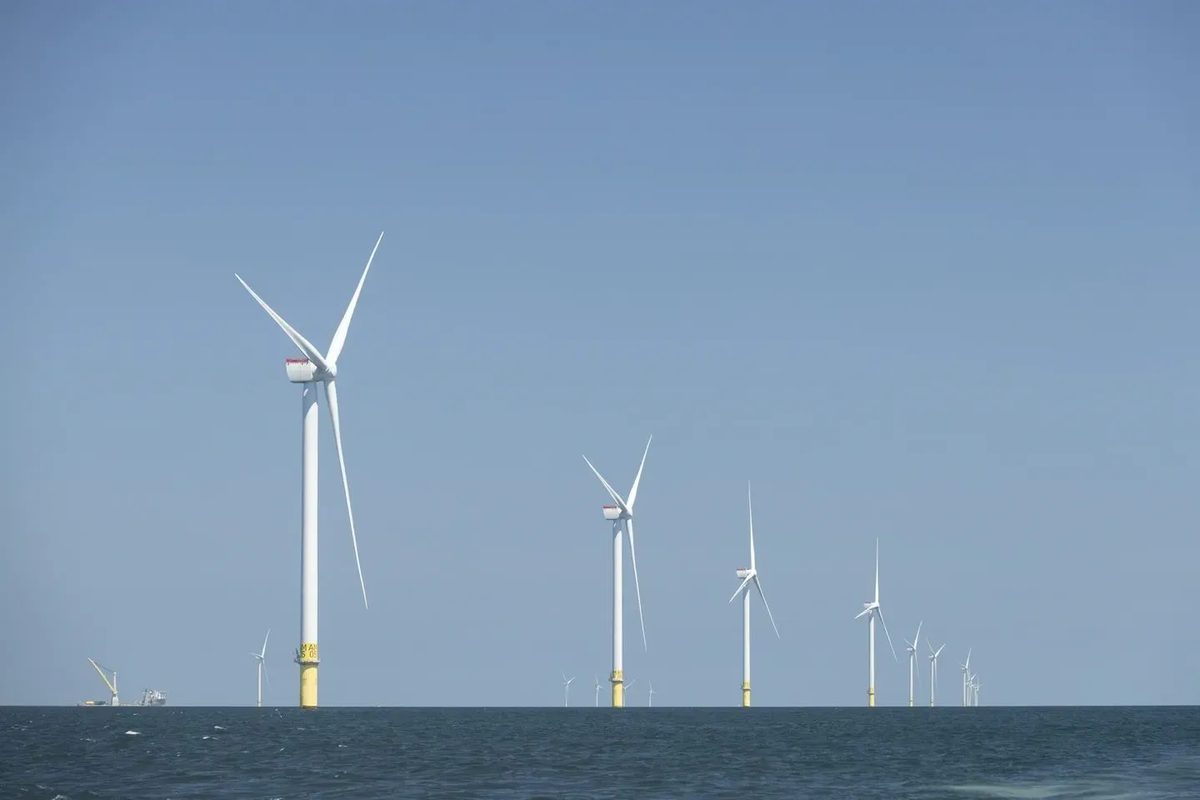
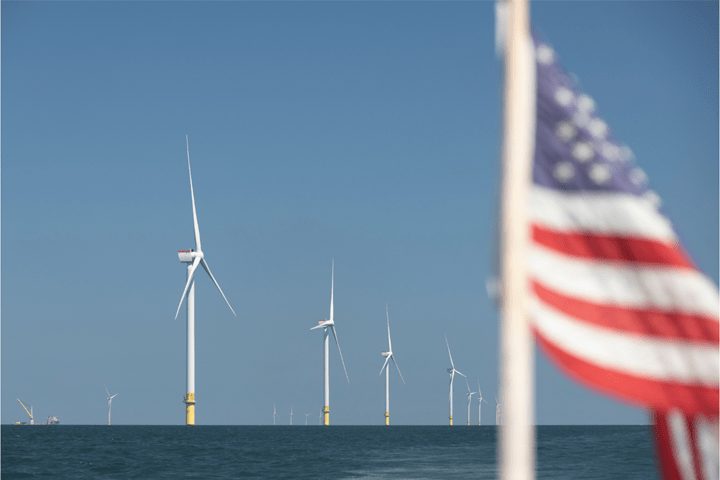
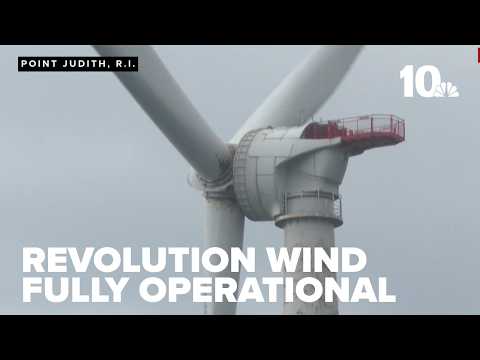
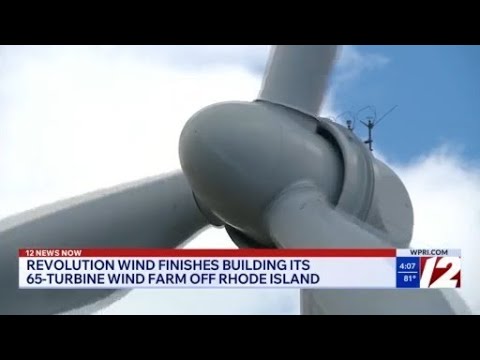
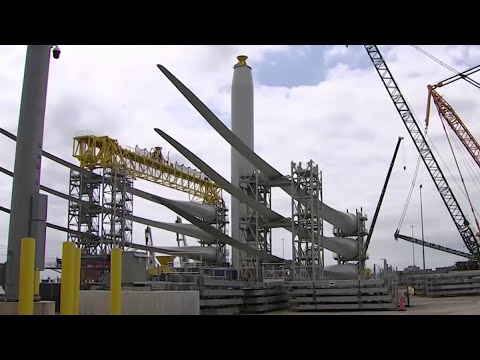
Revolution Wind's 65 turbines began generating at full capacity in October, and Ørsted declared the project commercially operational on November 5. It is the third utility-scale offshore wind farm in the United States, after South Fork Wind near New York and Vineyard Wind near Massachusetts.

The 704-megawatt project supplies about 2.5% of New England's electricity and enough power for roughly 350,000 homes. It got there after two federal stop-work orders, both overturned in court, and with a new legal challenge to its approval still open.

Why it matters

New England homes get a new power source at 9 cents per kilowatt-hour, less than half the regional average.

Questions about this story

Free account needed to ask — your question is kept and asked for you right after sign-up. Answers are public.

No questions yet — be the first to ask.

Key Indicators

704 MW
Project capacity
Nameplate capacity of the 65-turbine wind farm.
65
Turbines installed
The last of the Siemens Gamesa 11-megawatt turbines went in during September 2026.
350,000
Homes powered
Equivalent annual household demand, per Ørsted and state officials.
9¢/kWh
Contracted power price
Less than half the current New England average, per Renewable Energy World.
5.9 GW
Projected US offshore wind by 2035
BloombergNEF's current forecast, down from 39 GW before Trump's second term.
$6.2B
Project cost
Total capital cost of the wind farm, per Canary Media.

Voices

Curated perspectives — historical figures and your fellow readers.

Sign up to generate historical perspectives on this story.

People Involved

Organizations Involved

Timeline

2018 November 2026

10 events Latest: 2 days ago
Tap a bar to jump to that date
  1. Ørsted declares commercial operation

    Latest Milestone

    Revolution Wind becomes the third US utility-scale offshore wind farm in full operation.

  2. Final turbine installed

    Construction

    The 65th and last turbine is set, completing the array.

  3. Revolution Wind produces first power

    Milestone

    The project begins sending small amounts of electricity to the grid.

  4. First turbines installed; Eversource exits

    Construction

    Siemens Gamesa 11-megawatt turbines go in; Eversource sells its 50% stake.

  5. Construction begins offshore

    Construction

    Work starts on the wind farm about 15 nautical miles southeast of Point Judith.

  6. Rhode Island and Connecticut select Revolution Wind

    Contract

    The two states award power purchase agreements for 400 and 304 megawatts respectively.

Scenarios

1

Revolution Wind keeps selling power through 2027

Likely Resolves by End of 2027

Discussed by: Ørsted quarterly statements; Rhode Island Office of Energy Resources

Interior's October 2026 request to re-examine the 2023 approval does not by itself stop generation. Unless a court orders a halt, the turbines keep delivering power to Rhode Island Energy, Eversource and United Illuminating under 20-year contracts. The project's own operators and the state agencies that signed those contracts treat commercial operation as durable.

2

Interior revokes approval and a court allows a shutdown

Unlikely Resolves by Q2 2027

Discussed by: Offshore wind industry analysts tracking the Interior Department's litigation

The department has twice tried to halt construction and lost in court both times. A successful re-evaluation of the 2023 construction and operations plan could give it a different legal footing. The trigger would be a new agency decision to suspend or revoke the approval, followed by a court declining to block it.

3

Sunrise Wind reaches commercial operation on schedule

Possible Resolves by End of 2027

Discussed by: Ørsted; New York state energy officials

Ørsted said in November 2026 that all turbine foundations for the 924-megawatt Sunrise Wind project off Long Island are installed, with full operation expected in the second half of 2027. If it holds, it would be the fourth US utility-scale offshore wind farm and the largest.

Historical Context

3 moments from history that rhyme with this story — and how they unfolded.

2001–2017

Cape Wind (2001–2017)

A 130-turbine project proposed for Nantucket Sound became the first offshore wind farm to win federal approval in the United States, in 2010, after nine years of review. Local opposition, including from figures who owned property overlooking the sound, fought it throughout.

Then

The project lost its power purchase agreements in 2014 and 2015 when utilities canceled them.

Now

The developer surrendered its lease in 2017. No turbine was ever built, and the episode set expectations that US offshore wind projects could die after winning permits.

Why this matters now

Revolution Wind shows the opposite outcome: a project that survived federal opposition and reached full operation. Cape Wind is the benchmark for how often that does not happen.

2016

Block Island Wind Farm (2016)

Five turbines totaling 30 megawatts went up off Block Island, Rhode Island, becoming the first commercial offshore wind farm in US waters. The project replaced the island's diesel generators and connected it to the mainland grid for the first time.

Then

It proved that US offshore wind construction was technically possible and that state-level contracts could support it.

Now

It took another eight years for a utility-scale project to follow, and the industry's growth has been far slower than advocates expected.

Why this matters now

Revolution Wind is 23 times Block Island's size and sits in the same state waters. The gap between the two shows how long the US industry took to scale.

July 2024

Vineyard Wind blade failure (2024)

A turbine blade broke at the 806-megawatt Vineyard Wind project off Massachusetts, scattering fiberglass debris onto Nantucket beaches and forcing the project to shut down.

Then

Federal regulators suspended the project and required inspections across the fleet.

Now

The project later resumed operation, but the incident showed that completing construction does not end a wind farm's operational and regulatory risk.

Why this matters now

Revolution Wind uses the same 11-megawatt Siemens Gamesa turbine model as South Fork Wind, and its completion comes as the industry is still managing the fallout from Vineyard Wind's failure.

Sources

(9)