


Pull to refresh
Logo
Novartis licenses Abogen's mRNA T-cell engager in up to $7.8 billion deal

Novartis licenses Abogen's mRNA T-cell engager in up to $7.8 billion deal

Money Moves

Swiss pharma pays $575 million upfront for worldwide rights to ABO2203, the first mRNA-encoded T-cell engager tested in autoimmune disease

Today: Abogen and Novartis sign licensing and option agreement

Overview

Updated 1 hour ago

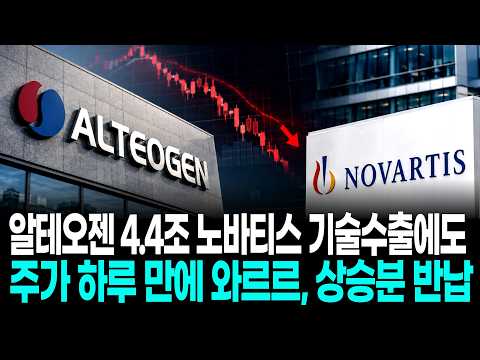
Novartis agreed to pay up to $7.8 billion for rights to Chinese biotech Abogen's mRNA therapeutics. The deal includes a $575 million upfront payment and an exclusive worldwide license to ABO2203, the first mRNA-encoded T-cell engager to reach clinical testing in autoimmune disease.

ABO2203 uses lipid nanoparticles to deliver mRNA instructions that direct the body to produce CD19-targeted T-cell engagers internally, replacing manufactured protein drugs. Novartis also gets exclusive options to license other RNA-based programs from Abogen, whose pipeline spans oncology, autoimmune disease, and vaccines. The transaction awaits regulatory clearance.

Why it matters

Novartis is betting that mRNA can deliver therapeutic proteins, not just vaccines, and the bet prices that at $7.8 billion. If ABO2203 achieves B-cell depletion in autoimmune patients, it could become a cheaper, scalable alternative to antibody-based depletion therapies.

Questions about this story

Free account needed to ask — your question is kept and asked for you right after sign-up. Answers are public.

No questions yet — be the first to ask.

Key Indicators

$575M
Upfront payment to Abogen
Paid by Novartis for exclusive worldwide license to ABO2203 and option rights.
$7.2B
Potential milestone payments
Eligible if all options on all programs are exercised and development, regulatory, and commercial milestones succeed.
$7.8B
Maximum total deal value
Combined upfront and milestones, plus potential royalties on sales.
$121B
Projected T-cell engager market by 2035
Frost & Sullivan projection cited in Abogen's AACR presentation of ABO2203 clinical data.

Voices

Curated perspectives — historical figures and your fellow readers.

Ever wondered what historical figures would say about today's headlines?

Sign up to generate historical perspectives on this story.

People Involved

Organizations Involved

Timeline

April 2026 October 2026

2 events Latest: Today
  1. Abogen and Novartis sign licensing and option agreement

    Today Deal

    Novartis gains exclusive worldwide license to ABO2203 with $575M upfront, up to $7.2B in milestones, and options on additional Abogen RNA programs.

  2. ABO2203 first-in-human data presented at AACR

    Clinical Data

    Prof. Li Wang presented ABO2203 data in relapsed/refractory B-cell NHL showing 100% ORR and 100% CR in high-dose cohort, no CRS or ICANS observed.

Scenarios

1

Deal closes; ABO2203 accelerates toward pivotal autoimmune trials

Likely Resolves by Q2 2027

Discussed by: Reuters, Seeking Alpha, industry analysts covering the transaction

Regulatory clearances are obtained without material modifications. Novartis funds ABO2203 development in autoimmune indications, building on the clinical proof of concept from the B-cell lymphoma study. The deal's milestone structure incentivizes both companies to move quickly into pivotal trials.

2

Regulatory review conditions or delays the deal

Possible Resolves by Q2 2027

Discussed by: Cross-border M&A analysts; potential Chinese outbound technology transfer review

Chinese regulators scrutinize the outbound licensing of RNA platform technology, or foreign investment review processes impose conditions. The deal could close with a narrowed scope, revised financial terms, or additional compliance requirements. A prolonged review would delay ABO2203's autoimmune program.

3

Novartis exercises options on Abogen's additional RNA programs

Possible Resolves by End of 2028

Discussed by: Deal-structure analysts; biotech licensing observers tracking option-based partnerships

After the initial closing, Novartis exercises one or more exclusive options on Abogen's other RNA-based assets, expanding the partnership into additional therapeutic areas. Each option exercise triggers additional option fees and expands the milestone pool, potentially pushing the total deal value beyond the announced $7.8 billion ceiling.

Historical Context

3 moments from history that rhyme with this story — and how they unfolded.

March 2019

Daiichi Sankyo-AstraZeneca Enhertu deal (2019)

AstraZeneca paid $1.35 billion upfront for global rights to Daiichi Sankyo's antibody-drug conjugate Enhertu, a HER2-targeting cancer therapy then in early-stage trials. The deal included up to $5.7 billion in milestone payments and a 50/50 profit split.

Then

Enhertu went on to achieve blockbuster sales across multiple HER2-positive cancers, becoming one of the fastest-growing oncology drugs in history.

Now

The deal validated the antibody-drug conjugate modality and established Daiichi Sankyo as a major oncology player, reshaping how Western pharma evaluates Asian biotech assets.

Why this matters now

Like the Enhertu deal, the Abogen-Novartis agreement involves a large upfront for a first-in-class novel modality from an Asian biotech, with downstream intellectual property remaining valuable to the licensor.

December 2017

Legend Biotech-Johnson & Johnson Carvykti deal (2017)

Johnson & Johnson paid $350 million upfront to Legend Biotech, a Chinese cell therapy company, for worldwide rights to its CAR-T therapy for multiple myeloma, with milestone payments and tiered royalties on sales.

Then

Carvykti received FDA approval in 2022 and became a multibillion-dollar franchise, validating Legend's platform and providing the company with substantial royalty income.

Now

The deal established a template for Chinese biotech licensing to Western pharma, showing that China-originated novel therapies could become global standard-of-care products.

Why this matters now

Carvykti proved that a Chinese biotech's novel cell therapy could succeed globally under a Western partner. The Abogen deal follows that playbook for mRNA-encoded therapies, with similarly large upfront and milestone economics.

October 2022

Moderna-Merck personalized cancer vaccine deal (2022)

Merck paid $250 million upfront to Moderna for joint development of mRNA-4157, a personalized cancer vaccine, with an option exercise payment and more than $5 billion in potential milestones plus royalties.

Then

The mRNA cancer vaccine showed improved recurrence-free survival in melanoma trials, advancing through Phase 3 and expanding into adjuvant therapy for other tumor types.

Now

The deal was among the first major pharma bets that mRNA could work beyond infectious disease vaccines, paving the way for therapeutic mRNA licensing.

Why this matters now

The Moderna-Merck deal established that mRNA can be a therapeutic protein delivery platform. The Abogen-Novartis deal extends that validation to T-cell engagers, with a substantially larger upfront payment.

Sources

(8)