Pull to refresh
Logo
Daily Brief
Following
Why Sign Up
Tesla bets $20 billion on building its own chip factory from scratch

Tesla bets $20 billion on building its own chip factory from scratch

New Capabilities
By Newzino Staff |

The automaker with zero fabrication experience targets the world's most advanced semiconductor process

Today: Tesla formally launches TeraFab project

Overview

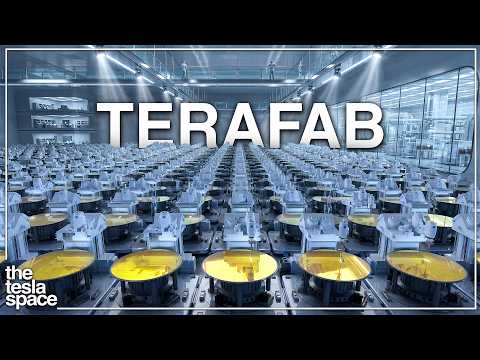
Every company designing custom artificial intelligence chips today — Apple, Google, Amazon, Microsoft — pays someone else to manufacture them. Tesla just announced it will build and operate its own semiconductor fabrication plant, a $20 billion facility called TeraFab targeting the 2-nanometer process node, the most advanced manufacturing technology in existence. No company without decades of chipmaking experience has ever attempted this.

Why it matters

If a carmaker can build cutting-edge chips, it reshapes who controls the AI hardware supply chain.

Key Indicators

$20B
Estimated project cost
More than double Tesla's entire 2025 capital expenditure of $8.5 billion
2nm
Target process node
The most advanced chip manufacturing technology, currently mastered only by TSMC
0
Years of fab experience
Tesla has never operated a semiconductor fabrication facility
100B-200B
Annual chip target
Custom AI and memory chips per year at full scale
40-50x
AI5 compute improvement
Performance gain over Tesla's current AI4 chip generation

Interactive

Exploring all sides of a story is often best achieved with Play.

Ever wondered what historical figures would say about today's headlines?

Sign up to generate historical perspectives on this story.

Sign Up

Debate Arena

Two rounds, two personas, one winner. You set the crossfire.

People Involved

Organizations Involved

Timeline

  1. Tesla formally launches TeraFab project

    Corporate

    Tesla officially launched its TeraFab semiconductor fabrication initiative, a $20 billion project to build a 2nm chip fab at the North Campus of Gigafactory Texas in Austin. The facility aims to produce 100 to 200 billion custom AI and memory chips annually for autonomous vehicles, Optimus robots, and AI infrastructure.

  2. Musk posts seven-day countdown to TeraFab launch

    Statement

    Musk posted on X: "Terafab Project launches in 7 days," generating intense media coverage and speculation about the scope of the announcement.

  3. TeraFab confirmed on Tesla's Q4 2025 earnings call

    Corporate

    Musk formally confirmed the TeraFab semiconductor fabrication project during Tesla's earnings call, stating "We will break the chip wall" and projecting a supply constraint within three to four years without in-house manufacturing. Tesla's 2026 capital expenditure plan exceeded $20 billion.

  4. Musk tells shareholders Tesla needs a "gigantic" chip fab

    Statement

    At a shareholder event, Musk said Tesla must build its own semiconductor fabrication facility to avoid supply constraints and publicly floated a partnership with Intel, though no deal was signed.

  5. Tesla discontinues Dojo; chip chief Pete Bannon departs

    Corporate

    Tesla killed its Dojo custom supercomputer chip program and Pete Bannon, the vice president who had led all custom silicon development since 2016, left the company. The AI6 chip was repositioned to replace Dojo's training role.

  6. Tesla signs $16.5 billion Samsung deal for AI6 chips

    Partnership

    Tesla committed $16.5 billion to have Samsung manufacture its next-generation AI6 chip at Samsung's Taylor, Texas fabrication facility using 2nm gate-all-around transistor technology.

  7. Tesla ships HW4 with upgraded AI4 chip

    Product Launch

    The next-generation HW4 computer began shipping in Tesla vehicles with an improved chip on Samsung's 7nm process, featuring more compute cores and enhanced neural network performance.

  8. First custom Tesla FSD chip ships in vehicles

    Product Launch

    Tesla's HW3 computer, powered by its custom Full Self-Driving chip fabricated by Samsung on a 14-nanometer process, began shipping in Model S, 3, X, and Y vehicles. The chip delivered 72 trillion operations per second.

  9. Tesla hires Jim Keller and Pete Bannon to design custom chips

    Corporate

    Tesla recruited legendary chip architect Jim Keller and Apple veteran Pete Bannon to build an in-house semiconductor design team, signaling dissatisfaction with off-the-shelf Nvidia hardware for autonomous driving.

Scenarios

1

Tesla builds operational 2nm fab, reshapes AI chip supply chain

Discussed by: Teslarati, 24/7 Wall Street, Tesla-focused analysts

Tesla successfully constructs and ramps TeraFab over four to six years, achieving competitive yields on 2nm chips. The facility supplies custom silicon for Tesla's vehicle fleet, Optimus robots, and AI training clusters, eliminating dependence on TSMC and Samsung. This would validate Musk's vertical integration philosophy and potentially open Tesla to selling excess capacity as a contract foundry. The scenario requires Tesla to recruit thousands of experienced fab engineers, master extreme ultraviolet lithography, and sustain $20 billion or more in capital investment through a period of negative free cash flow.

2

TeraFab scales back to packaging and testing, not full fabrication

Discussed by: Electrek, semiconductor industry analysts

Facing the reality that building a leading-edge fab from scratch takes a decade or more and requires expertise Tesla does not have, TeraFab is quietly rescoped. Instead of manufacturing chips from raw silicon wafers, the facility focuses on advanced packaging — combining chips fabricated by Samsung and TSMC into custom multi-chip modules. This would still provide meaningful vertical integration benefits at a fraction of the cost and technical risk, following a path similar to what Apple has pursued with TSMC's advanced packaging services.

3

Tesla acquires or partners with an existing fab operator

Discussed by: Financial analysts, Tom's Hardware, semiconductor industry observers

Rather than building fabrication capability from zero, Tesla strikes a deep partnership with or acquires a struggling fab operator — Intel's foundry division being the most frequently discussed candidate. Musk's November 2025 comments about Intel suggest this path has been explored. An acquisition would give Tesla instant access to process engineers, existing clean rooms, and institutional manufacturing knowledge, dramatically accelerating the timeline while adding enormous financial and integration risk.

4

TeraFab joins Tesla's list of delayed or abandoned megaprojects

Discussed by: Electrek, skeptical Wall Street analysts, Goldman Sachs

TeraFab follows the trajectory of Tesla's 4680 battery cell program and original Dojo supercomputer — bold announcements followed by years of delays, technical setbacks, and results that fall well short of initial claims. Construction stretches years beyond schedule, yields prove uneconomical, and Tesla continues relying on Samsung and TSMC for chip supply. The capital expenditure generates negative returns and contributes to Tesla's projected negative free cash flow, potentially triggering a capital raise that dilutes existing shareholders.

Historical Context

Intel's foundry losses and IDM 2.0 struggles (2021-2025)

March 2021 - Present

What Happened

Intel CEO Pat Gelsinger announced IDM 2.0 in March 2021, committing over $100 billion to rebuild Intel's manufacturing leadership and open its fabs to outside customers. Despite five decades of fabrication expertise and billions in CHIPS Act subsidies, Intel's foundry division posted a $13.4 billion operating loss in 2024. Yield rates on advanced nodes lagged TSMC by 20 percentage points or more.

Outcome

Short Term

Gelsinger was ousted in late 2024. Intel's stock lost more than half its value. The company began exploring a separation of its foundry and design businesses.

Long Term

Intel's experience demonstrated that even established chipmakers with massive resources struggle to compete with TSMC on advanced process nodes, raising the bar for any new entrant.

Why It's Relevant Today

If Intel — with 50 years of fab experience, thousands of process engineers, and billions in government subsidies — lost $13 billion in a single year trying to catch TSMC, Tesla's prospects as a company with zero fabrication experience are the central question for TeraFab's viability.

Tesla 4680 battery cell production delays (2020-2025)

September 2020 - Present

What Happened

At Tesla's September 2020 Battery Day, Musk announced the 4680 battery cell format, promising a 56% cost reduction and five times the energy output. Tesla built dedicated production lines at Giga Texas and Giga Nevada to manufacture cells in-house rather than relying solely on suppliers like Panasonic and CATL. Production consistently fell short of targets, with yield and quality issues persisting for years.

Outcome

Short Term

The Cybertruck launched in late 2023 using 4680 cells, but production volumes were limited. Tesla continued relying heavily on external cell suppliers.

Long Term

By 2025, Tesla had improved 4680 yields but never achieved the cost and performance breakthroughs promised at Battery Day. The program illustrated both Tesla's willingness to attempt difficult vertical integration and its tendency to underestimate manufacturing timelines.

Why It's Relevant Today

TeraFab skeptics, led by Electrek, explicitly compare the project to the 4680 program: ambitious vertical integration announcements followed by years of delays and results falling short of promises. Semiconductor fabrication is arguably orders of magnitude more complex than battery cell production.

Apple's chip design success via the fabless model (2008-present)

2008 - Present

What Happened

Apple began designing custom chips in 2008, shipping the A4 processor in the original iPad in 2010. Over the next fifteen years, Apple expanded custom silicon across every product category — A-series for iPhone, M-series for Mac, and specialized chips for AirPods, Apple Watch, and security. Apple invested in chip design talent rather than fabrication, relying entirely on TSMC to manufacture its processors. The partnership grew so deep that Apple effectively funded TSMC's advance to leading-edge nodes.

Outcome

Short Term

Apple's M1 chip, launched in 2020, demonstrated that custom silicon could deliver dramatic performance and efficiency gains over commodity processors.

Long Term

Apple proved that world-class chip capability does not require owning a fab. The fabless model let Apple capture silicon's strategic benefits — performance differentiation, power efficiency, hardware-software integration — without the capital intensity and technical risk of manufacturing.

Why It's Relevant Today

Apple's success raises the question of whether Tesla's decision to build its own fab is strategically necessary or a case of vertical integration past the point of diminishing returns. Tesla could potentially achieve most of TeraFab's goals through deeper partnerships with TSMC and Samsung, as Apple does, without the $20 billion fabrication gamble.

Sources

(12)