

Pull to refresh
Logo
OpenAI claims AI solution to Navier–Stokes Millennium Problem

OpenAI claims AI solution to Navier–Stokes Millennium Problem

New Capabilities

Proof shows fluid equations can predict infinite speeds; credit and verification unresolved

Yesterday: Rival Euler results surface

Overview

Updated 2 hours ago

OpenAI says its AI agents proved that the Navier–Stokes equations—used for two centuries to model liquids and gases—can break down and predict infinite speeds. The company verified the proof in Lean, a formal proof-checking language. The claim carries a $1 million Millennium Prize reward, which OpenAI says it will not collect.

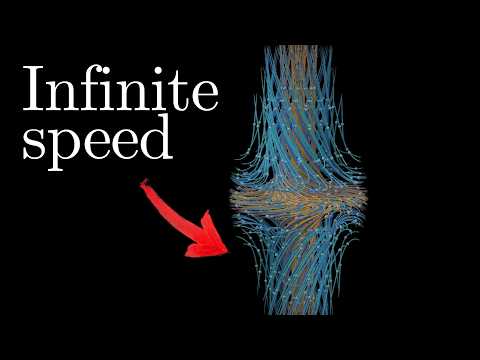
The result settles the forced version of the problem: a spinning vortex stretched so thin its speed shoots to infinity. Engineers say it changes little in practice, because the equations already fail at molecular scales. The real upheaval is inside mathematics, where AI is forcing a reexamination of credit and verification.

Why it matters

If AI can crack a 200-year-old math problem, the rules for how math gets done—and who gets credit—may not survive.

Questions about this story

Free account needed to ask — your question is kept and asked for you right after sign-up. Answers are public.

No questions yet — be the first to ask.

Key Indicators

$15M
Reported AI compute cost
New Scientist estimates OpenAI spent about $15 million running its agents, roughly 88 hours, to produce the proof.
$1M
Millennium Prize reward
Clay Mathematics Institute prize for solving any of seven problems; OpenAI says it will not claim it.
1
Prior solved Millennium Problems
Only the Poincaré conjecture (2003, by Grigori Perelman) has been confirmed before this claim.
70 nm
Vortex width at singularity (air)
George Karniadakis of Brown calculated the equations break down for air when a vortex narrows to about 70 nanometers.

Voices

Curated perspectives — historical figures and your fellow readers.

Ever wondered what historical figures would say about today's headlines?

Sign up to generate historical perspectives on this story.

People Involved

Organizations Involved

Timeline

May 2000 September 2026

5 events Latest: Yesterday
Tap a bar to jump to that date
  1. Rival Euler results surface

    Latest Development

    Two independent research groups announce finite-time blowup results for the Euler equations using different approaches.

  2. Nature analyzes the implications

    Publication

    Nature publishes analysis of the proof's meaning; engineers and fluid dynamicists say practical impact is minimal.

  3. Credit dispute erupts

    Controversy

    Mathematicians allege OpenAI's agents reproduced unpublished work by Buckmaster and Alpöge without crediting it.

  4. OpenAI announces the proof

    Announcement

    OpenAI says its AI agents proved finite-time blowup for the forced Navier–Stokes equations, verified in the Lean proof assistant.

  5. Clay Institute names the problem

    Milestone

    Clay Mathematics Institute names Navier–Stokes regularity among seven Millennium Prize Problems, each with a $1 million reward.

Scenarios

1

OpenAI's proof survives peer review

Possible Resolves by Q2 2028

Discussed by: Nature; Clay Mathematics Institute statements

Independent mathematicians verify the Lean-checked argument, and the proof is published in a peer-reviewed mathematics journal. The Clay Mathematics Institute confirms the forced version satisfies the Millennium Problem's criteria. OpenAI formally declines the $1 million prize, as it announced. The verification process takes years; the Poincaré conjecture result took about three.

2

Proof fails independent verification

Possible Resolves by End of 2027

Discussed by: Live Science, citing unnamed mathematicians' allegations

Mathematicians who say OpenAI's agents reproduced unpublished work by Buckmaster and Alpöge without credit press for full disclosure. If the proof draws on flawed or incomplete groundwork—or contains a gap the agents missed—independent scrutiny finds it out. The claim is withdrawn or retracted, and the Millennium Problem stays open. The forced-version loophole means the unforced problem remains untouched regardless.

3

New attribution rules for AI-assisted proofs

Likely Resolves by End of 2028

Discussed by: Nature; Science News (George Eyink)

Whatever happens to the proof itself, the dispute forces mathematical institutions to set standards for AI-generated work. The American Mathematical Society, Clay Mathematics Institute, or International Mathematical Union issues formal guidance on attribution, verification, or prize eligibility for machine-produced proofs. The Navier–Stokes case becomes the template for how the field handles the next AI proof.

Historical Context

2 moments from history that rhyme with this story — and how they unfolded.

2002–2006

Poincaré conjecture proof (2002–2006)

Grigori Perelman posted three papers online in 2002–2003 proving the Poincaré conjecture, one of the seven Millennium Problems. The math community took years to verify the argument, and Perelman declined both the Fields Medal and the $1 million prize.

Then

The proof was validated around 2006; no one claimed the prize because Perelman refused it.

Now

Set the precedent that a Millennium Problem can be solved and the prize declined, and that verification can lag years behind announcement.

Why this matters now

OpenAI likewise says it will not claim the prize. The Poincaré case shows how slowly independent verification moves, which is why the Navier–Stokes claim faces years of scrutiny.

2018–2020

AlphaFold and protein folding (2018–2020)

DeepMind's AlphaFold2, announced in late 2020, solved protein structure prediction, a 50-year grand challenge, at the CASP14 competition. It was AI's highest-profile scientific breakthrough to date.

Then

Protein structures became computable in hours instead of years; teams using AlphaFold shared a Nobel Prize in Chemistry in 2024.

Now

Showed AI can crack long-standing scientific problems, but integration with human workflows took years and credit was shared across many researchers.

Why this matters now

Like AlphaFold, the Navier–Stokes proof shows AI expanding what is tractable. The difference: math proofs demand formal verification and raise sharper questions about who owns the result.

Sources

(10)