Meta ships its first proprietary AI model after a bruising delay, but soaring costs and a Q2 earnings miss have investors questioning the $145 billion bet
Meta ships its first proprietary AI model after a bruising delay, but soaring costs and a Q2 earnings miss have investors questioning the $145 billion bet
Meta shipped Muse Spark, code-named Avocado, in April 2026—its first proprietary foundation model and a ground-up departure from the Llama architecture. The model ranked fourth on Artificial Analysis's Intelligence Index at launch, behind rivals at Google, OpenAI, and Anthropic, but Meta's stock rose about 10% in the five days after release.
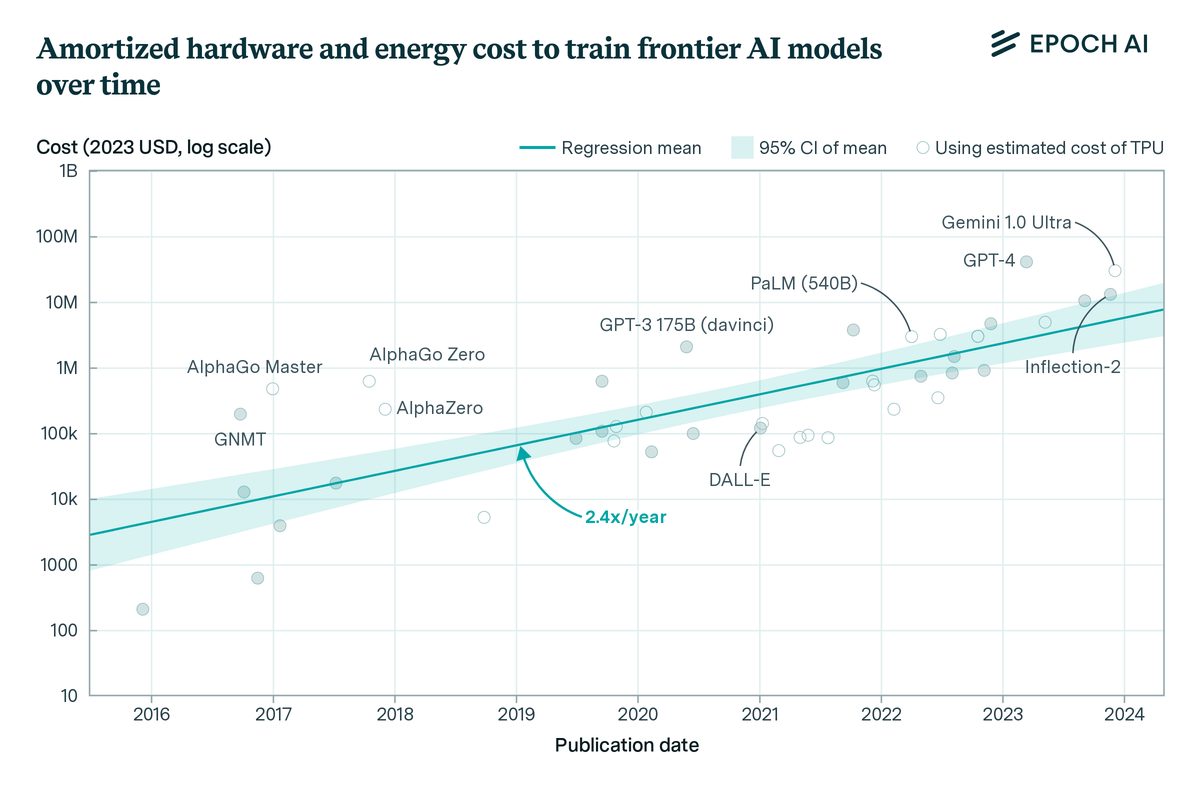
The financial picture has since darkened. Meta raised its 2026 spending forecast to $125–145 billion at Q1 earnings, then missed Q2 profit estimates—costs rose 55% and free cash flow fell from $8.55 billion to $784 million.
Why it matters
The AI model behind Facebook, Instagram, and WhatsApp shapes what three billion people see, read, and believe every day.
Questions about this story
Free account needed to ask — your question is kept and asked for you right after sign-up. Answers are public.
No questions yet — be the first to ask.
Key Indicators
$125–145B
Meta's 2026 AI capital expenditure
Raised at Q1 2026 earnings from a prior $115–135B forecast, citing higher component costs and expanded data center plans.
$600B
Pledged U.S. AI infrastructure through 2028
Meta's total committed American investment in data centers and related infrastructure over four years.
$14.3B
Scale AI investment to recruit Alexandr Wang
Meta acquired a 49% stake in Scale AI and hired its founder as chief AI officer in June 2025.
9.64%
Meta stock drop after Q2 2026 earnings
Shares fell nearly 10% after hours when Meta missed Q2 EPS estimates by about $1 per share and free cash flow fell from $8.55 billion to $784 million.
Images from Openverse under Creative Commons licenses.
Videos from YouTube.
Voices
Curated perspectives — historical figures and your fellow readers.
Dorothy Parker
(1893-1967) ·Jazz Age · wit
Fictional AI pastiche — not real quote.
"They spent six hundred billion dollars to discover what every writer has always known: you cannot buy the muse, only the desk she refuses to sit at."
100% found this insightful
Andrew Carnegie
(1835-1919) ·Gilded Age · industry
Fictional AI pastiche — not real quote.
"Aye, Mr. Zuckerberg has learned what every steelman knows: you can buy a furnace, but you cannot buy the knowledge of how to run it — and six hundred billion dollars' worth of brick and iron is worthless without the men of genius to light the fire within."
100% found this insightful
Ever wondered what historical figures would say about today's headlines?
Sign up to generate historical perspectives on this story.
17 events
Latest: July 29th, 2026 · 2 months ago
Showing 8 of 17
JK to step
Tap a bar to jump to that date
Jump to
July 2026
Meta misses Q2 profit estimates as costs rise 55% year over year
LatestFinancial
Meta reported Q2 revenue of $60.8 billion, up 28%, but missed EPS estimates by nearly $1 per share. Total costs rose 55% to $42 billion, including $2.4 billion in legal charges and $1.2 billion in severance. Free cash flow fell from $8.55 billion to $784 million, and Meta stock fell nearly 10% in after-hours trading.
Meta releases Muse Spark 1.1, targeting coding and agent tasks
Product Update
Meta launched Muse Spark 1.1 three months after the original model, with improvements to coding and multi-step agent performance. Independent testing by Vals AI measured a score of 69 on a standard coding benchmark; Meta's own evaluation claimed 80. It is priced at roughly one-third the cost of top-tier rival models.
June 2026
Google caps Meta's Gemini access, citing compute shortage
Competitive
Google restricted the volume of Gemini API capacity it would sell to Meta, citing its own supply constraints. Meta had been using Gemini for content moderation, scam detection, and internal coding tools; the cutback pushed Meta to rely more on Muse Spark for those workloads.
April 2026
Meta raises 2026 capex forecast to $145 billion at Q1 earnings
Financial
Meta reported Q1 revenue of $56.3 billion, up 33%, with net income of $26.8 billion. The company raised its 2026 capital expenditure guidance to $125–145 billion from a prior $115–135 billion, citing higher component costs. Stock fell more than 6% in after-hours trading.
Meta launches Muse Spark, its first proprietary foundation model
Product Launch
Meta released Muse Spark, the model code-named Avocado, as the first output from Meta Superintelligence Labs—a ground-up rebuild that ranked fourth on Artificial Analysis's Intelligence Index, behind Gemini 3.1 Pro, GPT-5.4, and Claude Opus 4.6. Meta's stock gained roughly 10% over the five trading days that followed.
March 2026
Avocado delayed to May; Google Gemini licensing discussed
Product Delay
Internal testing showed Avocado trailing Google, OpenAI, and Anthropic models on reasoning, coding, and writing. Meta pushed the launch from March to at least May. Leadership discussed temporarily licensing Google's Gemini to power Meta AI products. Meta shares fell 4.5%, the steepest drop in over four months.
February 2026
Google ships Gemini 3.1 Pro, widening performance lead
Competitive
Google released Gemini 3.1 Pro with a 77.1% score on the ARC-AGI-2 benchmark—more than doubling its predecessor. Combined with strong releases from OpenAI and Anthropic in February, the competitive bar rose sharply just as Meta was finalizing Avocado.
January 2026
Meta forecasts record capital spending of up to $135 billion
Financial
Meta announced 2026 capital expenditure guidance of $115–135 billion, nearly double the prior year. Chief financial officer Susan Li said the company remained "capacity constrained" and that compute demand was growing faster than supply.
December 2025
Meta confirms shift from open-source Llama to proprietary Avocado
Corporate Strategy
Reports confirmed that Meta's next flagship AI model, code-named Avocado, would be closed-source and proprietary—abandoning the open-weight philosophy that had defined the Llama series and attracted a large developer community.
November 2025
Chief AI scientist Yann LeCun departs Meta
Leadership Change
LeCun, a Turing Award winner who founded Meta's AI research lab 12 years earlier, confirmed he would leave to build Advanced Machine Intelligence Labs, a startup pursuing a fundamentally different approach to AI.
July 2025
Zuckerberg signals retreat from fully open-source AI
Corporate Strategy
After years of championing open-source AI models, Zuckerberg said Meta would likely not open-source all of its superintelligence models, citing competitive and security concerns—partly driven by Chinese firm DeepSeek's use of Llama's architecture.
June 2025
Zuckerberg launches Meta Superintelligence Labs
Organizational
Zuckerberg announced the creation of Meta Superintelligence Labs in an internal memo, consolidating the company's AI research, model development, and product teams under a single division led by Wang.
Meta pays $14.3 billion for Scale AI stake, hires Wang
Corporate Strategy
Meta acquired a 49% nonvoting stake in Scale AI and recruited its 28-year-old founder Alexandr Wang as Meta's first chief AI officer, making him one of the highest-paid employees in the technology industry.
May 2025
Meta splits AI division into two groups
Organizational
Chief product officer Chris Cox restructured Meta's AI teams into an AI Products group (led by Connor Hayes) and an AGI Foundations unit (co-led by Ahmad Al-Dahle and Amir Frenkel) to speed product development.
Llama 4 Behemoth delayed indefinitely
Product Delay
Meta's largest planned model, Llama 4 Behemoth, was pushed from early summer to fall 2025 or later. Engineers grappled with whether its improvements over earlier versions justified a public release. The model was eventually shelved.
Meta released Llama 4 Scout and Maverick, but the launch was overshadowed by accusations that a specially crafted, unreleased variant had been submitted to the LM Arena benchmark to inflate scores. Meta denied the claims.
Meta's head of AI research announces departure
Leadership Change
Joelle Pineau, vice president of AI research who led Meta's Fundamental AI Research lab since 2023, announced she would leave the company. She later joined Cohere as chief AI officer.
Scenarios
1
Meta ships improved Avocado, narrows the gap with rivals
Possible
Discussed by: TipRanks analysts (39 of 44 maintain Buy ratings on Meta); StockTwits retail investors who view the delay as a short-term setback
Meta uses the additional months to close Avocado's performance gaps, launching a model by mid-2026 that is competitive with Google's Gemini 3.x and OpenAI's latest offerings. The Gemini licensing discussion is quietly dropped. This outcome depends on whether Avocado's shortcomings are tuning problems—fixable with more compute time and data refinement—or deeper architectural issues inherited from the failed Behemoth training runs. Meta's massive infrastructure gives it the raw compute to iterate quickly if the problems are tractable.
2
Meta licenses Google Gemini to power its AI products
Possible
Discussed by: Fortune, New York Times, and Trending Topics EU, citing internal Meta discussions; multiple analysts note the strategic implications
Meta signs a licensing agreement with Google to use Gemini across WhatsApp, Instagram, and Facebook while Avocado is refined. Users would interact with Google-built AI branded as Meta AI, with no visible indication of the switch. This buys time but hands Google a public validation of its model superiority and creates a dependency that could prove difficult to unwind—particularly if users notice no quality change when Meta eventually switches back to its own model.
3
Investors push Meta to slow AI spending after model struggles
Possible
Discussed by: Motley Fool, PYMNTS, and 24/7 Wall Street, all questioning whether $135 billion in annual spending is justified without a competitive model
If Avocado's May launch also disappoints, or if the Gemini licensing deal materializes, investor patience could erode. Meta's advertising business generates strong cash flow, but a sustained gap between spending and model quality would invite pressure to reduce capital expenditures or redirect funds to proven revenue drivers. The five Hold-rated analysts on TipRanks represent a minority view, but that minority could grow if Meta's 2026 AI roadmap continues to slip.
4
Meta's AI talent drain accelerates, compounding model delays
Possible
Discussed by: Fortune ("FAIR is dying a slow death" report); CNBC coverage of LeCun's departure and internal friction over Wang's leadership style
The departures of LeCun, Pineau, and 600 laid-off employees have already thinned Meta's AI research bench. If Avocado's struggles are perceived internally as a leadership or culture problem—Wang's 70-hour workweek demands, pay disparities between new and existing staff, computing resource bottlenecks—more senior researchers could leave for competitors or well-funded startups like LeCun's AMI Labs, which just raised over a billion dollars. A talent spiral would make each subsequent model harder to build.
5
Meta opens Muse Spark to external developers as a paid API product
Possible
Resolves by Q1 2027
Discussed by: CNBC (June 2026), reporting that Zuckerberg planned to sell AI capabilities to third parties after Muse Spark's launch; analysts at Intellectia AI flagging API monetization as a path to justify capex
With Muse Spark 1.1 priced at roughly one-third the cost of top rivals and competitive on coding benchmarks, Meta has an opening to sell API access to developers and enterprises. Revenue from a paid API tier would give investors a clearer line of sight from $125–145 billion in annual spending to actual returns—something the Q2 earnings miss made more urgent. The main obstacle is that Muse Spark still trails the frontier on general reasoning, making it a harder sell for premium enterprise use cases.
Historical Context
3 moments from history that rhyme with this story — and how they unfolded.
1 of 3
1980–1981
IBM outsources its PC operating system to Microsoft (1981)
IBM, the dominant computer company, needed an operating system for its new Personal Computer and licensed DOS from a small company called Microsoft rather than building its own. IBM believed hardware was the real competitive advantage and that the operating system was a commodity component. The deal gave Microsoft the right to license DOS to other manufacturers.
Then
IBM shipped the PC on schedule and dominated the early personal computer market.
Now
Clone manufacturers used the same Intel chips and Microsoft software to build cheaper alternatives. IBM's hardware advantage eroded, and Microsoft's Windows became the industry's true platform. Microsoft eventually became the world's most valuable company.
Why this matters now
Meta's $600 billion infrastructure bet assumes data centers and compute are the durable competitive advantage. But if the AI model—the software layer—is where differentiation actually lives, Meta risks building enormously expensive infrastructure that any capable model provider could theoretically run on. The IBM precedent suggests that the company controlling the software platform, not the hardware, often captures the most value.
2 of 3
June 2000 – February 2004
Yahoo licenses Google search (2000–2004)
In June 2000, Yahoo replaced its in-house search technology with Google's engine, making Google the system powering Yahoo's search results. The deal gave Google a "Powered by Google" credit on one of the internet's most-visited pages, exposing millions of users to the Google brand for the first time.
Then
Yahoo got a better search product and could focus on media and content. Google gained massive visibility and traffic.
Now
Google used the exposure to build its own destination site, launched AdWords, and became the dominant search engine. When Yahoo ended the deal in 2004 and built its own search, it was too late to reclaim the market.
Why this matters now
If Meta licenses Gemini, it risks a similar dynamic: Google gains public validation that its AI model is superior enough for a competitor to pay for, while Meta's own brand becomes associated with someone else's technology. The longer the licensing lasts, the harder it becomes to justify switching back.
3 of 3
June 2005 – August 2009
Apple switches from PowerPC to Intel processors (2005)
Apple had built its Mac identity around PowerPC chips developed with partners IBM and Motorola. When those partners failed to deliver processors competitive with Intel's x86 chips—particularly on laptop power efficiency—Steve Jobs announced at the 2005 Worldwide Developers Conference that all Macs would transition to Intel hardware, a move many considered unthinkable.
Then
Mac performance improved significantly, and the transition was completed faster than expected. Developers adapted within two years.
Now
Apple treated Intel as a bridge, not a destination. It quietly developed its own ARM-based chips and in 2020 launched Apple Silicon, leaving Intel behind entirely. The interim dependency funded the time needed to build a superior alternative.
Why this matters now
Meta's potential Gemini licensing could serve a similar bridge function—buying time to improve Avocado without shipping an inferior product. The question is whether Meta, like Apple, treats the dependency as temporary and invests in catching up, or whether it becomes a crutch.