
Pull to refresh
Logo
AI ECG model finds hidden signal for sudden cardiac death

AI ECG model finds hidden signal for sudden cardiac death

New Capabilities

A deep-learning model flags patients that ejection-fraction screening misses, and early evidence suggests defibrillators may help them.

Overview

Updated 39 minutes ago

Every year, more than 350,000 Americans suffer sudden cardiac arrest, and the test doctors use to decide who gets a defibrillator misses most of them. That test is left ventricular ejection fraction (LVEF), an ultrasound measure of how much blood the heart pumps per beat.

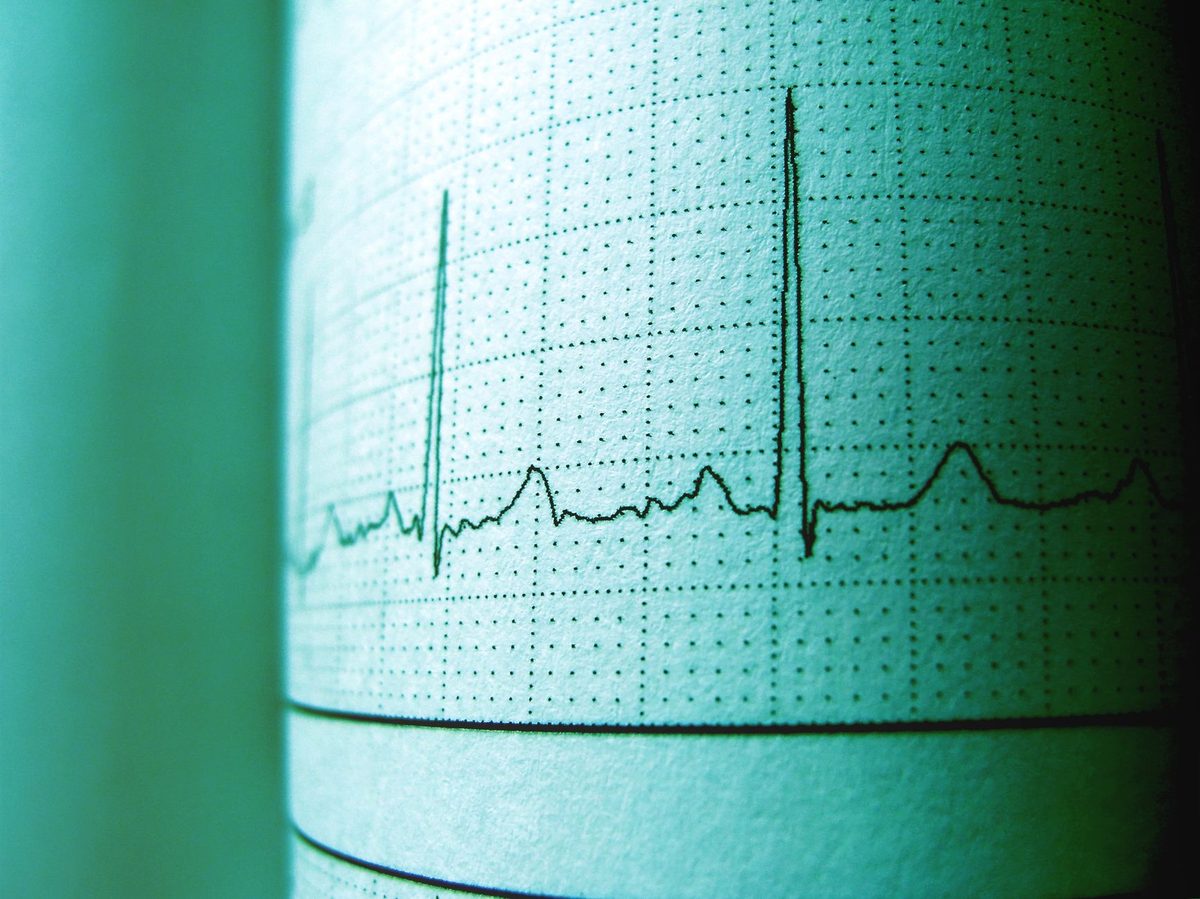
A deep-learning model trained on every electrocardiogram (ECG) in a Swedish region found a different signal. In a study published in Nature, the model isolated a group making up 2.2% of patients with a 7.0% annual rate of sudden cardiac death, higher than the 4.6% rate among patients with reduced LVEF. The model flagged 86.1% of its high-risk patients whom LVEF did not.

Why it matters

If validated, the model could route defibrillators to patients whom ejection-fraction screening never flags.

Questions about this story

Free account needed to ask — your question is kept and asked for you right after sign-up. Answers are public.

No questions yet — be the first to ask.

Key Indicators

7.0%
Annual sudden cardiac death rate in the AI high-risk group
Higher than the 4.6% annual rate among patients with reduced LVEF.
4.6%
Annual sudden cardiac death rate with reduced LVEF
The current standard identifies a smaller, lower-risk group than the ECG model.
86.1%
AI high-risk patients not flagged by LVEF
Most of the model's high-risk patients would have been missed by the standard test.
54.4%
Lower mortality among high-risk patients with defibrillators
Observational comparison against predicted mortality, not a randomized trial.
2.2%
Share of study sample in the AI high-risk group
The model isolates a small group with a concentrated risk of sudden death.
350,000
Annual US sudden cardiac arrests
Most victims do not survive to receive a defibrillator.

Voices

Curated perspectives — historical figures and your fellow readers.

Sign up to generate historical perspectives on this story.

People Involved

Organizations Involved

Timeline

June 2026 November 2026

2 events Latest: Today
  1. Study links 'slurred downstroke' to sudden cardiac death

    Today Research

    The ECG waveform feature predicted risk independently of LVEF, and high-risk patients with defibrillators were 54.4% less likely to die than expected.

  2. Nature publishes deep-learning ECG study

    Research

    A model trained on a Swedish region's ECGs isolates a high-risk group with a 7.0% annual sudden-death rate.

Scenarios

1

Randomized trial confirms defibrillator benefit in ECG-flagged patients

Possible Resolves by End of 2031

Discussed by: The study authors and cardiologists quoted in Scientific American and the European Heart Journal call for randomized evidence before practice changes.

A prospective trial enrolls patients identified by the ECG model and randomly assigns them to defibrillator placement or usual care. If mortality falls in the device arm, the model moves from risk marker to treatment guide.

2

FDA clears an ECG-based sudden-death risk model

Possible Resolves by Q2 2029

Discussed by: Clinical AI analysts and device-industry observers.

A company or health system seeks regulatory clearance for software that computes sudden-death risk from a standard 12-lead ECG. Clearance would let hospitals bill for the test and scale it beyond research studies.

3

Guidelines expand ICD criteria beyond ejection fraction

Unlikely Resolves by End of 2028

Discussed by: Cardiology guideline committees and health-policy analysts.

The next major U.S. device guideline adds an ECG-based risk marker to the criteria for implantable defibrillators. That would change coverage decisions and shift implant volumes toward patients the current LVEF threshold misses.

Historical Context

2 moments from history that rhyme with this story — and how they unfolded.

2002

MADIT-II and the ejection-fraction standard (2002)

The Multicenter Automatic Defibrillator Implantation Trial II found that implantable defibrillators cut mortality in heart-attack survivors with reduced LVEF. The result made LVEF the main gatekeeper for device placement.

Then

Guidelines adopted LVEF thresholds for implantable defibrillators.

Now

LVEF remains the standard, but two-thirds of implanted devices never deliver a shock, and most sudden-death victims never meet the threshold.

Why this matters now

The new model targets the false negatives that LVEF misses.

2008

Early repolarization syndrome (2008)

A French research group reported that a subtle J-point elevation on the ECG was associated with idiopathic ventricular fibrillation in survivors of cardiac arrest.

Then

The pattern was proposed as a new risk marker for sudden cardiac death.

Now

Larger prospective studies found the association weaker and inconsistent, and it did not become a stand-alone criterion for defibrillators.

Why this matters now

It shows why a promising ECG pattern needs prospective validation before it changes clinical practice.

Sources

(8)