

Pull to refresh
Logo
Amazon lets customers shop by texting Alexa

Amazon lets customers shop by texting Alexa

New Capabilities

The retail giant moves its AI shopping agent from its app into text messages, starting with invite-only US customers

Overview

Updated Yesterday

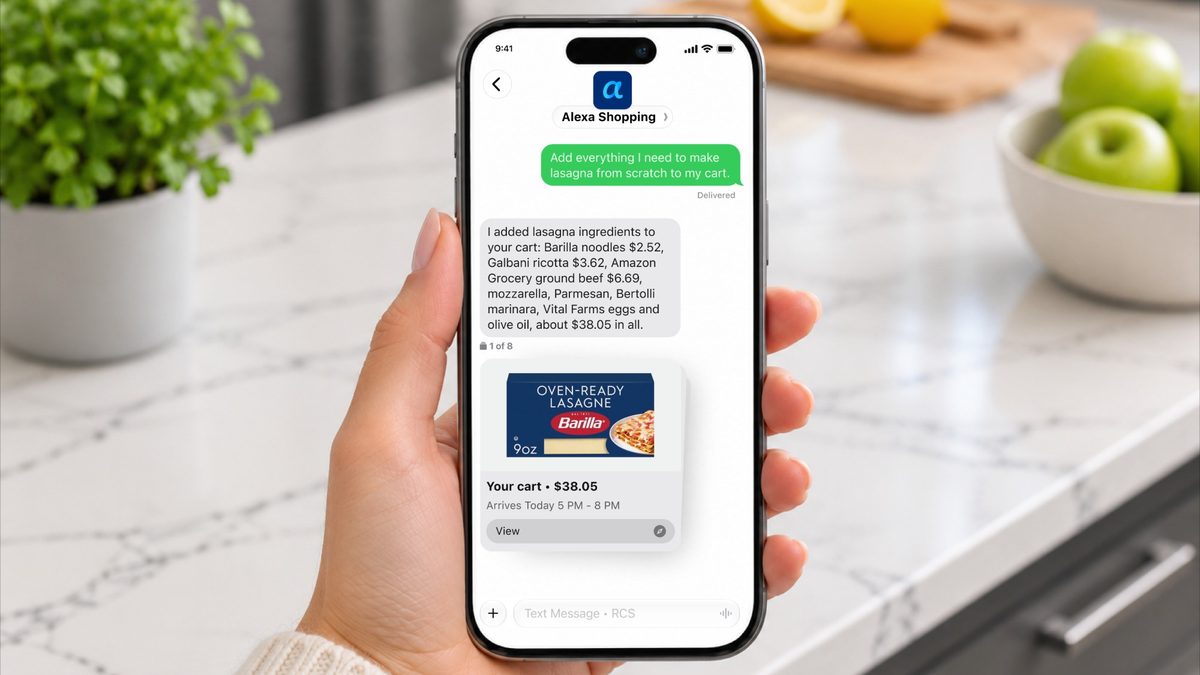
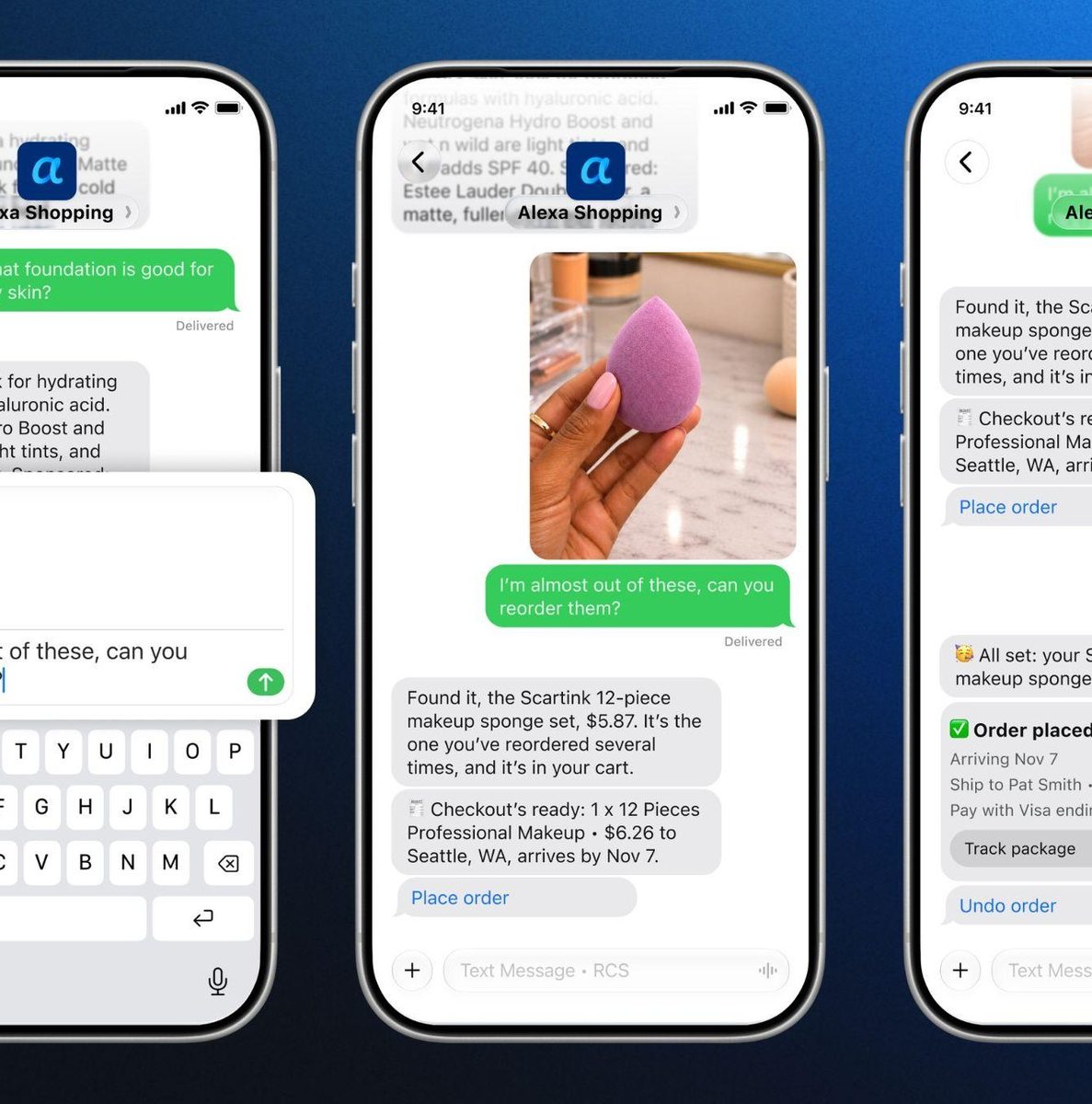
Amazon began letting a small group of US customers shop by text message on November 6. They can text a contact called "Alexa Shopping" to order groceries, compare prices, or send a photo of something they want. The assistant searches, suggests options, and completes the purchase with their approval.

The feature moves Amazon's AI shopping agent out of its app and onto the phone's messaging screen. Amazon says millions more customers will get invitations in the coming weeks, just before the holiday shopping season.

Why it matters

If texting an AI agent becomes how people shop, Amazon controls the inbox, the product search, and the checkout in one thread.

Questions about this story

Free account needed to ask — your question is kept and asked for you right after sign-up. Answers are public.

No questions yet — be the first to ask.

Key Indicators

400 million
Customers who used Alexa for Shopping in the past 12 months
Amazon's figure for the year through November 2026.
8x
Growth in use of Alexa for Shopping's agentic features
Amazon says usage has grown more than eight times since the start of 2026.
$68.6 billion
Amazon advertising sales in 2025
The text thread is a new surface for sponsored product placements.

Voices

Curated perspectives — historical figures and your fellow readers.

Sign up to generate historical perspectives on this story.

People Involved

Organizations Involved

Timeline

March 2026 November 2026

7 events Latest: Yesterday
Tap a bar to jump to that date
  1. Amazon begins invite-only text shopping

    Latest Product launch

    Select US customers can text "Alexa Shopping" to search, compare, and buy.

  2. OpenAI adds texting to its Dot agent

    Product

    OpenAI gives its personal AI agent a text-message interface.

  3. DoorDash rolls out text ordering

    Product

    The delivery company adds text-based ordering, part of a wider shift.

  4. Amazon launches Alexa for Shopping

    Product

    Amazon merges its Rufus shopping chatbot with Alexa+ into one agent.

Scenarios

1

Text shopping opens to all US customers

Likely Resolves by Mar 1, 2027

Discussed by: Amazon's own rollout language and technology trade coverage

Amazon says millions more invitations will go out in the coming weeks. If the invite-only phase goes smoothly, the feature becomes a standard way to shop, and the text thread starts carrying order updates, delivery notices, and deals alongside purchases.

2

Rollout stays invite-only through 2027

Possible Resolves by Jun 1, 2027

Discussed by: StartupHub.ai and other technology commentators

The launch is gated, and Amazon has not detailed how text checkout approvals, photo matching, or cross-web Shop Direct orders are handled. If those gaps slow adoption or raise disputes, Amazon could keep the feature limited to a test group well into 2027.

3

Court forces Amazon to admit rival shopping agents

Uncertain Resolves by Jun 1, 2027

Discussed by: Legal observers following Perplexity v. Amazon and the broader agent-access fight

Perplexity's case against Amazon continues after an appeals court overturned the Comet ban. A final ruling against Amazon could require it to let outside AI agents search and buy from its store, undercutting the advantage of its own text-shopping agent.

Historical Context

3 moments from history that rhyme with this story — and how they unfolded.

May 1998

United States v. Microsoft (1998)

The US Justice Department and 20 states sued Microsoft, alleging it bundled its Internet Explorer browser into Windows to crush Netscape and control the gateway to the web. The trial exposed internal emails about dividing the browser market.

Then

A federal judge ordered Microsoft broken into two companies in 2000.

Now

An appeals court reversed the breakup, but Microsoft settled in 2001 and agreed to share its programming interfaces with rivals.

Why this matters now

The fight was over who controls the default doorway to the internet. Amazon's text agent is a bid to control the default doorway to shopping.

June 2017

EU Google Shopping case (2017)

The European Commission fined Google 2.42 billion euros for favoring its own comparison shopping service in search results over rivals. Regulators said Google had abused its dominance as a search gateway.

Then

Google was ordered to change how it displayed shopping results in Europe.

Now

The case became a template for regulating how dominant platforms treat their own products versus competitors'.

Why this matters now

Amazon's store is a similar gateway. Its decision to build its own agent while blocking outside ones raises the same question about self-preferencing.

August 2020

Apple v. Epic Games (2020)

Epic Games added a direct payment option to Fortnite, and Apple removed the game from its App Store. Epic sued, arguing Apple's control over app distribution and payments was anticompetitive.

Then

A federal judge ruled mostly for Apple but ordered it to allow links to outside payment options.

Now

The case fed broader regulatory pressure on app store gatekeeping in the US and Europe.

Why this matters now

It shows how a platform's power to block outside agents from its marketplace becomes a legal question, not just a product decision.

Sources

(11)