
Pull to refresh
Logo
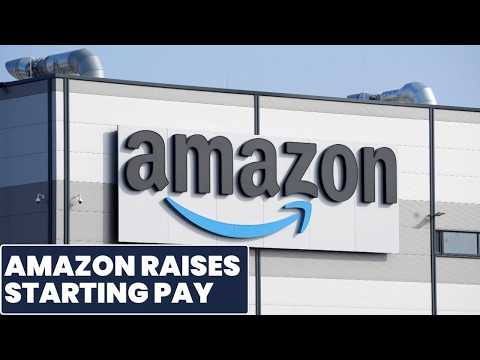
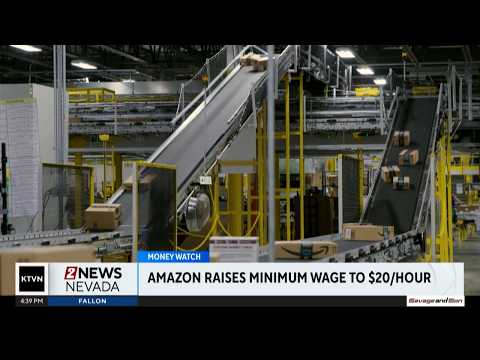
Amazon raises minimum starting pay to $20 an hour for US operations workers

Amazon raises minimum starting pay to $20 an hour for US operations workers

Money Moves

A $1.5 billion investment in wages, grocery discounts, and a lifetime credit union benefit lands ahead of the holiday hiring surge

Yesterday: Amazon raises minimum starting pay to $20 an hour

Overview

Updated Yesterday

Amazon's U.S. warehouse and delivery workers get a $1-an-hour raise this month, pushing the company's minimum starting wage for full-time operations roles to $20. The increase, part of a $1.5 billion investment announced Wednesday, brings average hourly pay to nearly $24 and average total compensation past $32 an hour when benefits are counted.

All U.S. employees also gain uncapped grocery discounts (10% off at Amazon and Whole Foods online, 20% off in store) and access to a lifetime credit union membership called Day 1 Financial. The package lands just before the holiday rush, when Amazon typically adds roughly 250,000 seasonal workers in anticipation of its largest order surge of the year.

Why it matters

If this raise becomes the retail benchmark, millions of US warehouse and store workers could see wage pressure from competitors trying to match Amazon.

Questions about this story

Free account needed to ask — your question is kept and asked for you right after sign-up. Answers are public.

No questions yet — be the first to ask.

Key Indicators

$20/hour
New minimum starting pay for full-time core operations employees
A $1-per-hour increase for eligible workers; many roles require no prior experience.
$24/hour
Average hourly wage for operations employees
Up from the prior average with the company-wide $1 raise.
$32+/hour
Average total compensation including benefits
Amazon counts healthcare, prepaid education, and Prime membership in this figure.
$1.5 billion
Investment in higher pay for US core operations employees
Covers the wage increase plus the new grocery and banking benefits.
17%
Increase in minimum starting pay over the past three years
Amazon says the wage floor for operations roles has grown from roughly $17 to $20 per hour since 2023.
100,000+
Whole Foods Market team members gaining access to Amazon's benefits package
The expanded benefits will extend to all US Whole Foods employees, per the announcement.

Voices

Curated perspectives — historical figures and your fellow readers.

Ever wondered what historical figures would say about today's headlines?

Sign up to generate historical perspectives on this story.

People Involved

Organizations Involved

Timeline

October 2018 October 2026

3 events Latest: Yesterday
  1. Grocery discounts take effect for all US employees

    Upcoming Policy

    All US Amazon employees gain 10% off eligible groceries on Amazon.com and Whole Foods Market online, plus 20% off in-store at Whole Foods.

  2. Amazon raises minimum starting pay to $20 an hour

    Latest Policy

    Amazon announced a $1-per-hour raise for eligible US operations workers, a $1.5 billion investment, grocery discounts, and the Day 1 Financial credit union benefit.

  3. Amazon sets $15 minimum wage

    Policy

    Amazon raised its US minimum wage to $15 an hour after years of criticism, while eliminating employee stock bonuses and some pay incentives.

Scenarios

1

Rivals match Amazon's $20 wage floor

Possible Resolves by Q2 2027

Discussed by: Fast Company's Pavithra Mohan, who noted Costco already starts at $20 and called Amazon's new minimum 'not unusual among major retailers'

With Costco at $20 and Amazon now at $20, Walmart and Target face mounting pressure to close the gap. Walmart's average frontline pay sits at $18.50 and Target's at $18.50, leaving both roughly $5 below Amazon's average of nearly $24. A tight labor market ahead of the 2027 hiring season could push one of them to announce a $20 minimum to stay competitive.

2

Automation shrinks the workforce that benefits from the raise

Likely Resolves by Feb 15, 2027

Discussed by: Fast Company and a New York Times report cited in its coverage, noting Amazon's 1 million+ robots could avoid hiring nearly 600,000 people in coming years

Amazon has simultaneously invested in warehouse automation, outsourced HR processes to an AI chatbot, and cut tens of thousands of jobs. If the wage increase accelerates automation adoption, the number of operations employees eligible for the raise could decline even as per-worker costs rise. This scenario would show up in Amazon's quarterly headcount reporting.

3

Grocery discounts and banking benefits drive measurable retention gains

Possible Resolves by Sep 16, 2027

Discussed by: Amazon's announcement, which frames the benefits as designed to help employees' 'money go further' and address financial stability

The uncapped grocery discount and lifetime credit union membership address high everyday costs more directly than a wage bump alone. If retention improves in fulfillment and delivery roles, Amazon would likely cite it in earnings calls or its shareholder letter as evidence the investment is paying off, potentially leading to further benefit expansions.

Historical Context

3 moments from history that rhyme with this story — and how they unfolded.

October 2018

Amazon's $15 minimum wage (2018)

After years of public criticism, including a 2018 bill from Sen. Bernie Sanders that would have taxed companies whose workers relied on public assistance, Amazon announced on October 2, 2018 that it would raise its US minimum wage to $15, effective November 1. The move applied to 250,000 employees and contractors, but Amazon also eliminated employee stock bonuses and monthly performance-based incentives.

Then

Amazon absorbed the cost increase and became a visible champion of the $15 wage floor, drawing praise from Sanders and labor advocates.

Now

The $15 benchmark pressured other large employers including Target, Best Buy, and Costco to raise their own minimum wages over the following years.

Why this matters now

The 2026 announcement follows the same playbook: a dramatic, widely-announced wage increase timed for maximum public and competitive effect. The 17% rise over three years shows how Amazon has been incrementally pushing the industry floor upward.

2025

Costco's wage leadership (2025)

Costco raised starting wages for entry-level workers to $20 an hour, with average hourly pay crossing $31. Costco has historically paid above-market wages, betting that higher pay reduces turnover and training costs.

Then

Costco maintained its industry-low turnover rate while absorbing the wage increase into margins.

Now

The $20 starting wage became the clear benchmark for big-box and grocery retail, one that Walmart and Target had not matched.

Why this matters now

Costco's $20 floor gave Amazon a direct competitor benchmark to match, making the new wage less a leap and more a catch-up to an existing standard. The gap between the two companies' averages, though, remains wide: Costco's average is $31 versus Amazon's $24.

Through 2026

Minimum wage escalation across US states (2026)

By the end of 2026, the minimum wage crosses $15 in 14 states and 65 cities and counties, with many exceeding $17. Seattle's minimum wage passes $21, and several localities are approaching $20.

Then

Amazon's $20 floor now clears the statewide minimum in every state where it operates.

Now

Rising statutory minimums reduce the gap between Amazon's floor and the legal minimum, making its wage leadership less distinctive over time.

Why this matters now

State-level minimum wage escalation compresses the differential Amazon can claim over competitors, which helps explain why the company pairs its wage bump with benefits like grocery discounts and banking access rather than raising pay more steeply.

Sources

(10)