


Pull to refresh
Logo
Amazon pays $8.25 million to settle D.C. lawsuit over slow Prime deliveries

Amazon pays $8.25 million to settle D.C. lawsuit over slow Prime deliveries

Rule Changes

D.C. attorney general alleged the company excluded majority-Black ZIP codes from its delivery network for nearly four years

October 1st, 2026: Settlement announced: $8.25 million and disclosure requirements

Overview

Updated 1 hour ago

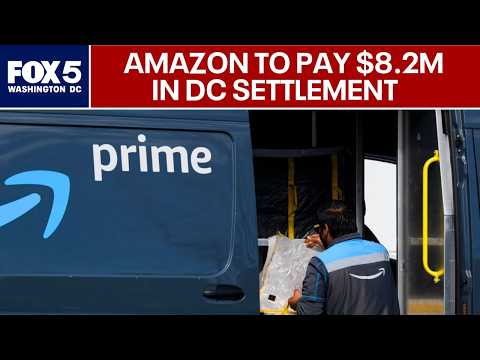
Amazon will pay $8.25 million to settle a Washington, D.C., lawsuit over four years of slower Prime deliveries to two majority-Black ZIP codes east of the Anacostia River. The attorney general's office alleged Amazon excluded ZIP codes 20019 and 20020 from its in-house deliveries from mid-2022 to April 2026 while charging about 69,000 Prime members full price.

Affected members get back about $7.25 million — nearly half their Prime fees during the exclusion. The District receives $1 million in penalties. Amazon denies wrongdoing but must now disclose future exclusions to customers within 60 days and to the attorney general within 90 days.

Why it matters

The settlement sets a disclosure standard for companies that quietly downgrade delivery services in specific neighborhoods.

Questions about this story

Free account needed to ask — your question is kept and asked for you right after sign-up. Answers are public.

No questions yet — be the first to ask.

Key Indicators

$8.25M
Total settlement value
Composed of $7.25 million in Prime membership refunds and $1 million in civil penalties to the District.
69,000+
Affected Prime members
Unique Prime members with a default delivery address in ZIP codes 20019 or 20020 during the exclusion period.
46 months
Length of exclusion period
From June 2022, when Amazon began using third-party carriers for the excluded ZIP codes, to April 2026 when it lifted the exclusions.
$1M
Civil penalty to D.C.
Amazon must pay the penalty within 21 days of the consent order's effective date.

Voices

Curated perspectives — historical figures and your fellow readers.

Ever wondered what historical figures would say about today's headlines?

Sign up to generate historical perspectives on this story.

People Involved

Organizations Involved

Timeline

June 2022 October 2026

4 events Latest: October 1st, 2026 · 1 week ago
Tap a bar to jump to that date
  1. Amazon lifts delivery exclusions

    Business Practice

    Amazon removes the safety-based carrier exclusions for ZIP codes 20019 and 20020, restoring in-house delivery to those neighborhoods before the settlement.

  2. Amazon begins excluding two D.C. ZIP codes from in-house delivery

    Business Practice

    Amazon begins relying on USPS and UPS for all deliveries to ZIP codes 20019 and 20020 in Wards 7 and 8, citing driver safety concerns. Prime members in those areas see slower delivery times.

Scenarios

1

Amazon Files New Delivery Exclusion Notice with D.C. OAG

Possible Resolves by Oct 1, 2030

Discussed by: Terms of the consent judgment; D.C. OAG compliance monitoring

Amazon's consent order permits zip-code-level delivery exclusions for safety reasons, but only with advance disclosure to customers and the OAG. If Amazon reimplements an exclusion in any D.C. residential ZIP code, it must notify affected Prime members within 60 days and the attorney general within 90 days. This scenario tracks whether that mechanism ever gets triggered.

2

Refund Distribution Completes Without Major Disputes

Likely Resolves by End of 2027

Discussed by: D.C. OAG; news coverage from NBC4 Washington and the Washington Post

The settlement promises affected Prime members about half their membership fees from the exclusion period. Distribution depends on Amazon identifying eligible account holders and issuing payments. If the process goes smoothly, an OAG announcement or news report will confirm completion within the first year.

3

Other Jurisdictions Open Similar Delivery Exclusion Investigations

Possible Resolves by Q2 2028

Discussed by: Bloomberg Law coverage; civil rights and consumer protection advocates

The D.C. case is a public record that other attorneys general can cite. If other cities find similar exclusion patterns, they may open their own consumer protection or civil rights investigations into geographic delivery downgrades. This scenario tracks whether the D.C. precedent spreads.

Historical Context

2 moments from history that rhyme with this story — and how they unfolded.

1935-1968

Redlining and the Home Owners' Loan Corporation maps (1930s-1968)

During the New Deal, the federal Home Owners' Loan Corporation graded cities block by block, coloring neighborhoods with Black residents red — 'hazardous.' Private lenders, insurers, and real estate agents used those grades to deny mortgages and services to entire communities, a practice that became known as redlining.

Then

Black families were denied federally backed mortgages in massive numbers, locking them out of postwar homeownership and wealth building.

Now

The practice helped create segregated cities that still show service gaps along racial lines decades later.

Why this matters now

The D.C. case involves a company excluding two majority-Black ZIP codes from standard delivery service. Whole neighborhoods cut out of services that others receive echoes redlining's geographic pattern.

April 1968

The Fair Housing Act (April 1968)

Congress passed the Fair Housing Act in April 1968, eight days after Martin Luther King Jr.'s assassination, prohibiting discrimination in housing sales, rentals, and financing on the basis of race, religion, national origin, and other categories.

Then

Explicitly race-based housing policies became illegal, though enforcement was slow to take effect.

Now

The law established the federal principle that treating entire neighborhoods differently on racial grounds is legally actionable.

Why this matters now

Housing discrimination law set that precedent for neighborhood-level equity. The D.C. lawsuit applies a similar principle through consumer protection law rather than fair housing law.

Sources

(10)