
Pull to refresh
Logo
Colombian fossils point to evolutionary turnover without mass extinction

Colombian fossils point to evolutionary turnover without mass extinction

New Capabilities

McGill and CIP researchers name a new pattern, the 'Biotic Inflection,' from the Early Cretaceous Paja Formation

Overview

Updated 1 hour ago

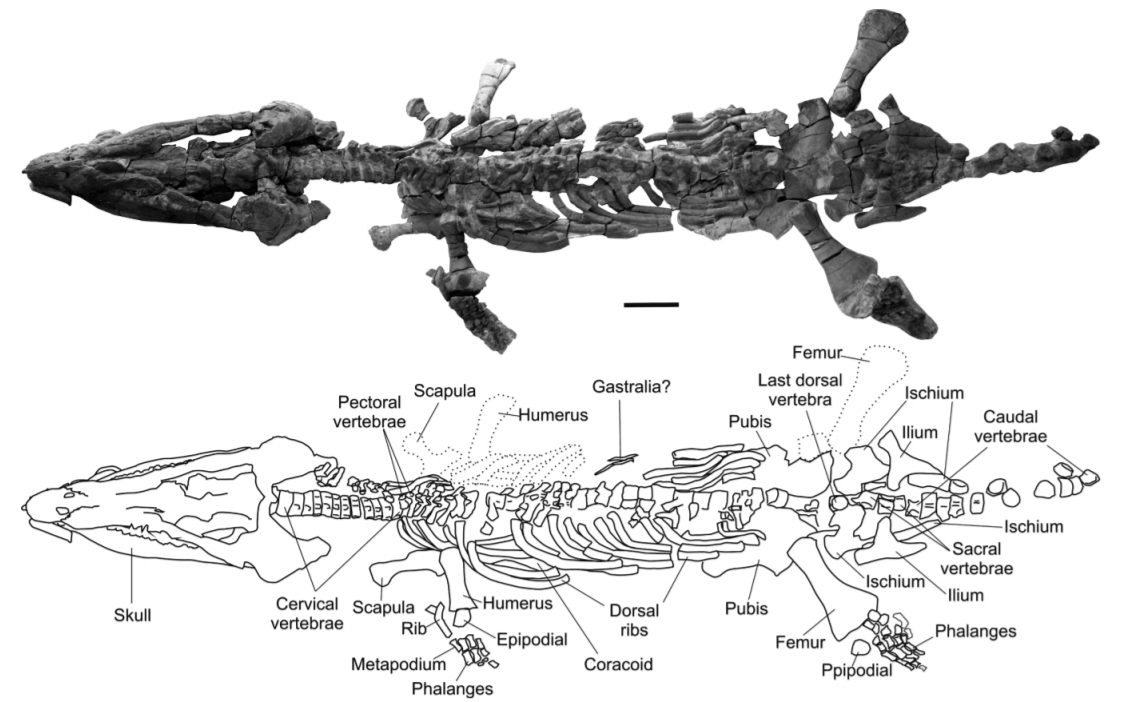
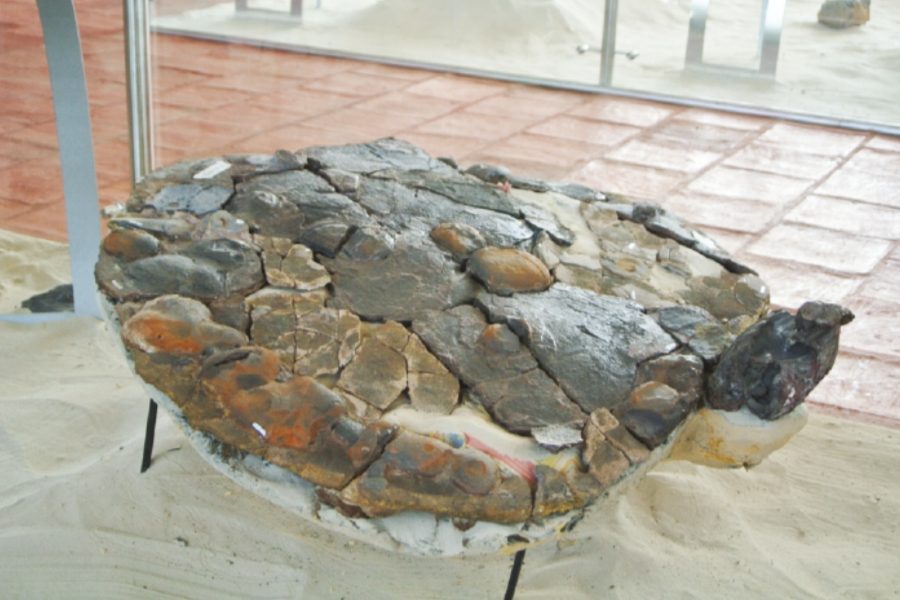
In the hills near Villa de Leyva, Colombia, the Paja Formation holds the bones of long-necked plesiosaurs, marine crocodile relatives, turtles and sharks, all packed into Early Cretaceous rock. A team from McGill University and the Centro de Investigaciones Paleontológicas read that assemblage as a snapshot of two biological eras overlapping: lineages on their way out, living beside lineages on their way up.

The team, led by McGill biology professor Hans Larsson and PhD graduate Dirley Cortés, calls the pattern a 'Biotic Inflection.' If it holds up elsewhere, it means some of the largest turnovers in the history of life did not require a catastrophe to clear the field first.

Why it matters

If major evolutionary turnover can happen without mass extinction, gaps in the fossil record stop reading as automatic evidence of catastrophe.

Questions about this story

Free account needed to ask — your question is kept and asked for you right after sign-up. Answers are public.

No questions yet — be the first to ask.

Key Indicators

7
Trophic levels in the Paja Biota
A 2024 food-web reconstruction placed apex marine reptiles above the level occupied by modern orcas and sharks.
250 m
Cretaceous sea level above today's
The review lists peak eustatic sea level about 250 metres higher than present mean sea level.
1,140 ppm
Estimated atmospheric CO2 then
Roughly three times the pre-industrial level of 380 ppm, per the review.

Voices

Curated perspectives — historical figures and your fellow readers.

Sign up to generate historical perspectives on this story.

People Involved

Organizations Involved

Timeline

2024 November 2026

3 events Latest: Yesterday
  1. McGill publicizes the findings

    Latest Announcement

    University news office and CIP describe an evolutionary transition that did not require a mass extinction.

  2. Review proposes the Biotic Inflection

    Research

    Frontiers in Ecology and Evolution publishes the Paja Formation synthesis introducing the term.

  3. Food web reconstruction finds a seventh trophic level

    Research

    Cortés and Larsson map Paja Biota feeding relationships and place apex marine reptiles above modern orcas.

Scenarios

1

Biotic Inflection enters the standard vocabulary

Possible Resolves by End of 2028

Discussed by: The McGill and CIP authors, who explicitly frame the paper as a testable model rather than a one-off description

Other research groups apply the term to their own fossil formations. The clearest candidates are the mammal turnover across the Paleocene-Eocene Thermal Maximum and the Great American Biotic Interchange, both of which the review itself names as possible matches. If several independent teams find the same relic-plus-novel overlap, the term stops being a label for one Colombian deposit and becomes a category of evolutionary transition.

2

The concept stays a local description of one deposit

Possible Resolves by End of 2028

Discussed by: Skeptics implied by the authors' own caveats, which state the formation cannot yet be called a paleohotspot under strict criteria

The Paja Formation is exceptionally preserved, and that may be the whole story. If comparable deposits elsewhere do not show relic and novel lineages overlapping, the pattern reads as a sampling artifact of one unusually rich site rather than a general mode of evolutionary change. The term then survives mainly in reviews of Colombian Cretaceous paleontology.

3

Better dating breaks the overlap

Unlikely Resolves by End of 2030

Discussed by: The authors, who list more accurate fossil ages as a prerequisite for testing the idea

The claim rests on relic and novel lineages actually sharing the same window of time. Tighter radiometric or biostratigraphic dating could show the two groups were separated by more time than the current stratigraphy suggests, which would dissolve the overlap. The authors name improved age estimates as one of three things needed to settle the question.

Historical Context

2 moments from history that rhyme with this story — and how they unfolded.

About 56 million years ago

Paleocene-Eocene Thermal Maximum (about 56 million years ago)

Global temperatures rose sharply over a few thousand years. Archaic mammal groups that had dominated the Paleocene declined while the ancestors of modern mammalian orders began to spread, with tropical forest pushing toward the poles.

Then

Mammal communities turned over across North America and Eurasia.

Now

The shift set the lineage lineup that produced today's mammalian orders.

Why this matters now

The McGill review names this transition as the closest analogue to what the Paja Formation preserves, and the test case for whether Biotic Inflections recur.

About 3 million years ago

Great American Biotic Interchange (about 3 million years ago)

A land bridge formed between North and South America. Species moved in both directions, with northern mammals expanding south and southern lineages moving north.

Then

Competition reshuffled faunas on both continents.

Now

South America's mammal assemblage was rebuilt, with many native groups reduced or lost.

Why this matters now

The review uses it as a second example of what a Biotic Inflection would look like if only one well-preserved deposit had survived to document it.

Sources

(4)