
Pull to refresh
Logo
Researchers report fossilized red blood cells in a 115-million-year-old dinosaur bone

Researchers report fossilized red blood cells in a 115-million-year-old dinosaur bone

New Capabilities

The case rests on heme chemistry and cell-shaped structures in a Brazilian theropod; other paleontologists dispute the identification

Overview

Updated 1 hour ago

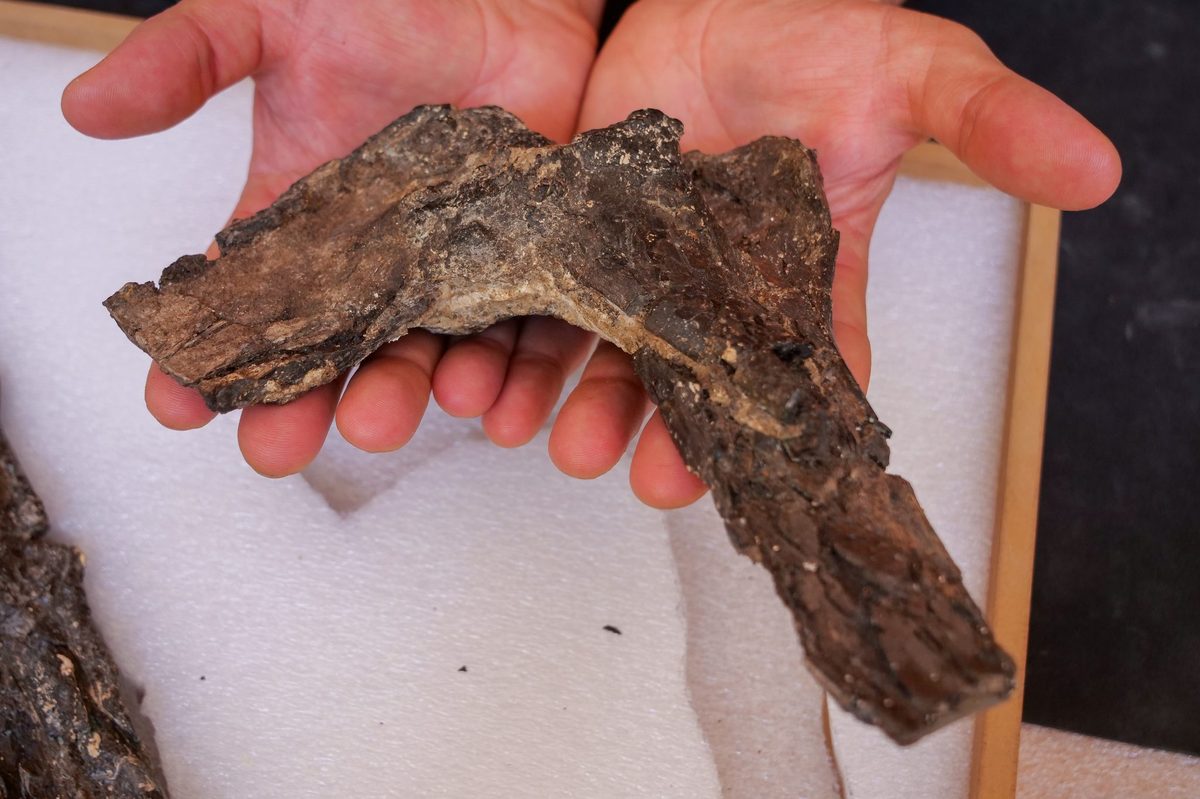
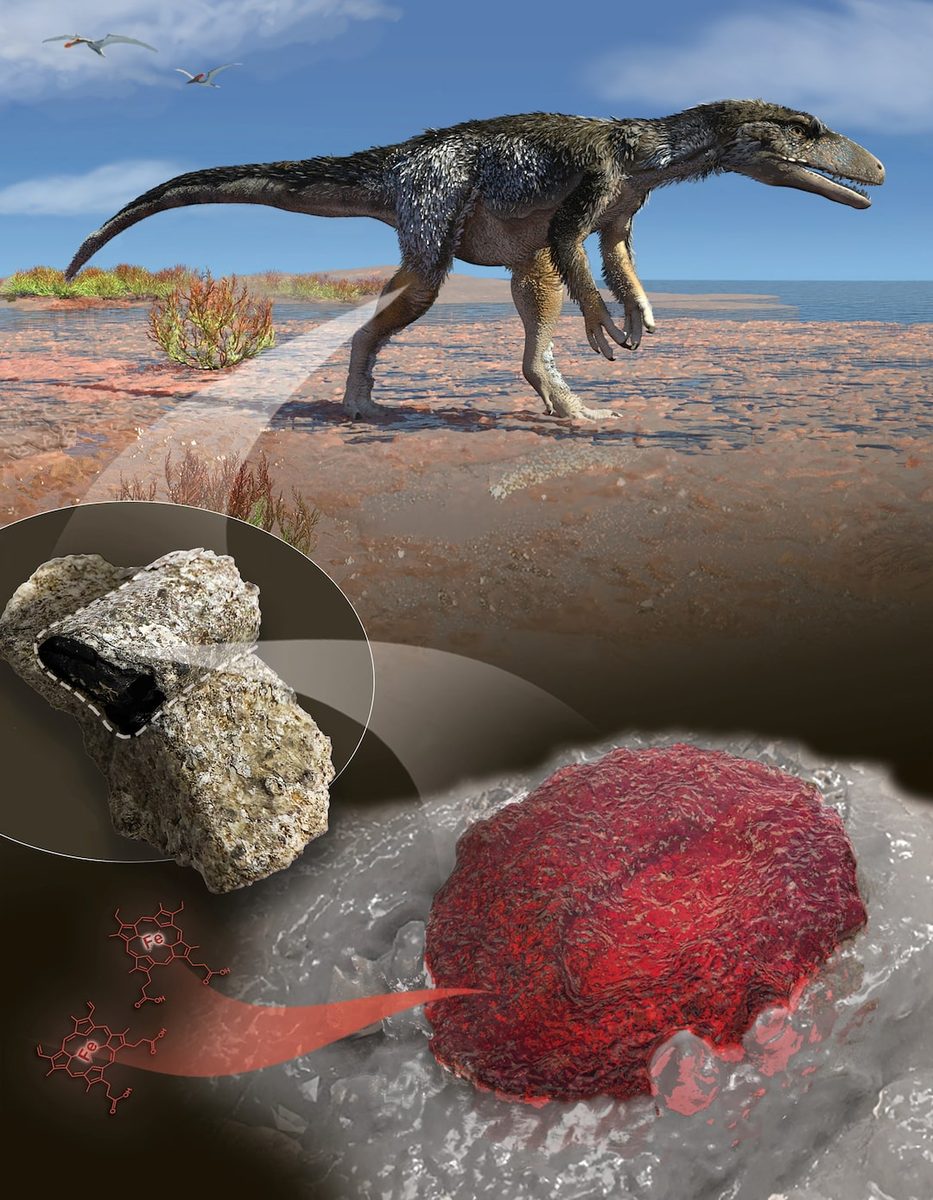
A team led by geochemist Kliti Grice at Curtin University in Perth says it has found red blood cell-shaped structures and chemical traces of heme inside the limb bone of Aratasaurus museunacionali, a 3-meter theropod from northeastern Brazil that died about 115 million years ago. The paper appeared in the Proceedings of the National Academy of Sciences.

If the identification holds, it extends the known survival window for blood molecules by tens of millions of years and gives paleontologists a chemical method for testing claims that used to rest on shape alone. Three outside specialists say the chemistry is suggestive but the cells are not proven.

Why it matters

If blood molecules can survive 115 million years, the search for ancient life on Mars and elsewhere needs new rules about where to dig.

Questions about this story

Free account needed to ask — your question is kept and asked for you right after sign-up. Answers are public.

No questions yet — be the first to ask.

Key Indicators

115 million
Age of the fossil
The Aratasaurus bone dates to the Cretaceous period, roughly 115 million years ago.
23 microns
Length of the cell-like structures
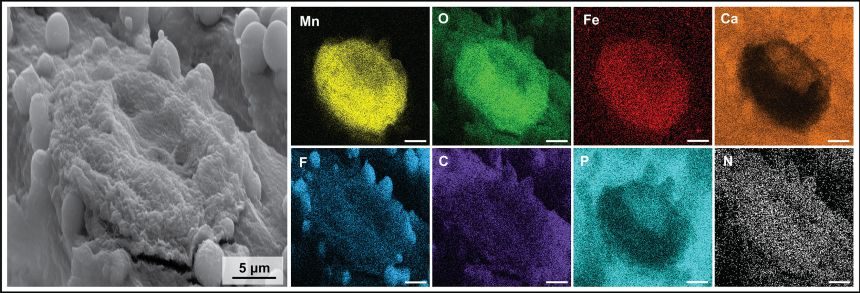
The oval structures average about 23 microns long and just under 20 wide, larger than living bird or crocodile red blood cells.
14
Earlier attempts to describe ancient red blood cells
Prior studies made similar claims, and none broadly convinced the field.
3 m / 34 kg
Estimated size of the animal
Aratasaurus was a modest-sized meat-eating dinosaur, about the length of a small car.

Voices

Curated perspectives — historical figures and your fellow readers.

Sign up to generate historical perspectives on this story.

People Involved

Organizations Involved

Timeline

2008 November 2026

4 events Latest: 2 days ago
Tap a bar to jump to that date
  1. Curtin issues public summary of the findings

    Latest Statement

    The university's release describes mineralized red blood cells and intact heme biomolecules, and raises the astrobiology angle.

  2. PNAS publishes the heme and cell-structure findings

    Research

    The team reports oval structures averaging 23 microns inside bone channels, plus heme B and a degraded form of heme.

  3. Outside paleontologists push back on the cell identification

    Reaction

    McNamara, Schweitzer and Saitta tell Science they accept parts of the chemistry but not the red blood cell label.

  4. Brazilian fossil recovered from a mine

    Discovery

    The Aratasaurus museunacionali remains were excavated in northeastern Brazil.

Scenarios

1

Second dinosaur fossil yields the same heme signature

Possible Resolves by Q2 2029

Discussed by: Paleontologists quoted in Science and The Scientist, who say chemical replication is the test that matters

Another lab applies the same laser and mass spectrometry methods to a different Cretaceous bone and finds heme-derived compounds in the same anatomical position. That would move the debate from one specimen to a class of fossils and make the method standard.

2

Lab experiment reproduces mineralized blood cells

Uncertain Resolves by End of 2029

Discussed by: Maria McNamara of University College Cork

Researchers decay and mineralize real red blood cells under controlled conditions to see whether they produce the same 23-micron ovals with manganese oxide alongside heme. Success would answer the shape problem that microscopy cannot settle.

3

Claim fades as critics' objections go unanswered

Possible Resolves by End of 2028

Discussed by: Schweitzer and Saitta, who question the size, the missing nucleus and the mineral shapes

The paper stands but attracts no follow-up work. Later reviews treat the structures as manganese oxide nodules and cite the heme signal as ambiguous, the same way earlier red blood cell claims faded.

Historical Context

3 moments from history that rhyme with this story — and how they unfolded.

March 2005

T. rex soft tissue claim (2005)

Mary Schweitzer's team reported soft, stretchy tissue and red blood cell-like structures inside the femur of a Tyrannosaurus rex from Montana, published in Science. The find was widely covered and widely questioned.

Then

Other labs tried and often failed to recover comparable material from other specimens.

Now

The episode set the standard the field now applies: chemistry and anatomy together, plus a contamination control.

Why this matters now

Schweitzer, the author of that claim, is one of the skeptics of the new Brazilian fossil, and her objections mirror the ones aimed at her own work.

August 1996

Martian meteorite ALH84001 (1996)

NASA researchers announced that a meteorite of Martian origin contained structures and chemicals they interpreted as possible signs of ancient microbial life. President Clinton gave a Rose Garden statement.

Then

The claim dominated coverage for months and prompted new planetary protection and sample-return planning.

Now

Most of the evidence was reinterpreted as non-biological, and the episode became the textbook case for requiring multiple independent lines of evidence.

Why this matters now

The Curtin team argues its finding matters for astrobiology. ALH84001 shows how quickly a life-detection claim can outrun its evidence.

Various, before 2026

Prior fossil blood cell claims

At least 14 earlier studies described red blood cell-like structures in dinosaur and other very old fossils. None broadly convinced the field, in part because minerals can mimic cell shapes under a microscope.

Then

Each claim drew a round of replication attempts and counterarguments.

Now

The failures pushed researchers toward chemical evidence, the approach the new paper uses.

Why this matters now

The new study is explicitly built to clear that bar, which is why the dispute has moved from shape to chemistry.

Sources

(10)