

Pull to refresh
Logo
Ice Age engravings found in a heavily visited Catalan cave

Ice Age engravings found in a heavily visited Catalan cave

New Capabilities

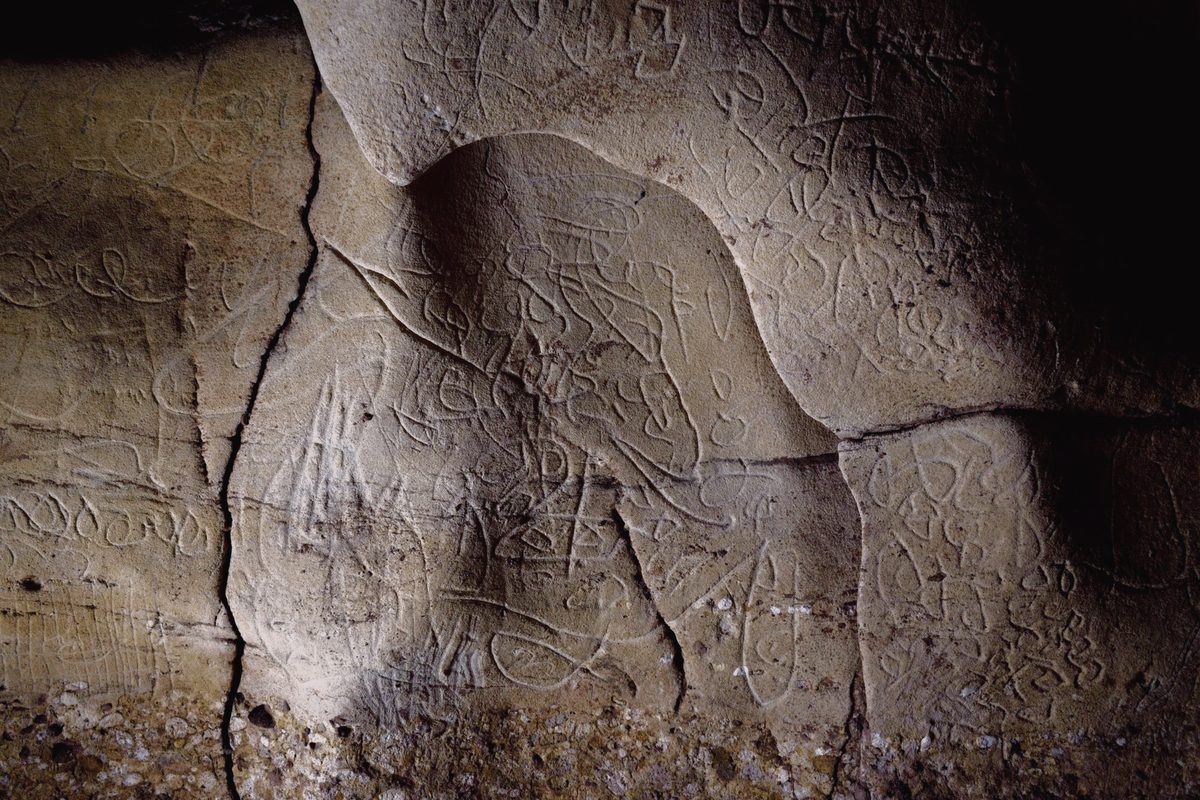
Researchers identified 280 Paleolithic motifs at Cova de la Font Major, including 55 animal figures.

Overview

Updated 1 hour ago

Visitors walked past the engraved walls of Cova de la Font Major for decades, some carving names over Ice Age marks. In 2019, archaeologist Josep Maria Vergès spotted them under raking light, and researchers now describe 280 Paleolithic motifs, including 55 animal figures.

The find is the third-largest Paleolithic art assemblage on the Mediterranean side of the Iberian Peninsula, the authors say. They argue the motifs show a local artistic tradition distinct from the Franco-Cantabrian region.

Why it matters

The find rewrites the map of Ice Age art in Spain and shows that a cave open to tourists for decades still held undiscovered engravings.

Questions about this story

Free account needed to ask — your question is kept and asked for you right after sign-up. Answers are public.

No questions yet — be the first to ask.

Key Indicators

280
Paleolithic motifs identified
Engravings documented in Cova de la Font Major.
55
Animal figures among the motifs
Includes horse, bear, aurochs and hind.
3.5
Cave passageways mapped
The cave system has more than 3.5 kilometres of underground passages.
~26,000
Approximate age of engravings
Nature reports the engravings date back around 26,000 years.

Voices

Curated perspectives — historical figures and your fellow readers.

Sign up to generate historical perspectives on this story.

People Involved

Organizations Involved

Timeline

1957 November 2026

5 events Latest: 3 days ago
Tap a bar to jump to that date
  1. Nature reports the discovery

    Latest Publication

    Nature's news story brings the find to a wider audience.

  2. Study published in Antiquity

    Publication

    Researchers describe 280 Paleolithic motifs, including 55 animal figures.

  3. Engravings spotted among graffiti

    Discovery

    Josep Maria Vergès noticed ancient lines and a horse in Paleolithic style.

  4. Cave opens as tourist attraction

    Tourism

    The cave was converted into a tourist attraction.

  5. Cave first excavated

    Excavation

    Archaeologists first excavated Cova de la Font Major.

Scenarios

1

More engravings found in sealed galleries

Possible Resolves by End of 2028

Discussed by: Míriam Salas-Altès in Scientific American

Salas-Altès said some galleries are filled with sediment and opening them could reveal more rock art. If researchers excavate those galleries, the cave's count of motifs could rise.

2

Direct dating pins the art to a specific period

Uncertain Resolves by End of 2028

Discussed by: New Scientist, citing the research team

The team cannot directly date the engravings. Human occupation in the cave dates to between 26,000 and 41,000 years ago, and the art is stylistically likely to be over 19,000 years old. New dating methods could establish a firmer age.

3

Cave access tightened to protect the engravings

Possible Resolves by End of 2027

Discussed by: Scientific American

Tourist access has already been limited since the engravings were recognized. Further restrictions could follow as researchers study the site.

Historical Context

2 moments from history that rhyme with this story — and how they unfolded.

1993-2019

Cova de la Font Major tourist era (1993-2019)

The cave was first excavated in 1957 and opened as a tourist attraction in 1993. For more than six decades, thousands of visitors passed the engraved surfaces, and some carved names and dates over them. The Paleolithic marks went unrecognized.

Then

The cave became a public attraction before its Ice Age art was identified.

Now

The case shows how heavy visitation can obscure, rather than erase, rock art.

Why this matters now

It explains how 280 motifs hid in plain sight until raking light revealed them.

2018

U-Th dating of Iberian cave art (2018)

A Science paper used uranium-thorium dating on carbonate crusts over paintings at La Pasiega, Maltravieso and Ardales. The results showed cave art in Iberia older than 64,800 years and suggested Neanderthal authorship.

Then

The study pushed back the earliest known cave art in the region.

Now

It showed that mineral crusts can provide minimum ages when organic material is absent.

Why this matters now

Cova de la Font Major's engravings are hard to date directly, so similar methods could clarify their age.

Sources

(5)