



Pull to refresh
Logo
Ancient DNA shows plague returned to Europe for centuries after Black Death

Ancient DNA shows plague returned to Europe for centuries after Black Death

New Capabilities

New dating method links 26 plague genomes to specific outbreaks chronicled from the 14th to 18th centuries

Today: Study published with PhIRM dating method

Overview

Updated 1 hour ago

The Black Death killed millions when it struck Europe in 1347. It didn't stay gone. Ancient DNA now shows the plague returned again and again for more than 400 years, evolving into new lineages and spreading along trade routes, refugee trails, and military roads.

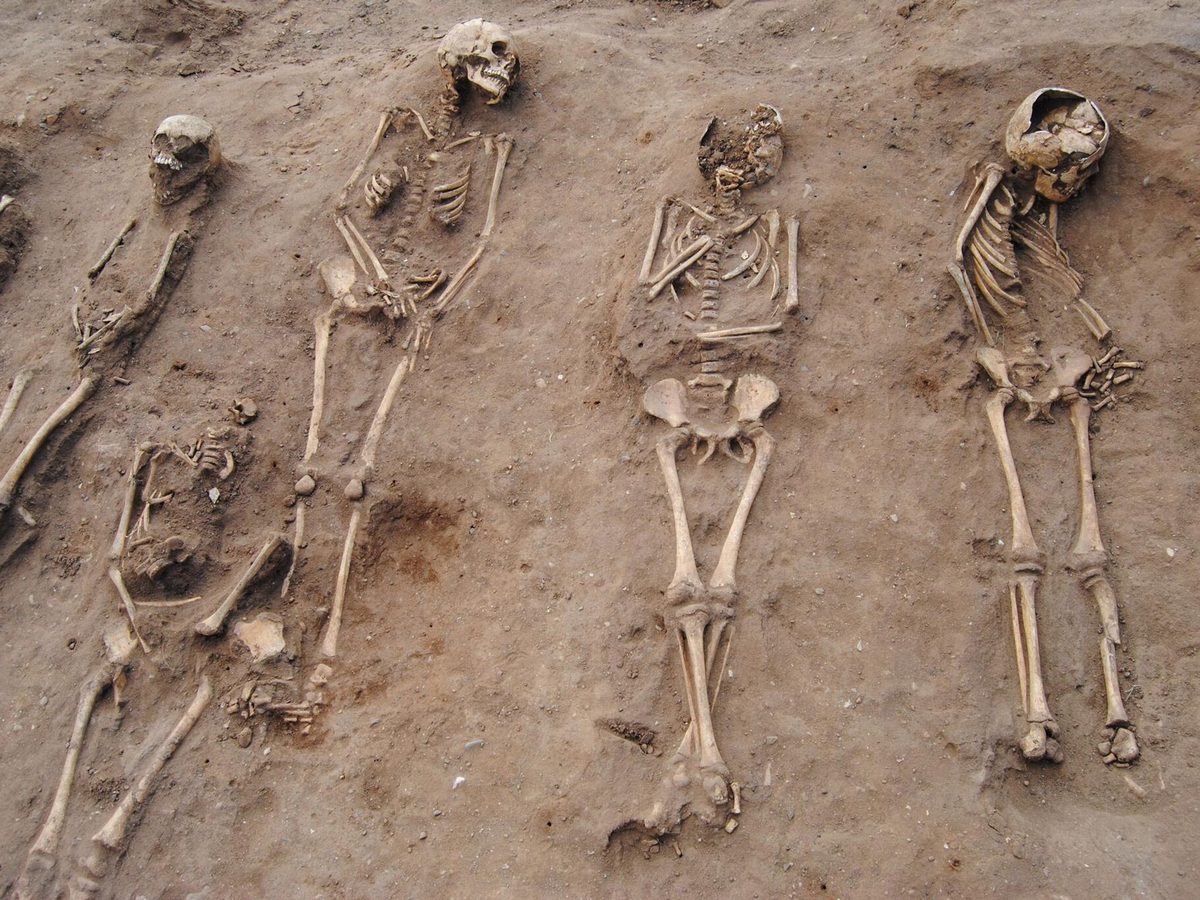
Researchers at the University of Tartu reconstructed 26 Yersinia pestis genomes from human remains at 11 archaeological sites in Estonia, Russia, England, the Netherlands, and Switzerland. A new dating method called PhIRM let them connect individual genomes to specific outbreaks that medieval chroniclers recorded by name.

Why it matters

Plague didn't vanish after the Black Death's first wave—it resurfaced roughly every generation for four centuries. The study shows how war, trade, and migration re-circulated a deadly pathogen long after its arrival, a pattern still central to how zoonotic diseases spread today.

Questions about this story

Free account needed to ask — your question is kept and asked for you right after sign-up. Answers are public.

No questions yet — be the first to ask.

Key Indicators

26
Plague genomes reconstructed from 11 archaeological sites
Samples span Estonia, Russia, England, the Netherlands, and Switzerland, dating from the 14th to 18th centuries.
75
Total genomes reassessed with improved dating
64 previously published plus 11 newly sequenced Yersinia pestis genomes.
400+
Years of recurring plague in Europe
Outbreaks continued from the 1350s through the early 18th century.
3
Plague lineage branches around 1450-1500
A major expansion that may have seeded new wildlife reservoirs in wild rodents.

Voices

Curated perspectives — historical figures and your fellow readers.

Ever wondered what historical figures would say about today's headlines?

Sign up to generate historical perspectives on this story.

People Involved

Organizations Involved

Timeline

October 1347 September 2026

6 events Latest: Today
Tap a bar to jump to that date
  1. Study published with PhIRM dating method

    Today Scientific finding

    Team presents 26 reconstructed genomes and refined dating linking them to chronicled outbreaks.

  2. Great Northern War begins

    Conflict

    Plague follows armies again; the 1710 siege of Tallinn kills soldiers and civilians alike.

  3. Thirty Years' War begins

    Conflict

    Plague spreads along troop and refugee routes, with new genomes linking outbreaks to the war.

  4. Plague lineages split into three branches

    Scientific finding

    Major expansion around 1450-1500 may have seeded new European wildlife reservoirs in rodents.

  5. Pestis secunda strikes

    Pandemic

    First major plague recurrence after the Black Death, beginning a pattern of returns.

  6. Black Death reaches Europe

    Pandemic

    Plague arrives via Mediterranean ports, killing up to 60% of Europe's population over six years.

Scenarios

1

Multi-source introduction model becomes consensus

Likely Resolves by Sep 20, 2029

Discussed by: Study authors; the bioRxiv preprint on Second Plague Pandemic origins

Additional ancient genomes from Asia, the Ottoman Empire, and Eastern Europe fill out the pattern this study found: plague repeatedly resurfaced in different European regions from multiple sources, not one single import. The PhIRM dating method becomes standard practice in paleogenomics, and the multi-introduction model gains broad acceptance.

2

European wildlife reservoirs confirmed by rodent DNA

Possible Resolves by Sep 20, 2029

Discussed by: Study authors; researchers studying the Third Plague Pandemic

Researchers extract Yersinia pestis DNA from pre-19th century European rodent remains, directly confirming the study's hypothesis that the 1450-1500 lineage expansion seeded permanent wildlife reservoirs. This answers the question of where plague hid between human epidemics and would parallel what happened globally during the Third Plague Pandemic of the 19th-20th centuries.

3

Single Eurasian reservoir model revived

Unlikely Resolves by Sep 20, 2029

Discussed by: Earlier genotyping studies; PLOS One 2016 plague persistence research

New genomic data from Central Asia or the Ottoman Empire shows all European post-Black Death lineages trace to one persistent non-European reservoir that continually re-seeded outbreaks, rather than multiple independent introductions. The European wildlife reservoir interpretation weakens as the field refines its models.

Historical Context

3 moments from history that rhyme with this story — and how they unfolded.

1855-1960s

Third Plague Pandemic (1855-1960s)

Originating in China's Yunnan province, plague spread via steamships to every inhabited continent, killing roughly 12 million people in India alone and reaching port cities worldwide.

Then

The pandemic triggered international sanitary conferences and the modern quarantine system.

Now

Plague established permanent wild-rodent reservoirs in the Americas, Africa, and elsewhere—where it persists today.

Why this matters now

Demonstrates the exact mechanism this study proposes for Europe: plague arriving in a new region and establishing lasting wildlife reservoirs that fuel future human outbreaks.

1918-1919

Spanish Flu (1918-1919)

An H1N1 influenza virus emerged and circled the globe in three major waves over roughly 18 months, killing an estimated 50 million people—more than World War I itself.

Then

The second wave in autumn 1918 was deadliest, and the virus continued evolving as it spread.

Now

Influenza remains a recurring seasonal threat, with descendant strains still circulating.

Why this matters now

Shows recurring waves can arise from a single introduced pathogen without a wildlife reservoir—contrasting with plague's environmental persistence and sharpening why the European reservoir question matters.

541-750

Justinianic Plague (541-750)

The first recorded plague pandemic reached Constantinople in 541 via Egyptian grain ships, killing an estimated 25-50 million people across the Mediterranean. It returned in waves for roughly two centuries, striking cities roughly every 8-12 years.

Then

The empire lost substantial population and revenue; armies and cities were repeatedly disrupted.

Now

Genomic work in 2018 confirmed Yersinia pestis caused the outbreak, establishing ancient DNA as the way to identify historical plagues.

Why this matters now

Shows plague pandemics historically return in waves over centuries, not as single events—the pattern this study documents for post-Black Death Europe.

Sources

(6)