

Pull to refresh
Logo
Ancient DNA supports Gothic origin story from Scandinavia

Ancient DNA supports Gothic origin story from Scandinavia

New Capabilities

New studies link Gothic migration to Scandinavian ancestry in Poland and beyond

Overview

Updated 1 hour ago

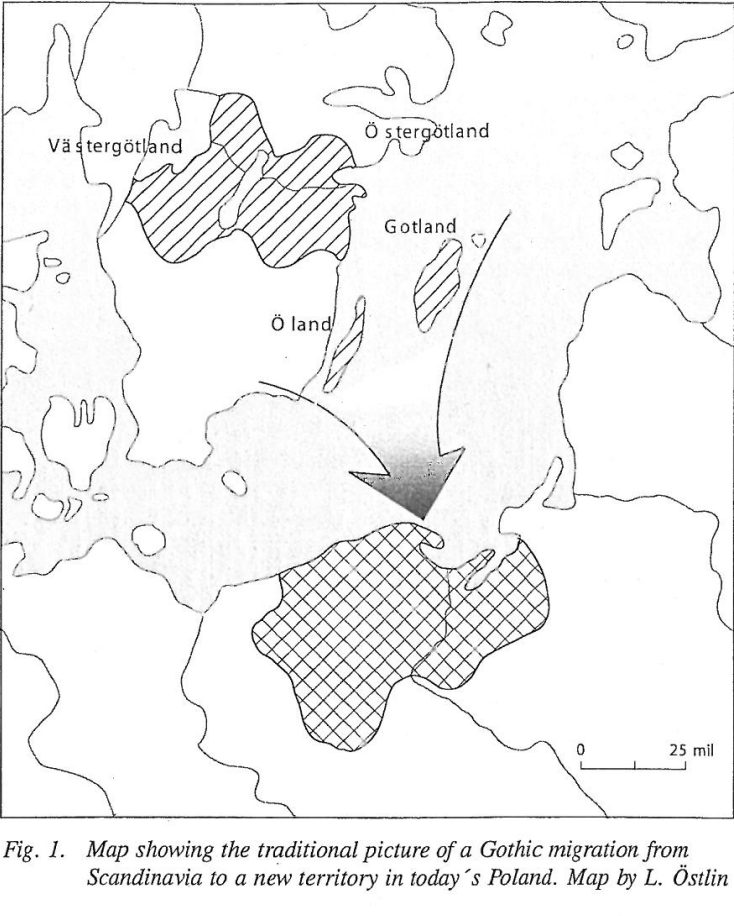
In 551 C.E., a Gothic historian named Jordanes wrote that his people sailed from a frozen island called Scandza and swept south to the Black Sea. For nearly 1,500 years, most historians treated that story as myth. Ancient DNA from skeletons across Europe now shows a large migration from Scandinavia into northern Poland around the time Gothic artifacts first appear there.

The finding does not prove every detail of Jordanes's account. It does show that Gothic language and culture spread partly through moving people, not only through trade or elite imitation. That challenges a decades-old scholarly preference for cultural transmission over migration.

Why it matters

The study revives migration as a force in European history and gives genetic evidence for a story long dismissed as legend.

Questions about this story

Free account needed to ask — your question is kept and asked for you right after sign-up. Answers are public.

No questions yet — be the first to ask.

Key Indicators

712
Ancient genomes analyzed
New DNA from 712 ancient humans, combined with 4,000 previously published profiles.
4,000
Previously published DNA profiles
The study combined new and existing Eurasian genomes.
~33%
Gothic-era skeletons in Spain with Northern European ancestry
About one-third of sampled Gothic and Germanic-style burials in Spain.
50 C.E.
First Goth-style artifacts in northern Poland
The date when Gothic material culture appears in the region.

Voices

Curated perspectives — historical figures and your fellow readers.

Sign up to generate historical perspectives on this story.

People Involved

Organizations Involved

Timeline

175-350 551

5 events Latest: Yesterday
Tap a bar to jump to that date
  1. Jordanes writes Gothic origin story

    Upcoming Historical

    The Gothic historian traces his people to Scandza and then south to the Black Sea.

  2. Goth-style artifacts appear in northern Poland

    Upcoming Archaeology

    A major shift toward Iron Age Swedish lineages coincides with the first Gothic material culture.

  3. Hacker News post links to Science article

    Latest Sharing

    A Hacker News submission points readers to the Science report on the ancient DNA findings.

  4. Nature papers link Gothic culture to Scandinavian migration

    Publication

    Two Nature papers and a Science report describe a large migration from Scandinavia to northern Poland.

  5. Goth-style burials in southeastern Poland show Scandinavian ancestry

    Genetics

    About half of the people sequenced had Scandinavian-like ancestry, with evidence of interbreeding.

Scenarios

1

Ancient DNA confirms Gothic migration into Ukraine

Likely Resolves by End of 2027

Discussed by: Guus Kroonen and other co-authors say the genetic pattern is consistent with a southward move toward Ukraine.

New sampling of Gothic-era burials in Ukraine or Romania finds Scandinavian-like ancestry, extending the genetic trail beyond Poland. This would strengthen the case that the Goths moved as a people, not only as a cultural model.

2

Gothic ancestry proves mostly elite transfer, not mass migration

Possible Resolves by End of 2028

Discussed by: Peter Heather and Joscha Gretzinger describe a later shift from mass migration to elite transfer.

Further sampling finds that Scandinavian ancestry was concentrated in a small elite across Gothic territories. That would support a two-chapter model: an initial migration followed by cultural spread among larger populations.

3

Historians keep Jordanes at arm's length despite DNA

Likely Resolves by End of 2028

Discussed by: Noel Lenski and other historians caution that Jordanes's full account includes fantastical claims.

The genetic evidence supports a Scandinavian origin but not Jordanes's stories about Troy or Egypt. Historians may accept migration while still treating his narrative as a mix of memory and invention.

Historical Context

2 moments from history that rhyme with this story — and how they unfolded.

5th–6th centuries

Anglo-Saxon migration debate (5th–6th centuries)

Historians long argued over whether the Anglo-Saxons replaced Britain's Romano-British population or only its elite. Ancient DNA later showed substantial continental ancestry in early medieval England, supporting large-scale migration.

Then

The genetic evidence shifted the debate toward migration models.

Now

It also showed that language and culture spread with people, not only through imitation.

Why this matters now

The Gothic case follows the same pattern: genetic data are testing a migration story that historians had treated skeptically.

c. 2500 BCE

Bell Beaker expansion (c. 2500 BCE)

Ancient DNA from Bell Beaker burials in Britain showed a large influx of steppe ancestry that replaced most of the island's earlier population.

Then

The finding confirmed migration on a scale archaeologists had debated.

Now

It became a model for using genetics to test how cultures spread.

Why this matters now

The Gothic study uses the same logic: if genes moved with culture, migration is back on the table.

Sources

(3)