


Pull to refresh
Logo
Bat genome project traces bats' origins to Europe, rewrites family tree

Bat genome project traces bats' origins to Europe, rewrites family tree

New Capabilities

103 bat genomes and 44 fossils resolve century-old debates about where bats came from

2 days ago: Nature publishes 103-species bat genome study

Overview

Updated 1 hour ago

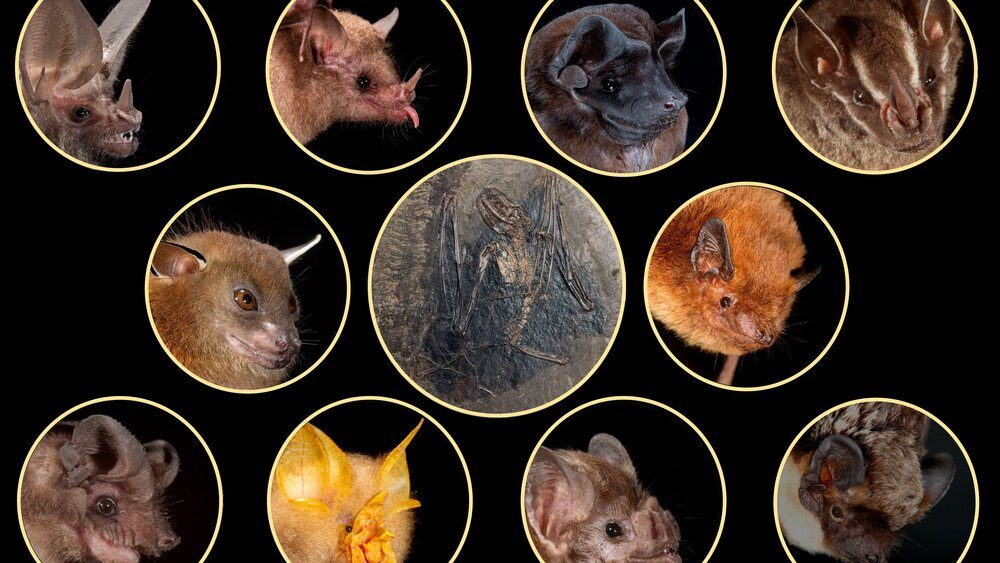
An international team of 137 researchers from 64 countries has sequenced the genomes of 103 bat species, including representatives from all 21 living bat families. Combined with an analysis of 44 fossil bats, the data shows bats—the only mammals capable of powered flight—likely originated in Europe about 65 million years ago, not Africa, Asia, or North America as earlier studies proposed.

The findings, published in Nature on September 23, 2026, resolve decades of disagreement over bat evolution. The study also places the family Myzopodidae within Vespertilionoidea and finds that laryngeal echolocation likely evolved before the diversification of crown-group bats, linking flight and echolocation in the ancestral bat lineage.

Why it matters

This rewrites where and when a quarter of all mammal species—bats—came from, and provides the genomic infrastructure for studying disease resistance, longevity, and echolocation.

Questions about this story

Free account needed to ask — your question is kept and asked for you right after sign-up. Answers are public.

No questions yet — be the first to ask.

Key Indicators

103
Bat species with assembled genomes
Covers all 21 recognized bat families
42
New genome assemblies generated by the study
Chromosome-level, long-read assemblies produced by Bat1K
44
Fossil bat species analyzed
Pre-Quaternary fossils integrated into the phylogeny
65 million years
Estimated age of bat origin
Late Paleocene origin in Europe
26
Ancestral bat chromosomes reconstructed
Modern bat genomes evolved through chromosome fusions
137
Researchers involved
From 64 countries via the Bat1K consortium

Voices

Curated perspectives — historical figures and your fellow readers.

Ever wondered what historical figures would say about today's headlines?

Sign up to generate historical perspectives on this story.

People Involved

Organizations Involved

Timeline

2017 September 2026

2 events Latest: 2 days ago
  1. Nature publishes 103-species bat genome study

    Latest Publication

    Study revises bat phylogeny, traces origins to Europe, and resolves family-level relationships.

  2. Bat1K consortium founded

    Initiative

    Researchers launch effort to sequence all living bat species' genomes.

Scenarios

1

Bat1K completes genomes for remaining bat species

Likely Resolves by End of 2031

Discussed by: Bat1K consortium leadership

The consortium continues its sequencing effort beyond the 103 species already completed. With all 21 families now represented, the remaining work focuses on filling in the roughly 1,400 living bat species. The methodology established in this study—combining chromosome-level assemblies with fossil data—will be applied to new species as they are sequenced.

2

Genomic resources drive bat disease-resistance and longevity research

Likely Resolves by End of 2028

Discussed by: Nature commentary, virology researchers

The chromosome-level assemblies open new avenues for studying why bats tolerate viruses without showing symptoms and live longer than their body size suggests. Researchers can now compare genomes across all bat families to identify genes involved in viral tolerance, DNA repair, and cell longevity—potential applications for human medicine.

3

European-origin hypothesis faces challenge from new fossils

Unlikely Resolves by End of 2031

Discussed by: Paleontologists, biogeography researchers

The European-origin conclusion rests on the fossil record and a dispersal-extinction cladogenesis model. New fossil discoveries in Africa, Asia, or North America could shift the inferred ancestral range. The study's own authors acknowledge that flight gives bats extraordinary dispersal capability, which complicates biogeographic reconstructions.

Historical Context

3 moments from history that rhyme with this story — and how they unfolded.

1997–2010

Molecular revolution in bat phylogenetics (1997–2010)

DNA sequencing revealed that fruit bats and some echolocating bats form a lineage called Yinpterochiroptera, while most echolocating bats belong to Yangochiroptera. This overturned the traditional Microchiroptera/Megachiroptera split and showed echolocation evolved multiple times.

Then

Researchers adopted the two-suborder classification (Yinpterochiroptera and Yangochiroptera).

Now

It set up the next question: where and when did the ancestral bat lineage arise? Later studies variously proposed North America, Africa, or Asia.

Why this matters now

The 2026 study uses far more genomic data and fossil integration to answer the origin question that molecular phylogenetics raised but could not resolve.

2017

Bat1K consortium launch (2017)

Researchers formally launched the Bat1K consortium to sequence the genome of every living bat species. The project parallels the Bird 10,000 Genomes (B10K) project and the Vertebrate Genomes Project.

Then

Initial pilot studies produced high-quality genomes for a handful of species.

Now

By 2026, the consortium had assembled 103 bat genomes spanning all 21 families, enabling the current analysis.

Why this matters now

The 2026 Nature paper is the consortium's flagship output, demonstrating what large-scale genomic investment can resolve about evolutionary history.

1900s–1980s

Early bat phylogenetics (1900s–1980s)

For most of the 20th century, bat relationships were inferred from morphology alone. Researchers debated whether microbats and megabats (fruit bats) formed two distinct lineages or whether echolocating bats were more closely related to each other than to non-echolocating bats.

Then

Morphology-based trees placed all echolocating bats together, suggesting echolocation evolved once.

Now

Molecular data later showed echolocation evolved independently in multiple bat lineages, overturning the morphological tree.

Why this matters now

This history shows how new data types (morphology, then DNA, now whole genomes) repeatedly overturn bat phylogenies. The 2026 study continues that pattern with chromosome-level assemblies.

Sources

(10)