
Pull to refresh
Logo
Pashinyan's Civil Contract wins Armenian parliamentary majority

Pashinyan's Civil Contract wins Armenian parliamentary majority

Rule Changes

A renewed mandate to seek peace with Azerbaijan and move toward the EU, but not enough seats to change the constitution.

June 8th, 2026: Civil Contract majority confirmed

Overview

Updated Jun 8

Russia has armed Armenia's military and guarded its borders for more than 30 years. On June 7, Armenian voters handed Prime Minister Nikol Pashinyan's Civil Contract party a fresh majority to keep steering the country away from Moscow and toward the European Union.

Civil Contract took about 49.8% of the vote, enough for roughly 64 of 105 seats. That is a working majority, but six seats short of the two-thirds needed to call a constitutional referendum. Azerbaijan wants that referendum as a condition of a final peace deal, so the gap matters.

Why it matters

Armenia's turn toward Europe could end Russia's military foothold in the South Caucasus and lock in a peace deal with Azerbaijan after decades of war.

Questions about this story

Free account needed to ask — your question is kept and asked for you right after sign-up. Answers are public.

No questions yet — be the first to ask.

Key Indicators

49.8%
Civil Contract vote share
Pashinyan's party led with about 727,000 votes.
64 of 105
Seats won by Civil Contract
A governing majority in the new National Assembly.
70
Seats needed for a referendum
Two-thirds of parliament is required to call a constitutional vote.
~31%
Combined pro-Russian opposition
Strong Armenia and the Armenia bloc both cleared the threshold.
59%
Voter turnout
Higher than many analysts expected for the vote.

Voices

Curated perspectives — historical figures and your fellow readers.

Ever wondered what historical figures would say about today's headlines?

Sign up to generate historical perspectives on this story.

People Involved

Organizations Involved

Timeline

June 2025 June 2026

5 events Latest: June 8th, 2026 · 3 months ago
Tap a bar to jump to that date
  1. Civil Contract majority confirmed

    Latest Election

    Final results show Civil Contract with about 49.8% and roughly 64 of 105 seats. Two pro-Russian blocs together take about 31% and enter parliament.

  2. Armenians vote

    Election

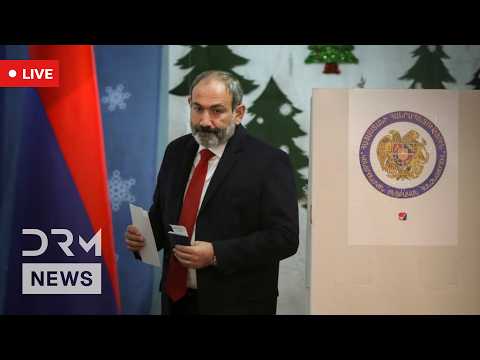
    Voters elect the 9th National Assembly. Turnout reaches about 59%, with the campaign framed as a choice between Russia and Europe.

  3. Putin warns over Armenia's EU plans

    Statement

    Russian President Vladimir Putin says Armenia's bid to join the EU needs 'special consideration,' drawing a parallel to Ukraine.

  4. Peace framework initialed at the White House

    Diplomacy

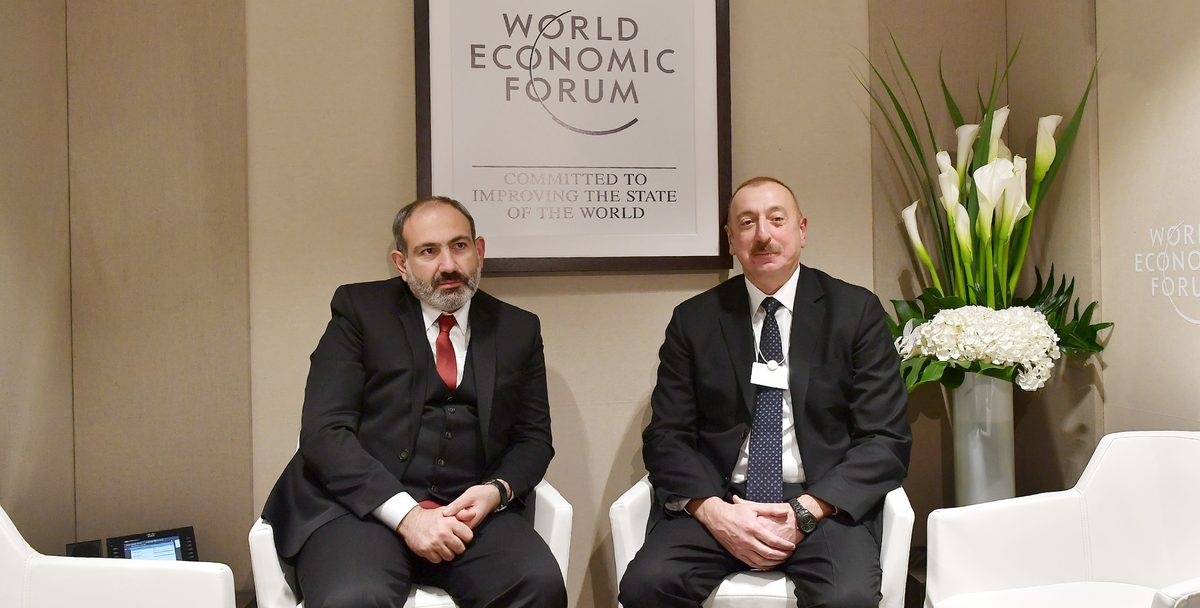
    Pashinyan and Azerbaijani President Ilham Aliyev initial a document moving toward a peace deal, hosted by U.S. President Donald Trump.

Scenarios

1

Armenia and Azerbaijan sign a final peace treaty

Possible Resolves by Q2 2027

Discussed by: Reuters, Al Jazeera, and the Armenian prime minister's office

With a renewed mandate, Pashinyan moves the August framework toward a signed treaty. Azerbaijan softens or drops its demand for an Armenian constitutional change, or the two sides find another path. A signing ends nearly four decades of conflict over Nagorno-Karabakh.

2

Armenia advances a formal EU membership bid

Possible Resolves by End of 2027

Discussed by: European Parliament research service, France 24

The new government uses its majority to push the EU accession process forward, building on a 2025 law that set the goal of joining. Brussels engages, and Armenia submits or formally advances a membership application despite Russian objections.

3

Constitutional referendum stalls for lack of votes

Likely Resolves by Q2 2027

Discussed by: OC Media, EVN Report

Because Civil Contract fell short of two-thirds, it cannot call a referendum alone. Opposition blocs refuse to supply votes. The constitutional change Azerbaijan seeks does not reach a national vote, and the peace process slows over the deadlock.

4

Armenia formally exits the Russia-led CSTO

Uncertain Resolves by End of 2027

Discussed by: Ifri, NPR

Russian trade restrictions and Putin's warnings push Armenia further from Moscow. Pashinyan, already having frozen participation, takes the final step and withdraws Armenia from the Collective Security Treaty Organization, the Russia-led military bloc.

Historical Context

3 moments from history that rhyme with this story — and how they unfolded.

November 2013–February 2014

Ukraine's Euromaidan and EU turn (2013–2014)

Ukraine's move toward an EU association deal, then its abrupt reversal under Russian pressure, set off mass protests that ousted President Viktor Yanukovych. Russia responded by annexing Crimea and backing war in the east.

Then

Yanukovych fled, and a pro-Western government took over in Kyiv.

Now

Years of war followed, culminating in Russia's full-scale invasion in 2022.

Why this matters now

Putin openly compared Armenia's EU plans to Ukraine's, making the parallel part of the pressure Armenia now weighs.

April–May 2018

Armenia's Velvet Revolution (2018)

Weeks of peaceful protest led by Nikol Pashinyan forced veteran leader Serzh Sargsyan to resign. Pashinyan, a former journalist, became prime minister on a promise to clean up corruption and democratize the country.

Then

Pashinyan won a landslide parliamentary majority in December 2018.

Now

He has dominated Armenian politics since, surviving the 2020 war and several attempts to unseat him.

Why this matters now

The 2026 majority extends the mandate Pashinyan first won in 2018 and tests whether his coalition still holds after years in power.

September–November 2020

Second Nagorno-Karabakh war (2020)

Azerbaijan retook large parts of the disputed Nagorno-Karabakh region in a six-week war. Thousands died, and Armenia signed a Russia-brokered ceasefire seen at home as a defeat.

Then

Pashinyan faced mass protests and calls to resign but held on.

Now

Azerbaijan fully reclaimed the territory in 2023, and Armenia began questioning its reliance on Russian security guarantees.

Why this matters now

The loss drove Armenia's search for new partners and made peace with Azerbaijan and the EU pivot central campaign issues.

Sources

(6)