


Pull to refresh
Logo
ARPA-H launches SPECTRA, an AI-driven initiative to transform autism diagnosis

ARPA-H launches SPECTRA, an AI-driven initiative to transform autism diagnosis

New Capabilities

Federal advanced research agency targets behavioral observation as main barrier to earlier, precise autism care

Today: Program details reach broader reporting

Overview

Updated 2 hours ago

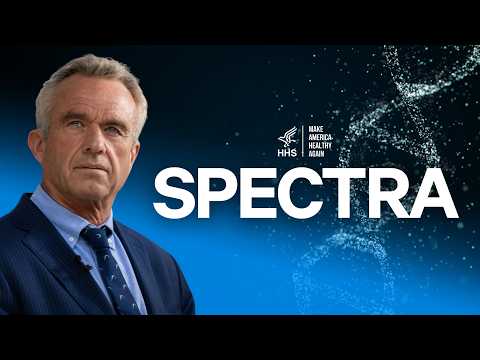
Autism diagnosis has relied for decades on behavioral observation by specialists. ARPA-H, the federal advanced research agency, launched SPECTRA on September 17 to replace that model with objective biological data and artificial intelligence.

The program integrates genetic, environmental, metabolic, and microbiome data with AI to map distinct autism trajectories and match individuals to tailored interventions. The goal is earlier diagnosis and assessment tools embedded in everyday life, not one-time clinical evaluations.

Why it matters

SPECTRA could shift autism assessment from scarce specialist observation to data-driven tools usable in homes, schools, and clinics.

Questions about this story

Free account needed to ask — your question is kept and asked for you right after sign-up. Answers are public.

No questions yet — be the first to ask.

Key Indicators

4
SPECTRA technical areas
Analysis, modeling, precision intervention, and enabling technologies define the program's scope.
Oct 18, 2026
First proposal deadline
Enabling technologies (TA 4) submissions due; window opens October 4.
Jan 18, 2027
Final proposal deadline
Precision intervention (TA 3) closes the submission cycle; full proposals follow.

Voices

Curated perspectives — historical figures and your fellow readers.

Ever wondered what historical figures would say about today's headlines?

Sign up to generate historical perspectives on this story.

People Involved

Organizations Involved

Timeline

3 events Latest: Today
  1. Program details reach broader reporting

    Today Announcement

    Fierce Biotech reports on SPECTRA's end-to-end system for identifying ASD risk factors, matching patients to interventions, and accelerating clinical research.

  2. ARPA-H launches SPECTRA program

    Launch

    ARPA-H formally announces SPECTRA with four technical areas spanning biological analysis, AI modeling, precision intervention, and enabling technologies.

  3. Bloomberg reports HHS planning SPECTRA

    Report

    Bloomberg News reviews a draft document outlining the initiative, citing plans to fill gaps in "the missing biology needed to treat earlier."

Scenarios

1

SPECTRA awards contracts across all four technical areas

Likely Resolves by Q2 2027

Discussed by: ARPA-H procurement analysts and program officers

Proposals arrive by the October, December, and January deadlines. Full proposals follow, and ARPA-H announces awards in mid-2027. The program then begins building the federated AI platform, multi-omics analysis tools, and embedded assessment devices it outlined. This path validates the program's ambitious scope and sets up multi-year research timelines.

2

SPECTRA misses deadlines or consolidates scope

Possible Resolves by Feb 28, 2027

Discussed by: Government procurement analysts

The program spans genetics, exposome, microbiome, immune, and family factors, demand for cross-disciplinary teams that may not form quickly. Insufficient proposals in one or more technical areas could force ARPA-H to extend deadlines, split solicitations, or merge technical areas. The program would proceed but on a narrower footprint than designed.

3

Congress cuts or restructures SPECTRA funding

Uncertain Resolves by Mar 15, 2027

Discussed by: Congressional appropriations watchers

Autism research sits on politically sensitive terrain. Kennedy's vaccine-related history could draw scrutiny to the program's framing, and budget pressures in the FY2027 appropriations cycle could reduce its allocation. The program would either scale back its technical areas or continue with a reduced footprint, delaying the diagnostic tools it promises.

Historical Context

2 moments from history that rhyme with this story — and how they unfolded.

October 1990 – April 2003

Human Genome Project (1990–2003)

The U.S. government coordinated an international effort to map the complete human genome, a project of similar ambition to SPECTRA in scale and technical difficulty. Researchers from multiple institutions and countries shared data through centralized databases.

Then

The project delivered a complete human genome sequence in 2003, two years early and under budget.

Now

It established open-data norms in biomedical research and spawned the genomics industry, including direct-to-consumer genetic testing.

Why this matters now

SPECTRA follows the same template: a federally funded, multi-institution research program built on shared data infrastructure. The comparison suggests both the potential payoff and the coordination challenges.

May 2013

DSM-5 autism criteria revision (2013)

The American Psychiatric Association consolidated autism subtypes, including Asperger's syndrome and PDD-NOS, into a single autism spectrum disorder diagnosis. The change affected eligibility for services and reshaped the clinical research landscape.

Then

Some families lost specific diagnoses and services while others gained broader spectrum coverage.

Now

The single-spectrum framework became the standard for autism research and clinical care, shaping how clinicians and researchers talk about the condition.

Why this matters now

SPECTRA aims to go further by replacing categorical diagnosis with continuous, data-driven trajectories. If it succeeds, it would redefine how autism is assessed and matched to interventions.

Sources

(8)