
Pull to refresh
Logo
CSL and Alentis partner on rare kidney and liver disease drug

CSL and Alentis partner on rare kidney and liver disease drug

Money Moves

Australian biotech pays $355 million upfront to co-develop lixudebart with Swiss firm Alentis; milestones could add $1.2 billion

Today: CSL and Alentis announce global partnership

Overview

Updated 38 minutes ago

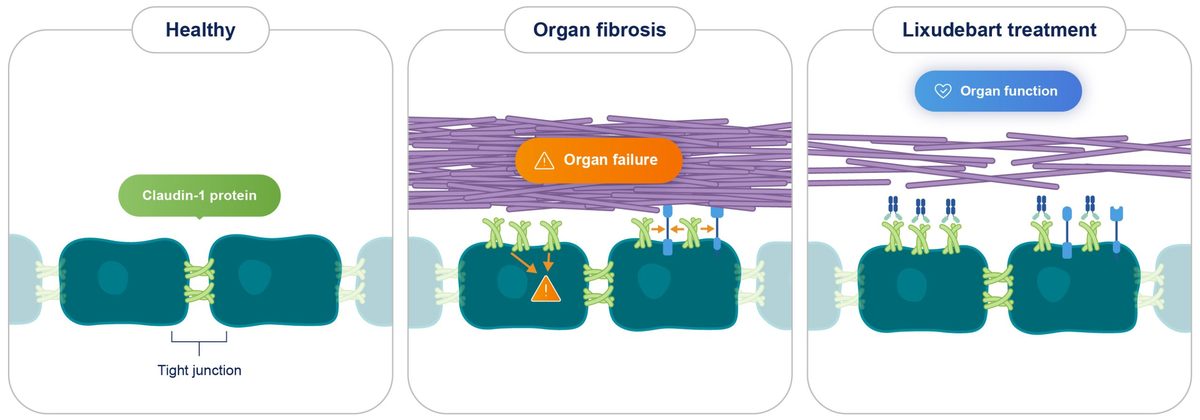
CSL will pay Swiss biotech Alentis Therapeutics $355 million upfront to co-develop lixudebart, an experimental antibody for rare kidney and liver diseases. Milestones could add $1.2 billion, with profits split 55% to CSL and 45% to Alentis.

Early data support the deal. An interim analysis of 26 patients with a rare autoimmune kidney disease showed improved kidney function. A liver fibrosis trial in 41 patients showed similar gains.

CSL is funding the ongoing Phase 2 kidney trial plus planned trials in two more conditions. If lixudebart works, CSL gains a foothold in nephrology; if trials fail, the upfront payment and trial costs are gone.

Why it matters

CSL is betting its nephrology push on a first-in-class mechanism; success yields a rare-disease blockbuster, failure costs hundreds of millions.

Questions about this story

Free account needed to ask — your question is kept and asked for you right after sign-up. Answers are public.

No questions yet — be the first to ask.

Key Indicators

$355M
Upfront payment from CSL to Alentis
Fixed payment due at deal signing, funded fully by CSL.
$1.2B
Maximum commercial milestone payments
Contingent on approval and sales targets across three indications.
$1.55B
Maximum deal value including upfront and milestones
Combined $355 million upfront plus up to $1.2 billion in milestones.
55/45
CSL/Alentis profit split after launch
CSL takes 55% of global commercial profits, Alentis 45%.
3
Indications in the development plan
ANCA-associated vasculitis with rapidly progressive glomerulonephritis, focal segmental glomerulosclerosis, and primary sclerosing cholangitis.

Voices

Curated perspectives — historical figures and your fellow readers.

Ever wondered what historical figures would say about today's headlines?

Sign up to generate historical perspectives on this story.

People Involved

Organizations Involved

Timeline

2024 October 2026

2 events Latest: Today
  1. CSL and Alentis announce global partnership

    Today Business

    CSL pays $355 million upfront, funds all trials, and shares profits 55/45 with Alentis for lixudebart.

  2. FDA grants orphan drug designation for lixudebart

    Regulatory

    The US Food and Drug Administration granted Orphan Drug status for lixudebart in idiopathic pulmonary fibrosis, a rare lung disease.

Scenarios

1

Lixudebart clears Phase 2 and heads to approval in AAV-RPGN

Possible Resolves by Q2 2028

Discussed by: CSL management and analysts following the deal, citing the positive interim Phase 2 data

The Phase 2 RENAL trial confirms early signals: improved kidney function and reduced proteinuria at 24 weeks. CSL launches Phase 3, and the FSGS and PSC programs advance. Alentis collects its first milestone payments as the franchise grows.

2

Phase 2 misses endpoints, deal value collapses

Possible Resolves by Q2 2028

Discussed by: Market analysts noting the historically high failure rate of mid-stage rare disease trials

The RENAL trial fails to show a statistically significant benefit over standard care, or safety issues emerge. CSL writes down the program, no milestones are paid, and the nephrology franchise loses its lead asset.

3

Narrow success: AAV-RPGN advances, other indications stall

Possible Resolves by Q2 2030

Discussed by: The deal structure, which funds separate trials for each indication

The RENAL trial succeeds and advances to Phase 3. But Phase 2 trials in focal segmental glomerulosclerosis or primary sclerosing cholangitis fail or get deprioritized, capping the franchise. Milestones tied to failed indications go unpaid, though CSL still gains a rare disease drug.

Historical Context

3 moments from history that rhyme with this story — and how they unfolded.

December 2020 – July 2021

AstraZeneca acquires Alexion (2021)

AstraZeneca agreed in December 2020 to buy Alexion Pharmaceuticals for $39 billion, its largest-ever deal. Alexion's rare disease drugs Soliris and Ultomiris treated complement disorders and generated billions in sales.

Then

The acquisition closed in July 2021 and became AstraZeneca's rare disease unit.

Now

It cemented the model of building rare disease franchises through high-priced, low-competition drugs.

Why this matters now

CSL's lixudebart deal follows the same franchise logic, using a partnership instead of an outright acquisition.

July 2019

Gilead and Galapagos partnership (2019)

Gilead paid Galapagos $3.95 billion upfront plus a $1.1 billion equity stake for a 10-year partnership on experimental inflammatory disease drugs. Most candidates failed or stalled in later trials.

Then

Gilead recorded writedowns as several programs missed endpoints.

Now

The deal became a cautionary example of large upfront payments for unproven mechanisms in a new therapeutic area.

Why this matters now

The Galapagos deal shows the failure mode CSL is exposed to: a big upfront check that produces no approved drug.

1990 – March 2009

Roche and Genentech partnership (1990-2009)

Roche bought majority control of Genentech in 1990 and funded its research for two decades while Genentech ran development. The arrangement produced blockbusters including Avastin and Herceptin. Roche took full ownership in 2009 for $46.8 billion.

Then

The 2009 buyout made Genentech a wholly owned Roche subsidiary.

Now

The partnership is the standard example of a big pharma and small biotech structure that yielded durable drugs.

Why this matters now

It's the upside case for CSL and Alentis: a long-running collaboration that lets a small company's research reach scale under a larger partner's commercial engine.

Sources

(9)