


Pull to refresh
Logo
Australia bans credit card surcharges

Australia bans credit card surcharges

Rule Changes

Businesses can no longer add a checkout fee for Visa, Mastercard, eftpos or American Express payments

Yesterday: Card surcharge ban takes effect

Overview

Updated 1 hour ago

Australian businesses can no longer add a surcharge when customers pay by card. The ban, in force since October 1, covers Visa, Mastercard, eftpos and American Express payments.

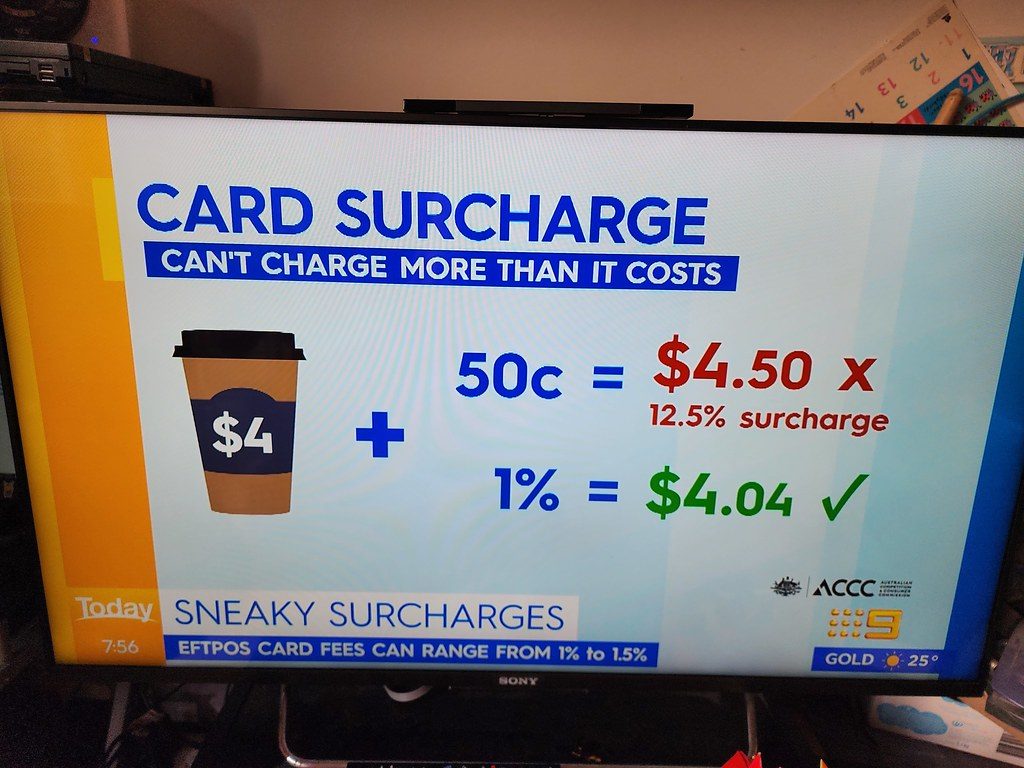
The change follows a Reserve Bank of Australia review that found surcharging had stopped working as intended. Businesses still pay processing costs, but they must now absorb them or fold them into prices paid by every customer.

Why it matters

The $1.6 billion Australians paid in card surcharges a year now shifts into prices paid by all customers, or onto business margins.

Questions about this story

Free account needed to ask — your question is kept and asked for you right after sign-up. Answers are public.

No questions yet — be the first to ask.

Key Indicators

$1.6B
Annual customer savings claimed by RBA
Projected annual saving to customers from removing card surcharges.
0.3%
New interchange fee cap, down from 0.8%
Cap on domestic interchange fees for designated card networks, roughly three cents per $10.
$910M
Annual business savings from interchange cuts
RBA estimate of savings to merchants from lower interchange fees.
$40K
Estimated annual cost to one Sydney cafe
Projected annual cost of absorbing card fees for Bitton Rose Bay, where over 90% of sales are by card.

Voices

Curated perspectives — historical figures and your fellow readers.

Ever wondered what historical figures would say about today's headlines?

Sign up to generate historical perspectives on this story.

People Involved

Organizations Involved

Timeline

March 2026 April 2027

5 events Latest: Yesterday
Tap a bar to jump to that date
  1. International card interchange caps begin

    Upcoming Regulatory

    Interchange fee caps extend to foreign-issued cards acquired in Australia, and detailed merchant statements become mandatory.

  2. Acquirers report interchange flow-through

    Upcoming Regulatory

    Large acquirers begin publishing how reductions in interchange fees flowed through to merchant service fees.

  3. Networks must publish card fee data

    Upcoming Regulatory

    Card networks and large acquirers begin publishing specified information about card payment fees on their websites.

  4. Card surcharge ban takes effect

    Latest Regulatory

    Businesses can no longer add surcharges for Visa, Mastercard, eftpos or American Express card payments. Lower interchange caps also begin for domestic transactions.

  5. RBA concludes surcharging review

    Policy

    Reserve Bank publishes its conclusions paper, announcing it will remove its no-surcharge prohibition and cut interchange fee caps.

Scenarios

1

Card costs end up baked into prices across Australian retail

Likely Resolves by Q2 2027

Discussed by: ACCI and business owners interviewed by ABC News and SBS News

Businesses that relied on surcharges to recover processing fees fold those costs into product prices. Cash payers end up subsidising card payers, and retailers face pressure from price-sensitive customers. ACCI argues the costs will reach consumers either way, just less transparently.

2

Workarounds replace card surcharges with new fees

Likely Resolves by Q1 2027

Discussed by: ABC News reporting on businesses finding workarounds; SBS News

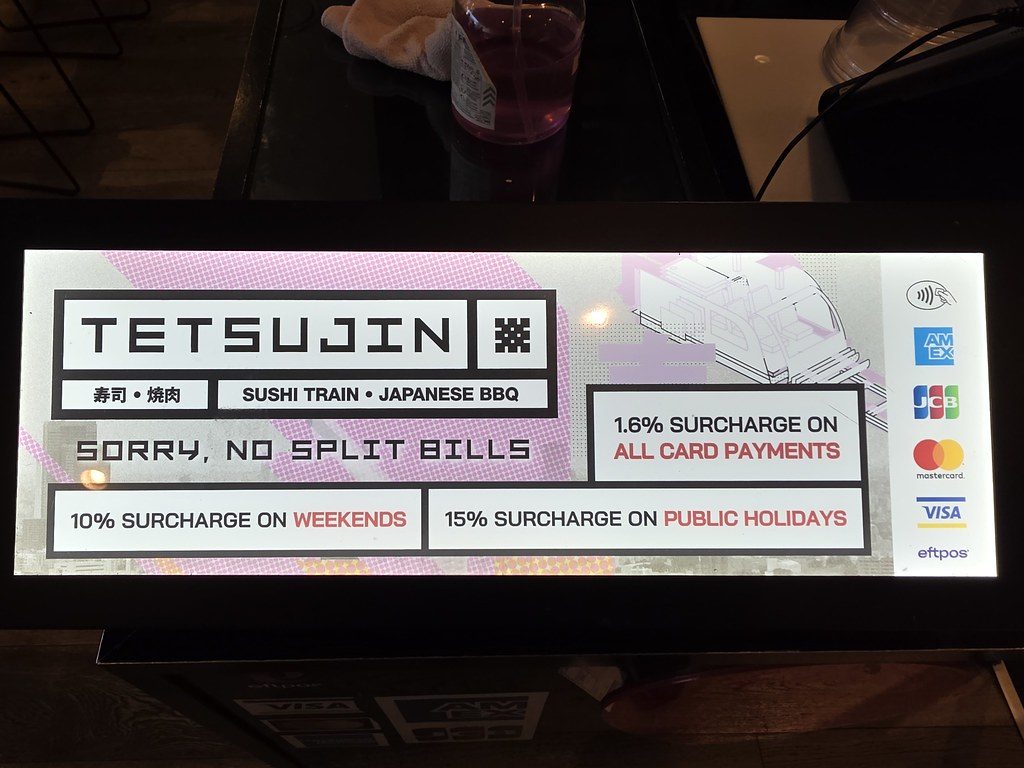
Businesses raise weekend or public holiday surcharges, add booking or service fees, or adjust pricing within the rules, which still allow non-card fees. Early sign: the Bitton Rose Bay cafe in Sydney raised its weekend fee from 10 to 12 percent to recover card costs.

3

Merchant fee competition drives card costs down

Possible Resolves by Q2 2027

Discussed by: RBA; bank commentary reported by AAP News

The RBA expects lower interchange caps and mandatory fee disclosure to push acquirers to compete on merchant pricing. Early moves: Commonwealth Bank cut its merchant rate to 0.99 percent and Westpac to 0.79 percent. If the competition holds, the cost businesses absorb is smaller than the surcharge they used to collect.

Historical Context

2 moments from history that rhyme with this story — and how they unfolded.

January 2018

UK and EU card surcharge ban (January 2018)

The UK banned surcharges on most consumer debit and credit card payments in January 2018, implementing the European Union's Payment Services Directive 2. Merchants could no longer add a checkout fee for paying by card.

Then

Card surcharges disappeared from UK consumer checkout flows; merchants absorbed costs or raised prices.

Now

The UK and European Economic Area approach became the reference point for jurisdictions weighing similar bans.

Why this matters now

Australia's ban follows the same model; the Straits Times notes the new policy brings Australia in line with the UK and the European Economic Area.

July 2013

US court settlement allowing card surcharges (2013)

A federal class action settlement over card interchange fees let US merchants add surcharges for credit card payments, after Visa and Mastercard dropped their no-surcharge rules for settling merchants. A number of states still prohibit the practice.

Then

Surcharging became legal in most US states, subject to caps and disclosure rules.

Now

The US moved in the opposite direction from the UK and Australia, permitting and disclosing the fee rather than folding it into prices.

Why this matters now

It shows the alternative policy answer to the same problem of rising card costs, and explains why Australia's ban is not the only regulatory option.

Sources

(11)