Anchor

Andromeda Surgical launches autonomous surgery platform for prostate procedures
New CapabilitiesA $15 million Series A funds a robot, built partly from self-driving car technology, that has helped urologists in three countries treat more than 40 patients.
Yesterday: Andromeda raises $15M and launchesNew here? Follow stories to track developments over time. Create a free account to get updates when stories you care about change.
Overview
For decades, surgical robots have been remote hands: a surgeon moves, the machine copies. Andromeda Surgical wants to change what the machine handles on its own.
The San Francisco startup raised a $15 million Series A and began selling its system, starting with an enlarged-prostate operation called HoLEP. Its software, written partly by engineers who once built self-driving trucks, has helped urologists in three countries treat more than 40 patients.
Why it matters
A steep learning curve keeps HoLEP prostate surgery rare; Andromeda's robot aims to let any urologist perform it at expert level.
Questions about this story
No questions yet — be the first to ask.
Key Indicators
$15M
Series A raised
Led by Standard Capital, with Y Combinator and others taking part.
$30M
Total funding to date
Combined across all rounds, per the company.
40+
Patients treated
Across three countries in the ongoing ASTRA clinical study.
30 min
Fastest enucleation time
As fast as 30 minutes, against a published average near 90.
Related Media
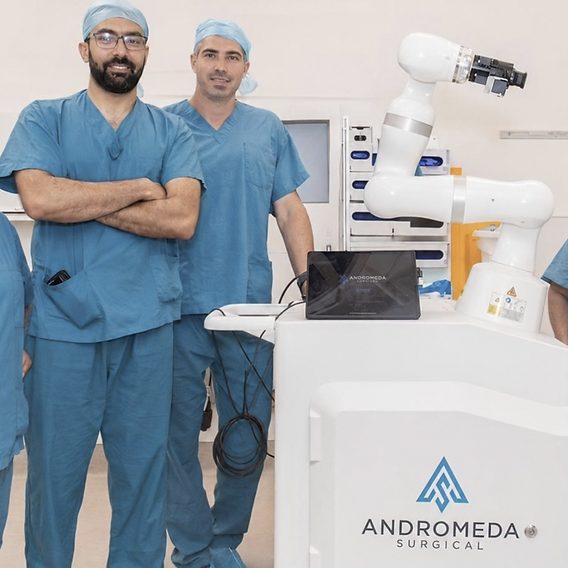
Andromeda Surgical Raises $15 Million Series A for Autonomous Surgery

Nick Damiano - Andromeda Surgical | LinkedIn
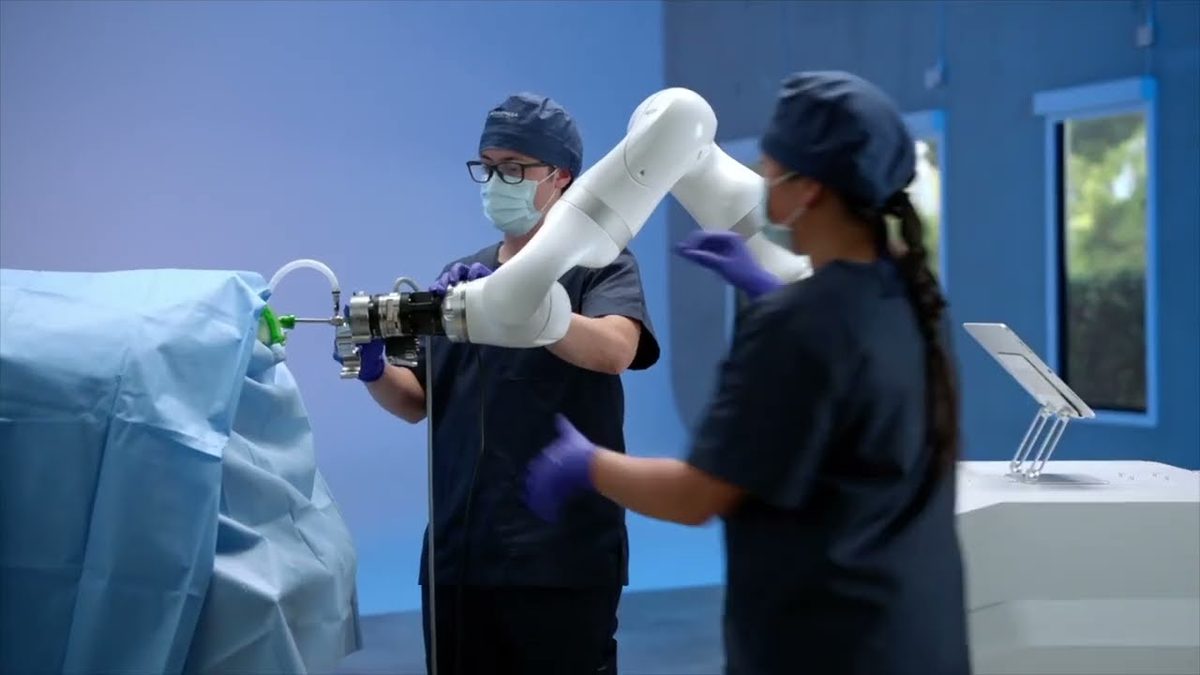
Robotic HoLEP, the Beacon platform from Andromeda Surgical, the future of enucleation?
6.2K views
4:38
Robotic HoLEP, the Beacon platform from Andromeda ...
Dr. Fernando Gómez Sancha
100 views
35:11
Spotlighting Andromeda Surgical: How Nick Damiano Is ...
Eight Capital
667 views
28:07
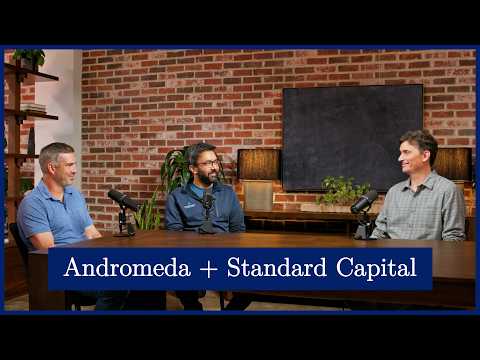
Andromeda + Standard Capital Series A
Standard Capital
Images from Openverse under Creative Commons licenses. Videos from YouTube.
Voices
Curated perspectives — historical figures and your fellow readers.
Play
Exploring all sides of a story is often best achieved with Play.
Most of these play right now — no account needed. Sign up to save scores, keep a streak, and unlock Debate and Predict.
Log in
Sign Up
Higher or Lower
A number from this story, against one from elsewhere in the news — guess which is bigger, then keep the chain going. 5 rounds, 3 strikes; a miss costs a strike and resets your streak.
Example
Anchor
EU tariff revenue
$52B
Big for this kind of number
Mystery
Pentagon AI contract
?
Round 1
Streak: 0
Mystery
?
Keyboard: ↓/L lower · ↑/H higher
0 pts
Best streak: 0 · Rounds: 0
0 points — sign up to put that on the leaderboard.
Now try on this story
Timeline
Andromeda Surgical launches autonomous surgery platform for prostate procedures
Order five events from this story, oldest at top. Each in the right slot scores 1 — neighbours within one slot count too. Your previous result — green ✓ for exact slots, yellow ~ for off by one. Cards now in true chronological order.
Loading puzzle…
Tap 💡 Free hint to lock the oldest into slot 1 — that leaves just four to order. Type pills are clues.
0/5
Exact slot
0/5
Within 1
Sign up to save your score and track a streak across stories.
Now try on this story
Connections
Sixteen names from the news. Find the four hidden groups of four. Four mistakes max.
Loading today's puzzle…
0/4 groups
Mistakes
Sign up to keep a daily streak — a new puzzle lands every day.
Now try on this story
Exit debate?
Your progress in this debate will be lost.
How it works
- 1 Two AI personas square off on this story.
- 2 You predict who'll win each round — correct picks earn XP.
- 3 One crossfire question is yours to fire. Pick it carefully.
Couldn't generate a topic
Select Your Champions
Choose one persona for each side of the debate
DEBATE TOPIC
Choose personas with different perspectives for a more dynamic debate.
SIDE A (PRO)
Select debater for this side:
No debate personas available right now.
SIDE B (CON)
Select debater for this side:
No debate personas available right now.
VS
Get ready to make your prediction...
Round of
Claim
Evidence
Stakes
Crossfire Answer
Closing Statement
Claim
Evidence
Stakes
Crossfire Answer
Closing Statement
Your Crossfire Question
Generating arguments...
Who's Got This Round?
Make your prediction before the referee scores
The referee scores both sides on
Correct predictions earn +20 XP
· Press 1 or 2 to pick
Evidence
40%
Logic
30%
Detail
20%
Style
10%
Round Results
Your Pick
Not this time
(%)
Overall Score
/10
Your Pick
Not this time
(%)
Overall Score
/10
Set the Crossfire
Pick the question both personas must answer in the final round
Crafting crossfire questions...
Choosing a question earns +10 XP crossfire bonus
🏆
Total XP Earned
Cred Change
Predictions
Debate Oracle! You called every round!
Sharp Instincts! You know your debaters!
The Coin Flip Strategist! Perfectly balanced!
The Contrarian! Bold predictions!
Inverse Genius! Try betting the opposite next time!
XP Breakdown
Base completion
+20 XP
Rounds played ( rounds x 5 XP)
+ XP
Correct predictions ( correct x 20 XP)
+ XP
Crossfire bonus
+10 XP
Accuracy
%
Prediction History
Round
You picked:
✓
✗
Now try on this story
Keep debating to level up your credibility and unlock achievements
People Involved
Organizations Involved
Andromeda Surgical
Medical robotics startup
Just launched commercially
A San Francisco company building AI-guided surgical robots, starting with prostate procedures.
Standard Capital
Venture capital firm
Lead investor in the Series A
The venture firm leading Andromeda's $15 million Series A.
Intuitive Surgical
Medical device company
Incumbent, for context
Maker of the da Vinci robot, the dominant surgical robotics system worldwide.
Timeline
March 2020 August 2026
5 events
Latest: Yesterday
Tap a bar to jump to that date
-
Andromeda raises $15M and launches
Latest FundingAndromeda announces a $15 million Series A led by Standard Capital and begins selling its prostate-surgery platform. It reports HoLEP in more than 40 patients across three countries, some as fast as 30 minutes.
-
Johns Hopkins robot removes a gallbladder on its own
Research milestoneA Johns Hopkins robot named SRT-H completes eight autonomous gallbladder removals on lifelike models, adjusting in real time. The work is in the lab, not on live patients.
-
Device-maker partnerships
BusinessAndromeda partners with Richard Wolf and Quanta System to widen access to lasers and scopes and speed clinical work abroad. It reports 15 procedures done in Chile and New Zealand.
-
First robotic-assisted HoLEP
Clinical milestoneDr. Cristián Trucco performs the world's first robotic-assisted HoLEP at Universidad Católica in Santiago, Chile, using Andromeda's tablet interface. The ASTRA clinical trial begins.
-
Starsky Robotics shuts down
BackgroundThe self-driving truck company co-founded by Kartik Tiwari winds down after failing to raise more capital. Much of its software team later moves to surgery.
Historical Context
3 moments from history that rhyme with this story — and how they unfolded.
July 2000
da Vinci surgical robot clearance (2000)
U.S. regulators cleared Intuitive Surgical's da Vinci for general laparoscopic surgery. The surgeon sat at a console and the robot copied every hand movement. It decided nothing itself.
Then
Hospitals adopted da Vinci for urology and other procedures, and Intuitive grew into the dominant surgical robotics maker.
Now
Twenty-five years on, mainstream 'robotic surgery' still means a machine that follows a surgeon, not one that acts on its own.
Why this matters now
Andromeda is trying to cross the line da Vinci never did: letting the robot handle steps of the operation, not just mirror the surgeon.
March 2020
Starsky Robotics shutdown (2020)
The self-driving truck company Kartik Tiwari co-founded ran one of the first fully driverless trucks on a public highway in 2019. Months later it shut down, unable to raise more money.
Then
The team dispersed, and its founder wrote a widely read post arguing that safety-first autonomy could not attract enough capital fast enough.
Now
The episode became a reference point for how long and how costly it is to turn autonomy demos into paying business.
Why this matters now
The same founder now leads Andromeda's engineering. His last autonomy venture shows both the technical promise and the funding trap Andromeda must avoid.
October 2023
Cruise robotaxi permit suspension (2023)
California regulators suspended Cruise's driverless permits after one of its cars dragged a pedestrian who had been thrown into its path. Cruise pulled its fleet nationwide.
Then
Cruise lost its California operating license, cut staff, and saw its leadership reshuffled.
Now
The case showed how fast public trust and regulatory approval can vanish for an autonomous system after a single serious incident.
Why this matters now
Surgical autonomy will face the same test. One high-profile failure in an operating room could set back approval and adoption across the field.
Sources
(8)Related Stories
Neura Robotics raises record sum to mass-produce humanoid robots
Money Moves
Updated Jun 11
First US commercial robot launches to repair satellites in orbit
New Capabilities
Updated Jul 21
Autonomous vehicles move from pilot programs to mass deployment
New Capabilities
Updated May 30
Robotaxis go mainstream
New Capabilities
Updated May 19
The race to build frontier AI
New Capabilities
Updated Aug 1
CES 2026 puts physical AI and humanoid robots center stage
New Capabilities
Updated Jul 20