

Pull to refresh
Logo
Apalutamide before and after prostate surgery reduces recurrence risk

Apalutamide before and after prostate surgery reduces recurrence risk

New Capabilities

PROTEUS substudy shows 62% reduction in recurrence or death versus surgery alone

Today: J&J announces PROTEUS substudy results

Overview

Updated 1 hour ago

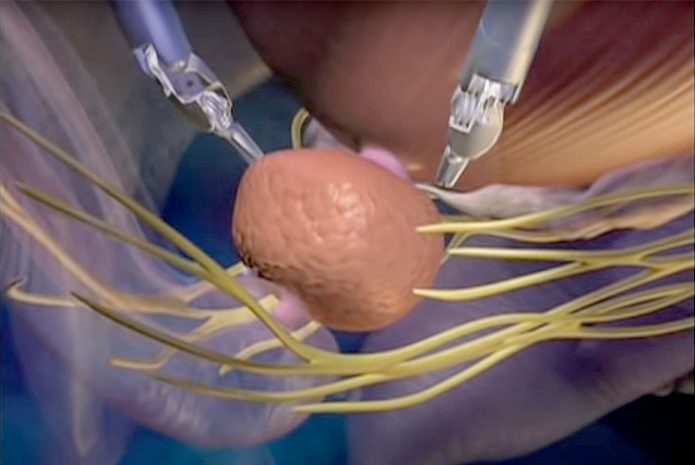
Nearly half of men with high-risk localized prostate cancer who have surgery see the cancer return within five years. New PROTEUS substudy data show that apalutamide plus hormone therapy for six months before and after surgery cuts that risk by 62% versus surgery alone.

The substudy randomized 408 patients to either perioperative apalutamide plus androgen deprivation therapy with radical prostatectomy, or radical prostatectomy alone. At three years, 63% of patients on the drug combination remained free of recurrence, metastasis, or death, versus 41.4% with surgery alone.

The regimen is not yet approved for this use. If regulatory approval follows, it would break a decades-old treatment model that relies on surgery first and monitors for recurrence afterward.

Why it matters

If approved, apalutamide could alter treatment for high-risk prostate cancer patients, nearly half of whom currently see recurrence within five years of surgery.

Questions about this story

Free account needed to ask — your question is kept and asked for you right after sign-up. Answers are public.

No questions yet — be the first to ask.

Key Indicators

62%
Reduction in risk of recurrence or death
Primary endpoint of event-free survival; hazard ratio 0.38 (p<0.0001) at median 37.8 months follow-up.
51%
Reduction in risk of metastasis or death
Secondary endpoint of metastasis-free survival; hazard ratio 0.49 (nominal p=0.0193).
71%
Reduction in risk of needing subsequent therapy
Exploratory endpoint of time to first subsequent treatment; hazard ratio 0.29 (nominal p<0.0001).
408
Patients randomized in the substudy
102 received apalutamide plus ADT; 306 underwent surgery alone in a 1:3 randomization.

Voices

Curated perspectives — historical figures and your fellow readers.

Ever wondered what historical figures would say about today's headlines?

Sign up to generate historical perspectives on this story.

Organizations Involved

Timeline

2026 October 2026

4 events Latest: Today
Tap a bar to jump to that date
  1. J&J announces PROTEUS substudy results

    Today Company announcement

    Press release reports 62% reduction in recurrence or death risk and 51% in metastasis or death risk; manuscript accepted by European Urology.

  2. PROTEUS substudy presented at ESMO Congress 2026

    Late-breaking abstract presentation

    408 patients compared perioperative apalutamide plus ADT against radical prostatectomy alone; event-free survival risk reduced 62% (HR 0.38; p<0.0001).

  3. PROTEUS primary results presented at ASCO 2026

    Clinical trial results

    Main trial of 2,109 patients showed apalutamide plus ADT improved pathological response and metastasis-free survival versus ADT plus placebo around surgery.

  4. PROTEUS main trial published in New England Journal of Medicine

    Publication

    At median follow-up of 61.7 months, 5-year metastasis-free survival was 78.2% with apalutamide versus 73.5% with placebo; pathological complete response or minimal residual disease was 8.9% versus 1.0%.

Scenarios

1

FDA approves apalutamide for perioperative use in high-risk localized prostate cancer

Possible Resolves by Q2 2028

Discussed by: Oncology drug approval analysts; J&J signaled intent to pursue regulatory review

Johnson & Johnson files a supplemental new drug application with the FDA based on the PROTEUS program. The data includes the main trial's metastasis-free survival benefit and the substudy's direct surgical comparison. Approval would rest on whether the FDA accepts the pathological response and MFS endpoints as evidence of clinical benefit.

2

NCCN guidelines add perioperative apalutamide as a recommended option

Likely Resolves by End of 2027

Discussed by: National Comprehensive Cancer Network guideline panels; prostate cancer specialists

The National Comprehensive Cancer Network updates its prostate cancer guidelines periodically. The PROTEUS data showing a 62% event-free survival improvement could prompt a new recommendation for perioperative apalutamide plus ADT in high-risk localized disease. The timing depends on the next guideline publication cycle.

3

Updated PROTEUS follow-up shows overall survival benefit

Possible Resolves by End of 2029

Discussed by: PROTEUS trial investigators; J&J noted additional follow-up is underway

The current analyses at 37.8 months (substudy) and 61.7 months (main trial) have not yet shown a statistically significant overall survival difference. Longer follow-up with more events could confirm an OS benefit, which would strengthen the case for regulatory approval and clinical adoption. Results could appear in a peer-reviewed journal within the next few years.

Historical Context

3 moments from history that rhyme with this story — and how they unfolded.

2005-2006

Adjuvant trastuzumab in HER2-positive breast cancer (2005)

The HERA trial and combined NSABP B-31/NCCTG N9831 analyses showed that adding trastuzumab (Herceptin) to chemotherapy after surgery roughly halved recurrence risk in HER2-positive breast cancer. Results presented in 2005 changed treatment worldwide within months.

Then

Trastuzumab became standard adjuvant therapy for HER2-positive breast cancer shortly after the trials were presented.

Now

Established the paradigm that targeted systemic therapy given around surgery can meaningfully improve outcomes in solid tumors.

Why this matters now

Like trastuzumab, apalutamide is a targeted agent given around surgery that substantially reduces recurrence in a specific cancer population. The parallel shows how perioperative targeted therapy can displace a surgery-first standard of care.

2017

STAMPEDE trial: abiraterone in high-risk prostate cancer (2017)

The STAMPEDE platform trial in the UK showed that adding abiraterone to standard androgen deprivation therapy improved survival in men with high-risk, newly diagnosed prostate cancer. The abiraterone arm was stopped early for clear benefit.

Then

Abiraterone plus ADT became a standard option for high-risk locally advanced prostate cancer.

Now

Set a precedent for moving potent systemic combination therapy earlier in prostate cancer's disease course.

Why this matters now

PROTEUS extends the same logic of treating with combination systemic therapy earlier, but adds it around surgery rather than instead of surgery, using a next-generation androgen receptor inhibitor.

2021

CheckMate 577: adjuvant nivolumab after esophageal cancer surgery (2021)

The CheckMate 577 trial showed that nivolumab given after surgery for resected esophageal cancer more than doubled median disease-free survival versus placebo. The FDA approved adjuvant nivolumab in this setting later that year.

Then

Adjuvant nivolumab became a new option for patients with residual disease after esophageal cancer surgery.

Now

Demonstrated that systemic therapy given around the time of surgery can improve outcomes in solid tumors where surgery alone had been standard.

Why this matters now

Shows a recent precedent for perioperative systemic therapy changing clinical practice in a surgical solid tumor setting, the same shift PROTEUS seeks in prostate cancer.

Sources

(5)