Anchor

First real-time AI use in brain surgery protects patient's sight
New CapabilitiesUCL-developed system analyzed live surgical video to guide a pituitary tumour removal, protecting the patient's vision
3 days ago: Human Progress reports on the milestoneNew here? Follow stories to track developments over time. Create a free account to get updates when stories you care about change.
Overview
Updated 2 hours agoRhys Hibbert, 48, went into surgery with an 11mm tumour pressing on the nerves that control his vision. He came out with what he calls 360-degree panoramic sight.
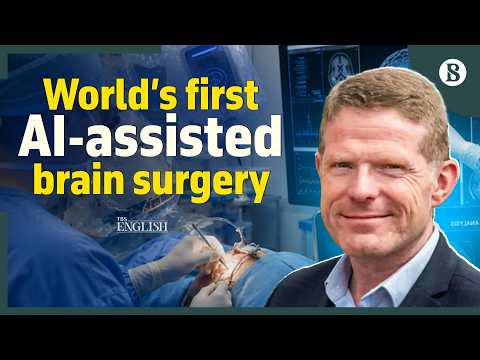
The difference: an AI system that watched the live surgical video feed and marked the blood vessels and nerves the surgeon needed to avoid. The May operation at the National Hospital for Neurology and Neurosurgery in London was the first time AI guided a neurosurgeon in real time during live surgery.
The system, developed at University College London, analyzed the camera feed from an endoscope inserted through the nose. It tracked surgical instruments and marked risky areas near the optic nerves and carotid arteries. A larger clinical trial is now planned.
Why it matters
If this AI proves out in larger trials, delicate brain surgery could get safer for thousands of patients a year.
Questions about this story
Free account needed to ask — your question is kept and asked for you right after sign-up. Answers are public.
No questions yet — be the first to ask.
Key Indicators
11mm
Tumour size
Non-cancerous growth on the pituitary gland, close to optic nerves and carotid arteries.
25-50%
Chance of incomplete removal without AI
Standard complication rate for this procedure without AI assistance.
0.5-2%
Risk of major blood vessel injury
Risk of injuring a carotid artery during standard surgery.
48
Patient age
Rhys Hibbert was slowly going blind before the operation.
Related Media
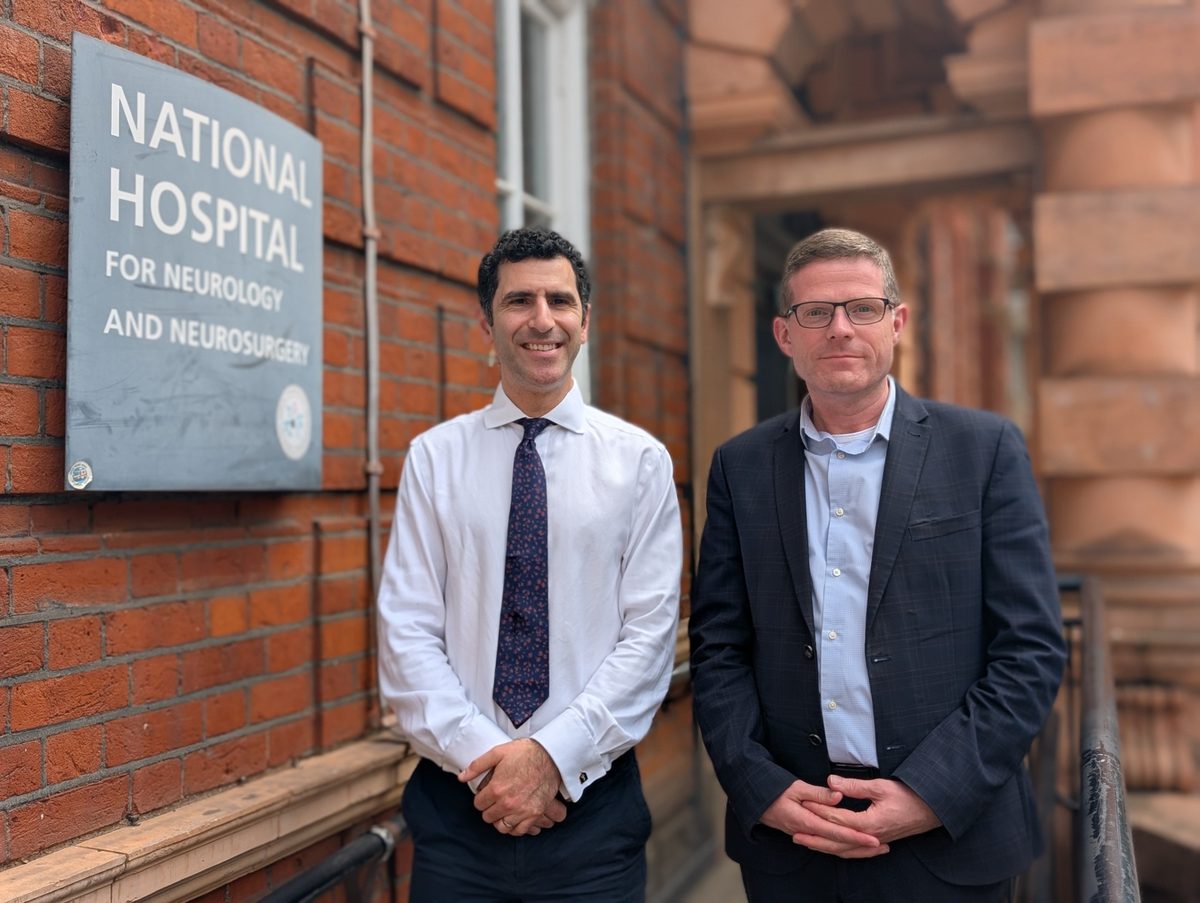
First patient in live AI-assisted sight-saving brain surgery | UCL News
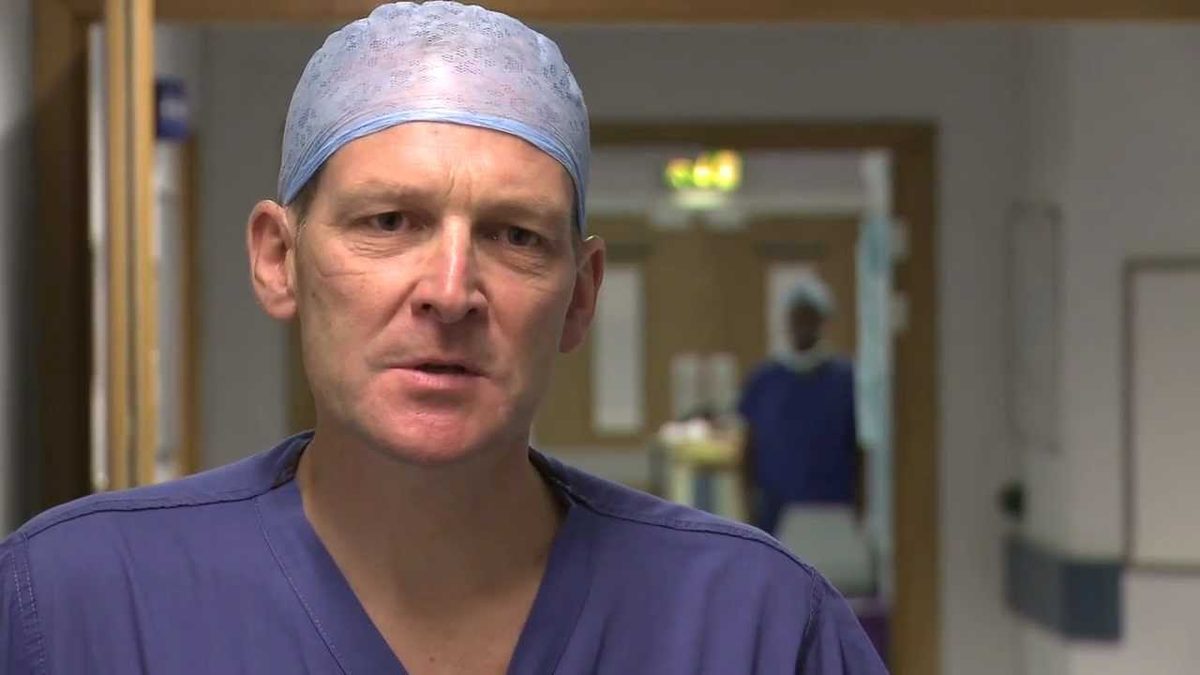
National Hospital for Neurology & Neurosurgery | UCLH

First patient to have brain surgery with real-time AI assistance
2.5K views
2:20
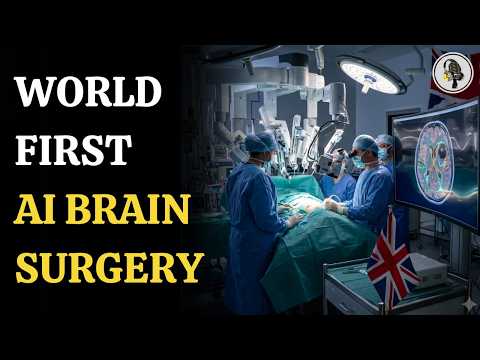
AI Brain Tumour Surgery Saves Patient's Sight in London
WION
2.9K views
4:07
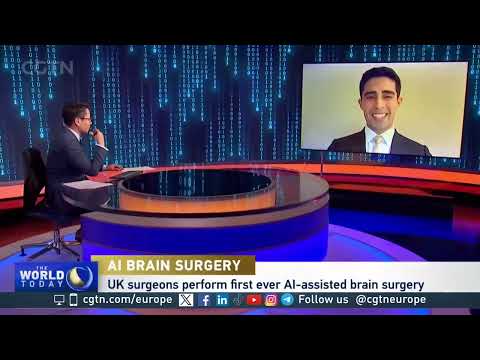
Inside the World's First AI-Assisted Brain Surgery
CGTN Europe
711 views
3:51
How AI became an expert second pair of eyes during brain ...
The Business Standard
Images from Openverse under Creative Commons licenses. Videos from YouTube.
Voices
Curated perspectives — historical figures and your fellow readers.
Play
Exploring all sides of a story is often best achieved with Play.
Most of these play right now — no account needed. Sign up to save scores, keep a streak, and unlock Debate and Predict.
Log in
Sign Up
Higher or Lower
A number from this story, against one from elsewhere in the news — guess which is bigger, then keep the chain going. 5 rounds, 3 strikes; a miss costs a strike and resets your streak.
Example
Anchor
EU tariff revenue
$52B
Big for this kind of number
Mystery
Pentagon AI contract
?
Round 1
Streak: 0
Mystery
?
Keyboard: ↓/L lower · ↑/H higher
0 pts
Best streak: 0 · Rounds: 0
0 points — sign up to put that on the leaderboard.
Now try on this story
Connections
Sixteen names from the news. Find the four hidden groups of four. Four mistakes max.
Loading today's puzzle…
0/4 groups
Mistakes
Sign up to keep a daily streak — a new puzzle lands every day.
Now try on this story
Exit debate?
Your progress in this debate will be lost.
How it works
- 1 Two AI personas square off on this story.
- 2 You predict who'll win each round — correct picks earn XP.
- 3 One crossfire question is yours to fire. Pick it carefully.
Couldn't generate a topic
Select Your Champions
Choose one persona for each side of the debate
DEBATE TOPIC
Choose personas with different perspectives for a more dynamic debate.
SIDE A (PRO)
Select debater for this side:
No debate personas available right now.
SIDE B (CON)
Select debater for this side:
No debate personas available right now.
VS
Get ready to make your prediction...
Round of
Claim
Evidence
Stakes
Crossfire Answer
Closing Statement
Claim
Evidence
Stakes
Crossfire Answer
Closing Statement
Your Crossfire Question
Generating arguments...
Who's Got This Round?
Make your prediction before the referee scores
The referee scores both sides on
Correct predictions earn +20 XP
· Press 1 or 2 to pick
Evidence
40%
Logic
30%
Detail
20%
Style
10%
Round Results
Your Pick
Not this time
(%)
Overall Score
/10
Your Pick
Not this time
(%)
Overall Score
/10
Set the Crossfire
Pick the question both personas must answer in the final round
Crafting crossfire questions...
Choosing a question earns +10 XP crossfire bonus
🏆
Total XP Earned
Cred Change
Predictions
Debate Oracle! You called every round!
Sharp Instincts! You know your debaters!
The Coin Flip Strategist! Perfectly balanced!
The Contrarian! Bold predictions!
Inverse Genius! Try betting the opposite next time!
XP Breakdown
Base completion
+20 XP
Rounds played ( rounds x 5 XP)
+ XP
Correct predictions ( correct x 20 XP)
+ XP
Crossfire bonus
+10 XP
Accuracy
%
Prediction History
Round
You picked:
✓
✗
Now try on this story
Keep debating to level up your credibility and unlock achievements
People Involved
RH
Rhys Hibbert
First patient to undergo live AI-assisted brain surgery
Recovered, sight improved dramatically
PM
Professor Hani Marcus
Consultant neurosurgeon at NHNN, UCL Queen Square Institute of Neurology
Performed the first AI-assisted surgery
DK
Danyal Khan
UCL PhD candidate and UCL/UCLH neurosurgical resident
Co-led the first AI-assisted surgery
DB
Dr Sophia Bano
Associate Professor in Robotics and AI at UCL Computer Science and UCL Hawkes Institute
Technical lead for the AI system
Organizations Involved
UC
University College London (UCL)
Research University
Developed the AI system at the UCL Hawkes Institute
Developed the real-time AI system used in the first live AI-assisted brain surgery.
University College London Hospitals NHS Foundation Trust
NHS Hospital Trust
Hosted the surgery at the National Hospital for Neurology and Neurosurgery
The NHS trust where the first live AI-assisted brain surgery was performed.
National Institute for Health and Care Research
Government Research Funder
Co-funded the clinical trial with Google
UK government body that co-funded the clinical trial of the AI-assisted surgery system.
Google
Technology Company
Co-funded the clinical trial with NIHR
Co-funded the clinical trial of the AI-assisted surgery system.
Timeline
May 2026 September 2026
4 events
Latest: 3 days ago
Tap a bar to jump to that date
-
Human Progress reports on the milestone
Latest MediaHuman Progress publishes its report on the first real-time AI use in brain surgery.
-
Global media report the milestone
MediaGuardian, Independent, Euronews and other outlets cover the world-first procedure.
-
UCL and UCLH announce the surgery
AnnouncementDetails of the first live AI-assisted surgery revealed after the patient recovered.
-
First live AI-assisted brain surgery performed
MedicalRhys Hibbert's 11mm pituitary tumour removed with real-time AI guidance at NHNN.
Historical Context
3 moments from history that rhyme with this story — and how they unfolded.
2000
da Vinci Surgical System (2000)
The FDA approved the da Vinci system, the first robotic-assisted surgical platform. It took years of clinical trials, surgeon training, and cost negotiations before robotic surgery became widespread.
Then
Robotic surgery was initially limited to a few procedures at major hospitals.
Now
da Vinci is now used in millions of procedures annually worldwide.
Why this matters now
The adoption curve for AI-assisted surgery may follow a similar path, starting with a single procedure and expanding as evidence accumulates.
2011
IBM Watson in medicine (2011)
IBM promoted Watson as a breakthrough in AI-assisted medicine, particularly for oncology treatment recommendations. It was deployed at several hospitals with high expectations.
Then
Watson's recommendations were often inconsistent with clinical practice and it struggled to integrate into hospital workflows.
Now
IBM sold Watson Health in 2022, a cautionary tale about AI hype in medicine.
Why this matters now
The UCL team emphasizes that the AI is an assistant, not a replacement, and that surgeons retain full control. Clinical validation will determine whether this AI avoids Watson's fate.
1990s
Image-guided neurosurgery (1990s)
Neurosurgeons began using frameless stereotactic navigation systems that tracked surgical instruments against pre-operative MRI and CT scans. This replaced reliance on anatomical landmarks and X-rays during surgery.
Then
Brain surgery became more precise, with better tumour resection rates and fewer complications.
Now
Image-guided navigation is now standard in neurosurgery worldwide.
Why this matters now
The current AI system builds on image-guided navigation but adds live analysis of the surgical video feed, rather than relying on pre-operative scans.
Sources
(10)Related Stories
First surgery using FDA-authorized Apple Vision Pro app performed at Duke Health
New Capabilities
Updated 6 days ago
AI systems advance toward autonomous medical diagnosis
New Capabilities
Updated Jun 24
Andromeda Surgical launches autonomous surgery platform for prostate procedures
New Capabilities
Updated Aug 10
The new pathways to 'inoperable' tumors
New Capabilities
Updated May 20
FDA clears cardiac MRI AI with self-update built in
New Capabilities
Updated 2 days ago
AI becomes a routine part of how American doctors practice medicine
New Capabilities
Updated May 30