




Pull to refresh
Logo
FAA launches AI system to manage air traffic

FAA launches AI system to manage air traffic

New Capabilities

Predictive tool debuts at three Washington-area airports as part of an $875 million modernization push

Today: SMART launches at three Washington-area airports

Overview

Updated 2 hours ago

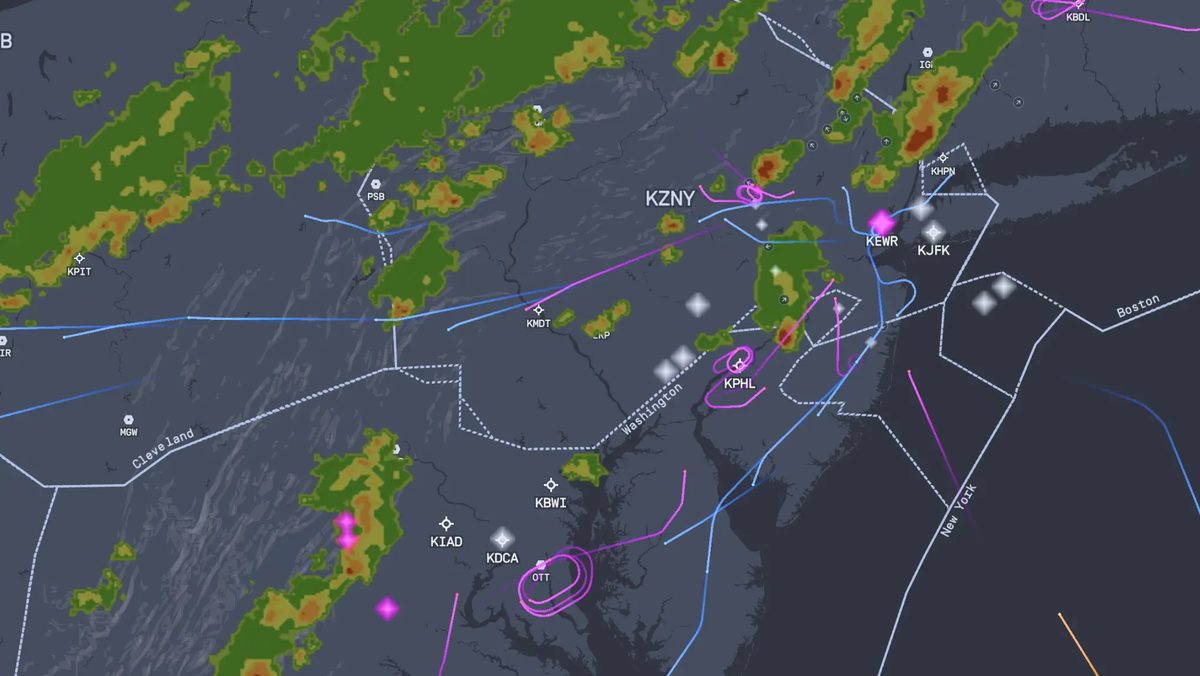
Air traffic controllers at three Washington-area airports started using an artificial-intelligence tool Monday that predicts where congestion will form before delays hit. The system, called SMART for Strategic Management of Airspace, Routes and Trajectories, analyzes weather at flying altitudes, airline schedules, and live flight paths in real time.

The launch is the first step in an $875 million, 12-year contract with Air Space Intelligence, a Boston company that previously built dispatch software for Alaska Airlines. The FAA plans to extend SMART to other airports gradually, part of a $12.5 billion push to modernize an air traffic control system that still relies on aging radar and, in some towers, paper flight strips.

Why it matters

SMART aims to cut flight delays by predicting congestion in advance. Whether it works will shape U.S. air travel for the next decade.

Questions about this story

Free account needed to ask — your question is kept and asked for you right after sign-up. Answers are public.

No questions yet — be the first to ask.

Key Indicators

$875M
SMART contract value
12-year award to Air Space Intelligence, announced in June 2026.
3
Airports in initial rollout
Reagan National, Dulles, and Baltimore-Washington Thurgood Marshall.
200
Data streams analyzed
Weather patterns, traffic flow, flight paths, and controller staffing data fed into SMART.
$12.5B
Broader ATC modernization budget
Total FAA investment across radar, communications, and software upgrades.

Voices

Curated perspectives — historical figures and your fellow readers.

Ever wondered what historical figures would say about today's headlines?

Sign up to generate historical perspectives on this story.

People Involved

Organizations Involved

Timeline

June 2026 September 2026

2 events Latest: Today
  1. SMART launches at three Washington-area airports

    Today Launch

    The FAA switches on SMART at Reagan National, Dulles, and Baltimore-Washington airports, marking the system's first operational use. A 90-day pilot follows.

  2. FAA awards $875 million AI contract

    Contract

    The FAA awards Air Space Intelligence an $875 million, 12-year contract to build SMART and a companion flow management data system.

Scenarios

1

FAA expands SMART to more airports after successful pilot

Likely Resolves by Q2 2027

Discussed by: FAA leadership, Secretary Sean Duffy

Duffy said the FAA will 'slow roll' SMART to additional airports. If the 90-day pilot at Washington-area airports shows measurable delay reductions, the agency is positioned to expand the system through 2027. Success would give controllers and airlines a shared view of weather, congestion, and routes — something the current fragmented system lacks.

2

FAA stalls SMART rollout citing technical or labor problems

Possible Resolves by Q2 2027

Discussed by: Dave Riley, National Air Traffic Controllers Association

The FAA's history of tech modernization is mixed: the Advanced Automation System of the 1980s cost billions over estimate and never delivered as designed. If SMART's predictions prove unreliable, or controllers resist adopting its recommendations, the pilot could be extended or the rollout slowed. NATCA's distance from the program signals potential friction.

3

SMART works, but controller staffing shortage keeps delays high

Uncertain Resolves by Q2 2027

Discussed by: Dave Riley, NATCA leadership

The system can only recommend actions; humans must carry them out. With the FAA still thousands of certified controllers short, many work mandatory overtime and grueling schedules. Even a successful SMART deployment could fail to move the needle on delays if the workforce can't act on its recommendations in time.

Historical Context

2 moments from history that rhyme with this story — and how they unfolded.

1982–1996

Advanced Automation System (1982–1996)

The FAA contracted IBM in the 1980s to build a fully automated air traffic control system called the Advanced Automation System, meant to replace 1970s-era computers nationwide.

Then

Costs ballooned from roughly $2.5 billion to more than $7 billion before the FAA scaled back the program in 1994.

Now

Only pieces of the system were deployed. The episode became shorthand for the FAA's difficulty managing large IT projects.

Why this matters now

SMART is the latest large-scale FAA technology bet. Skeptics point to AAS as evidence that ambitious air traffic upgrades often arrive late and over budget.

2007–present

NextGen GPS modernization (2007–present)

In 2007, the FAA launched NextGen, a satellite-based GPS overhaul designed to replace ground-based radar with more precise routes and reduce fuel burn.

Then

The program faced repeated delays and cost growth across multiple administrations.

Now

Key NextGen components remain incomplete almost two decades later, though some GPS-based procedures are in use.

Why this matters now

NextGen shows how FAA modernization programs stretch far beyond original timelines. SMART faces similar pressure to deliver measurable improvements.

Sources

(11)