

Pull to refresh
Logo
Space Force picks Raytheon to digitize missile-warning radar network

Space Force picks Raytheon to digitize missile-warning radar network

New Capabilities

Three vendors share $423.4 million to modernize eight Cold War-era radar sites

4 days ago: Raytheon announces radar modernization selection

Overview

Updated Yesterday

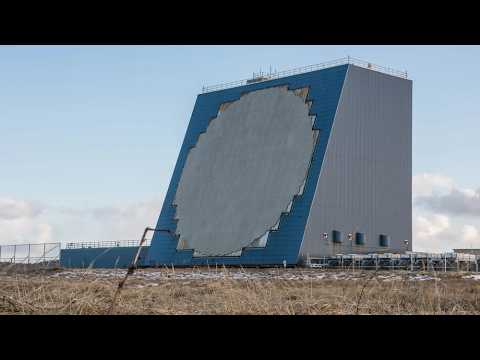
The radar sites that give America its first warning of a missile launch have run on Cold War-era electronics for decades. Now the Space Force is digitizing all eight of them, and Raytheon holds the largest contract for the job.

Space Systems Command awarded three prototype agreements worth a combined $423.4 million to replace the back-end processing that lets these radars track objects and separate warheads from debris and decoys. Raytheon's share is $309.5 million; the work runs through April 2028.

Why it matters

These eight radars are America's first line of missile warning. Their aging processors determine how many threats the network can track and hand to interceptors.

Questions about this story

Free account needed to ask — your question is kept and asked for you right after sign-up. Answers are public.

No questions yet — be the first to ask.

Key Indicators

$423.4M
Combined value of three prototype agreements
Awarded by Space Systems Command in July 2026 under other transaction agreements.
$309.5M
Raytheon's award
About 73% of the combined total, largest of the three awards.
8
Radar sites in program scope
Five upgraded early warning radars plus PARCS, Cobra Dane, and the AN/FPS-85.
Apr 2028
Prototype agreement end date
All three agreements run through April 21, 2028, followed by fielding decisions.

Voices

Curated perspectives — historical figures and your fellow readers.

Ever wondered what historical figures would say about today's headlines?

Sign up to generate historical perspectives on this story.

People Involved

Organizations Involved

Timeline

2025 October 2026

4 events Latest: 4 days ago
Tap a bar to jump to that date
  1. Raytheon announces radar modernization selection

    Latest Statement

    Company confirms GBRD work: digital systems will improve detection, reliability, and long-term performance.

  2. Space Force awards $423.4 million in prototype agreements

    Contract

    Raytheon gets $309.5 million; SciTec and WildStar take the rest. Agreements run through April 2028.

  3. Program scope expands to eight radars

    Program

    Early 2026 revision adds Cobra Dane and the AN/FPS-85, plus front-end array digitization.

  4. Space Force issues initial radar digitization plan

    Program

    First sources sought notice covers six radar sites, focused on back-end processing.

Scenarios

1

GBRD fielding goes competitive, breaking Raytheon's hold

Possible Resolves by Apr 21, 2028

Discussed by: Defense War Room analysis

SciTec Innovations and WildStar deliver working radar processing and software against the government-owned open architecture the Space Force is mandating. That gives Space Systems Command real options for the follow-on fielding award, which could go to multiple vendors or lean on the smaller firms for specific sites. The $1.98 billion in Golden Dome radar funding, if it reaches GBRD, would widen the field further.

2

Raytheon wins sole-source fielding, lock-in persists

Likely Resolves by Apr 21, 2028

Discussed by: Defense War Room analysis

The reference design drifts toward Raytheon's existing baseline, and the government-owned architecture ends up matching what the incumbent already builds. SciTec and WildStar remain prototype-stage players. Follow-on production is awarded as a Raytheon sole-source, recreating the single-vendor dependence GBRD was meant to break.

3

Radar digitization slips past fiscal 2030 target

Possible Resolves by End of 2029

Discussed by: Program schedule risk analysis

Technical hurdles in front-end array digitization, or host-nation coordination delays at Royal Air Force Fylingdales in the UK and Pituffik Space Base in Greenland, push initial operational capability past the first quarter of fiscal 2030. The Space Force revises its IOC and full operational capability dates.

Historical Context

2 moments from history that rhyme with this story — and how they unfolded.

1972-1976

Safeguard ABM system and PARCS (1972-1976)

The Army built the Safeguard antiballistic missile system to defend a U.S. ICBM field in North Dakota. Its Perimeter Acquisition Radar, later renamed PARCS, tracked incoming warheads at the Cavalier site. Congress shuttered the system after arms control limits, but PARCS kept operating as a warning radar.

Then

The Safeguard system was deactivated, and PARCS was converted to early-warning duty.

Now

The Cavalier radar still runs today, now a target of the GBRD digitization program.

Why this matters now

Shows how old the hardware is: the radar being modernized outlived the Cold War system that built it.

1975-1980

PAVE PAWS early-warning radars (1975-1980)

The Air Force, worried about submarine-launched ballistic missiles, asked Raytheon to build a family of phased-array warning radars. Cape Cod and Beale sites became operational in 1979 and 1980, with further sites at Clear, Thule, and Royal Air Force Fylingdales. These UHF radars are the direct ancestors of today's five upgraded early warning radars.

Then

The sites reached operational status through the late 1970s and early 1980s.

Now

Raytheon upgraded the sites to UEWR standard in the 2000s and remains the incumbent contractor.

Why this matters now

Explains Raytheon's entrenched position: it built these radars and has upgraded them for four decades.

Sources

(5)