
Pull to refresh
Logo
Beef foundation removes methane lesson from school curriculum after rancher objections

Beef foundation removes methane lesson from school curriculum after rancher objections

Rule Changes

A lesson on cattle and methane was pulled from a free science curriculum used by about 1.2 million US students, months after it was announced.

Overview

Updated 1 hour ago

A beef-industry foundation added a lesson on how cattle produce methane to a free science curriculum used by about 1.2 million US students. Within months, after ranchers objected, the lesson was removed.

The curriculum is paid for in part by the Beef Checkoff, a per-head fee that cattle sellers pay into promotion and research. That arrangement gives cattle producers a financial stake in the lessons and a way to challenge them, which is what happened here.

Why it matters

About 1.2 million students use this curriculum, so what it says about cattle and methane reaches classrooms far beyond one lesson.

Questions about this story

Free account needed to ask — your question is kept and asked for you right after sign-up. Answers are public.

No questions yet — be the first to ask.

Key Indicators

1.2M
Students using the curriculum
Estimated reach of the American Farm Bureau Foundation for Agriculture's free science curriculum.
100+
School districts using it
The curriculum is used in more than 100 districts nationwide, according to the Guardian.
74%
Animal methane attributed to cattle, 1986 estimate
A team led by atmospheric chemist Paul Crutzen estimated cattle produced about this share of methane from animals.
15–20%
Managed livestock share of world methane, 1989 EPA report
The Environmental Protection Agency's August 1989 report gave this range for annual global methane emissions from managed livestock.
4.7M tonnes
US beef cattle methane, 1990
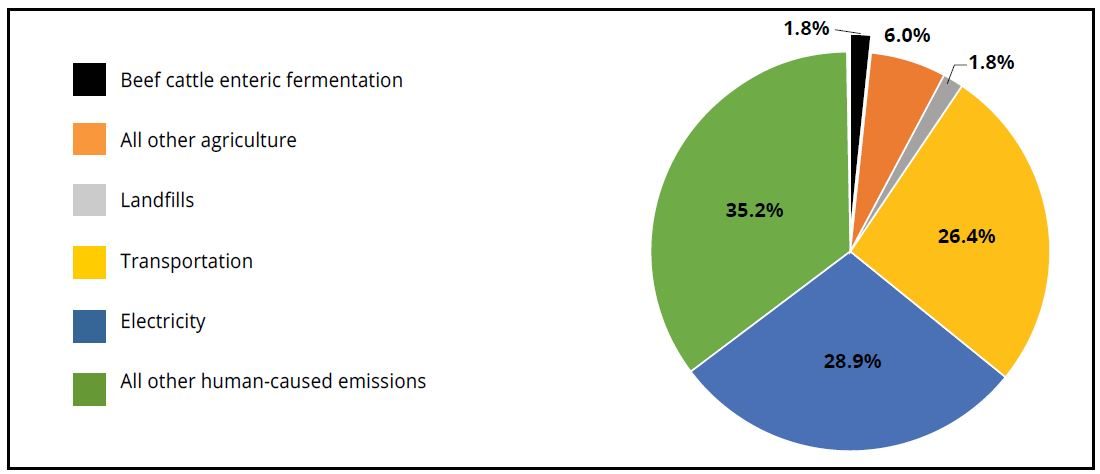
Methane from US beef cattle digesting feed, measured as about 5.2 million short tons.
19%
Fall in total US methane emissions, 1990–2022
Cuts came from landfills and fossil fuels; agricultural emissions rose over the same period.

Voices

Curated perspectives — historical figures and your fellow readers.

Sign up to generate historical perspectives on this story.

People Involved

Organizations Involved

Timeline

1986 November 2026

8 events Latest: Today
Tap a bar to jump to that date
  1. Guardian reports the lesson's removal

    Today Report

    The paper placed the removal in a decades-long dispute over what US schools teach about cattle and climate.

  2. Methane lesson removed after rancher criticism

    Curriculum

    The lesson was taken out of the curriculum within months of its announcement.

  3. Beef Board promotes checkoff-funded lessons

    Industry

    The board described New York City students learning genetics, sustainability and methane through beef production.

  4. Foundation announces cattle methane lesson

    Curriculum

    The new lesson explored how cattle produce methane and its role in environmental and biological systems.

  5. Cattlemen's strategic plan omits warming actions

    Industry

    The association's 47-page plan for 1992 and 1993 listed no specific actions on global warming.

  6. EPA report puts livestock at 15–20% of world methane

    Report

    The agency also listed ways to cut emissions, including feed additives and better manure handling.

  7. EPA holds workshop on livestock methane

    Policy

    The Environmental Protection Agency convened the workshop; National Cattlemen's Association official Richard Neal attended.

  8. Scientists estimate cattle's share of animal methane

    Research

    A team led by atmospheric chemist Paul Crutzen estimated cattle produced about 74% of methane coming from animals.

Scenarios

1

Foundation restores a revised methane lesson

Possible Resolves by Q2 2027

Discussed by: The Guardian, which notes the foundation has not said whether it will reissue the material

The foundation rewrites the lesson to foreground grazing systems and methane's place in biological cycles, then republishes it. That would satisfy ranchers who objected to the framing while keeping a methane component in the curriculum. Trigger would be a new lesson appearing in the foundation's public lesson catalogue, probably ahead of a school year.

2

Methane lesson stays out through the 2026–27 school year

Likely Resolves by Q2 2027

Discussed by: Rancher commentary in trade and advocacy publications, which argued the original lesson misrepresented grazing systems

The removal holds. The curriculum continues to cover cattle and sustainability without a dedicated lesson on methane and its climate role. Districts using the material teach the remaining lessons unchanged. This is the default path absent pressure from schools or funders to restore the content.

3

Federal review of checkoff-funded classroom materials

Unlikely Resolves by End of 2027

Discussed by: Current Affairs and Sentient Media, which have questioned industry-funded lesson plans

Members of Congress or the US Department of Agriculture's Agricultural Marketing Service, which oversees checkoff programs, examine whether promotion money should pay for school lessons. A hearing or formal review would put the funding structure itself in question rather than one lesson. No such step has been announced.

Historical Context

2 moments from history that rhyme with this story — and how they unfolded.

1986–1996

The cattlemen's global warming files (1986–1996)

The National Cattlemen's Association's records, 719 boxes, now sit at the American Heritage Center at the University of Wyoming. Researchers Jennifer Jacquet and Loredana Loy read 154 internal documents and 48 news stories from the period. They found the association commissioned reports questioning methane science that carried no methods section and do not appear to have been peer reviewed.

Then

One commissioned analysis appears to have counted only beef cattle, leaving out dairy cows, which pushed its estimate of livestock's contribution downward.

Now

The association's 47-page strategic plan for 1992 and 1993 listed no specific actions on global warming, even though its own commissioned reports mentioned feed as a way to cut emissions.

Why this matters now

The dispute over how much methane cattle produce, and whether to say so plainly, is the same one that removed the 2026 lesson.

February–August 1989

The EPA livestock methane report (1989)

The Environmental Protection Agency held a February 1989 workshop on methane from livestock and published its findings that August. The report estimated managed livestock produced 15% to 20% of the world's yearly methane and listed mitigation options: new feeding practices, feed additives, better manure handling, and grading changes so leaner beef was not marked down.

Then

Three of the reports the cattlemen's association commissioned mentioned feed as a way to cut emissions.

Now

In the association's own materials, researchers found no mention of any feeding strategy being researched, encouraged, or put into practice. US methane emissions fell 19% between 1990 and 2022 on cuts at landfills and in fossil fuels; agricultural emissions rose.

Why this matters now

It shows the industry's response to methane evidence has long centered on the message rather than the mitigation options, a pattern the curriculum fight repeats.

Sources

(6)