
Pull to refresh
Logo
Belarus jails Catholic priest who opposed the Ukraine war

Belarus jails Catholic priest who opposed the Ukraine war

Force in Play

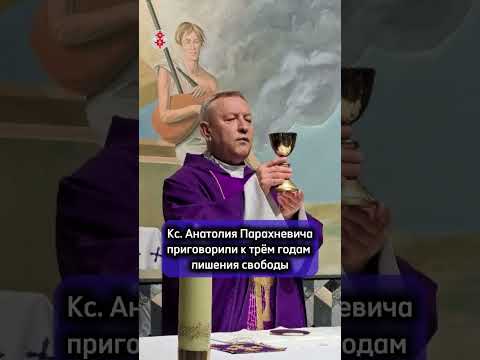
Father Anatoly Parakhnevich, 66, was convicted in a closed trial on charges of insulting the authorities and extremism after a treason case was dropped.

Overview

Updated 1 hour ago

A Belarusian court sentenced a 66-year-old Catholic priest to three years in prison in October. Masked security officers had arrested him in March, and he waited more than 200 days in KGB custody for a trial held behind closed doors.

The case against Father Anatoly Parakhnevich opened as a high-treason investigation and ended with convictions for insulting the authorities and extremism. It is one of several criminal cases Belarus has brought against Catholic clergy while revoking residence permits for Polish-born priests.

Why it matters

Belarus is jailing a priest for his speech, and his appeal will test whether the country's courts offer any protection at all.

Questions about this story

Free account needed to ask — your question is kept and asked for you right after sign-up. Answers are public.

No questions yet — be the first to ask.

Key Indicators

3 years
Prison sentence
Term handed down by a Vileyka district court in October 2026.
200+
Days in KGB custody before verdict
Detained from mid-March until the October ruling.
66
Priest's age at sentencing
He spent his 66th birthday in detention.
€680
Fine added to the prison term
Imposed alongside the three-year sentence, according to Catholic media.

Voices

Curated perspectives — historical figures and your fellow readers.

Sign up to generate historical perspectives on this story.

People Involved

Organizations Involved

Timeline

March 2026 November 2026

4 events Latest: 2 days ago
Tap a bar to jump to that date
  1. Masked officers arrest Parakhnevich

    Detention

    Men believed to be KGB officers detain the Olkovichi parish priest; he is held in a KGB remand centre.

Scenarios

1

Minsk court upholds the three-year sentence

Likely Resolves by Q2 2027

Discussed by: Forum 18 and Belarusian rights monitors, who note the courts rarely reverse political cases

Parakhnevich's appeal reaches the Minsk Regional Court, which reviews the Vileyka verdict. Belarusian appellate courts almost always affirm convictions in cases designated political, so the three-year term and fine would stand. He would continue serving his sentence, likely in a penal colony.

2

Appeal reduces or overturns the conviction

Unlikely Resolves by Q2 2027

Discussed by: Defense expectations reported by Catholic media, which say he rejects the charges

An appellate panel could strike the extremism charge or shorten the term, citing the weakness of the original case. This would still leave a criminal record but allow a shorter detention. Full acquittal is rare in Belarus's system, so a partial reduction is the more plausible version.

3

Freed early on health or humanitarian grounds

Possible Resolves by End of 2027

Discussed by: Local Catholic sources who reported a heart attack during detention

Parakhnevich reportedly suffered a heart attack while in custody, and his age and health could become grounds for early release, a pardon or a transfer. Belarus has occasionally released high-profile prisoners on humanitarian terms. This would end his detention without clearing his record.

Historical Context

2 moments from history that rhyme with this story — and how they unfolded.

August 2020 onward

Belarus's post-election crackdown (2020)

After a disputed presidential election in August 2020, mass protests spread across Belarus. Security forces detained thousands, shut independent media and moved against civic groups and religious communities seen as independent of the state.

Then

Leading opposition figures were jailed or driven abroad, and independent organizations were liquidated.

Now

The legal machinery built during the crackdown, including extremism charges and closed trials, became a standing tool against critics.

Why this matters now

The same charges and closed-court procedures used against Parakhnevich were sharpened during this period.

1920s-1980s

Soviet anti-religious campaigns in Belarus (1920s-1980s)

Under Soviet rule, churches in what is now Belarus were closed, clergy were arrested or exiled, and religious instruction was banned. Catholic and Orthodox believers faced repeated waves of persecution across the decades.

Then

Parishes were dismantled and many priests imprisoned or killed.

Now

Religious life survived largely underground until the Soviet system loosened in the late 1980s.

Why this matters now

Belarus's current prosecutions of Catholic priests echo a pattern of using state security power against clergy.

Sources

(9)